The Vastness of Learning
Introduction to Curriculum Development
Begin with the End in Mind
Imagine building a house without a blueprint. You might end up with a sturdy structure, but the rooms could be awkwardly placed, the plumbing might not connect, and it probably wouldn't be the house you envisioned. Creating a curriculum is similar. You can't just throw together a collection of topics; you need a plan that starts with the final goal.
This approach is called Outcome-Based Education (OBE). Instead of focusing first on what topics to teach, OBE starts by defining what students should be able to do by the end of their learning journey. Everything else, from lectures to assignments, is then designed to help them get there.
In OBE the curriculum is carefully constructed by first determining the outcomes, then designed backwards...
These outcomes exist at two levels: the big picture and the fine details.
Program Learning Outcomes (PLOs)
noun
Broad statements that describe the knowledge, skills, and attitudes graduates of an entire program (like a degree) should possess.
Course Learning Outcomes (CLOs)
noun
Specific statements that describe what a student will be able to do at the end of a single course.
Think of PLOs as the destination for a long road trip and CLOs as the specific stops you make along the way. Each stop is a worthwhile destination on its own, but it also gets you closer to your final goal. Every CLO should directly support one or more PLOs, creating a clear and logical path for the learner.
Choosing Your Blueprint
Once you know your outcomes, you need a framework to organize the content. Curriculum designers don't start from scratch; they use established models to structure the learning experience. These models act like blueprints, ensuring all the necessary components are included in a logical order.
One of the most common frameworks is ADDIE, an acronym that stands for Analysis, Design, Development, Implementation, and Evaluation. It’s a systematic, step-by-step process that ensures a thoughtful approach to curriculum building.
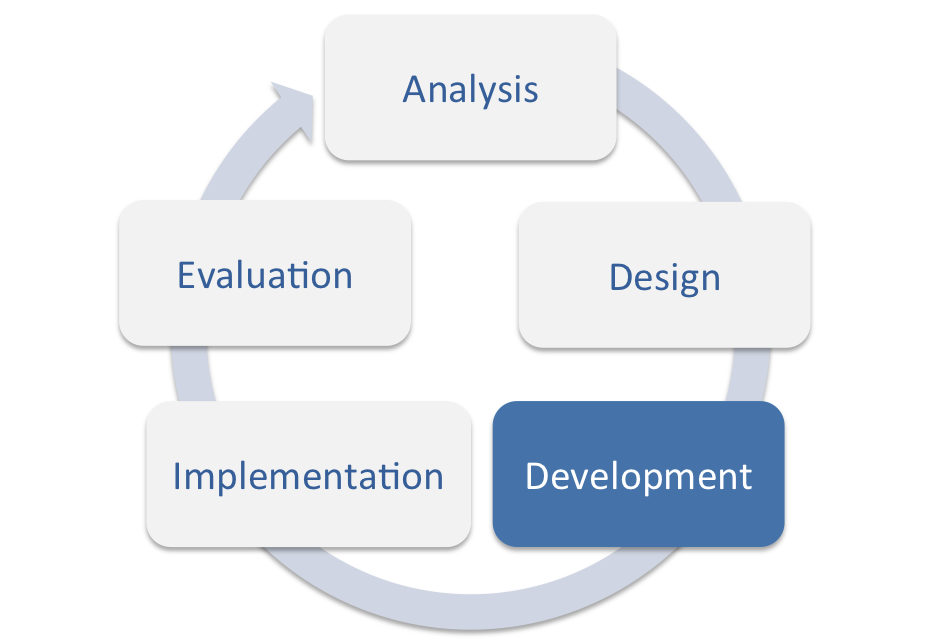
Here’s a quick look at the stages:
- Analysis: Who are the learners? What do they need to learn? What are the constraints?
- Design: This is where you write your CLOs and PLOs. You'll also plan the overall structure and flow of the course.
- Development: You create the actual course materials, like presentations, activities, and readings.
- Implementation: The course is delivered to the students.
- Evaluation: Did the students achieve the learning outcomes? How can the course be improved?
Other models exist, like Merrill's First Principles of Instruction, which focuses on problem-centered learning, or concept-based curriculum, which helps students understand big, transferable ideas. The best model depends on the subject matter, the learners, and the ultimate goals of the program.
The key is coherence. A well-designed curriculum ensures that every course, lesson, and activity has a clear purpose and directly contributes to the program's overall goals.
Now, let's test your understanding of these foundational concepts.
What is the primary starting point for curriculum design in an Outcome-Based Education (OBE) model?
Using the 'road trip' analogy from the text, if a Program Learning Outcome (PLO) is the final destination, what represents a Course Learning Outcome (CLO)?
Understanding these principles of curriculum development is the first step in creating powerful and effective learning experiences.