The Vast Ocean
Introduction to Oceanography
The Blue Planet
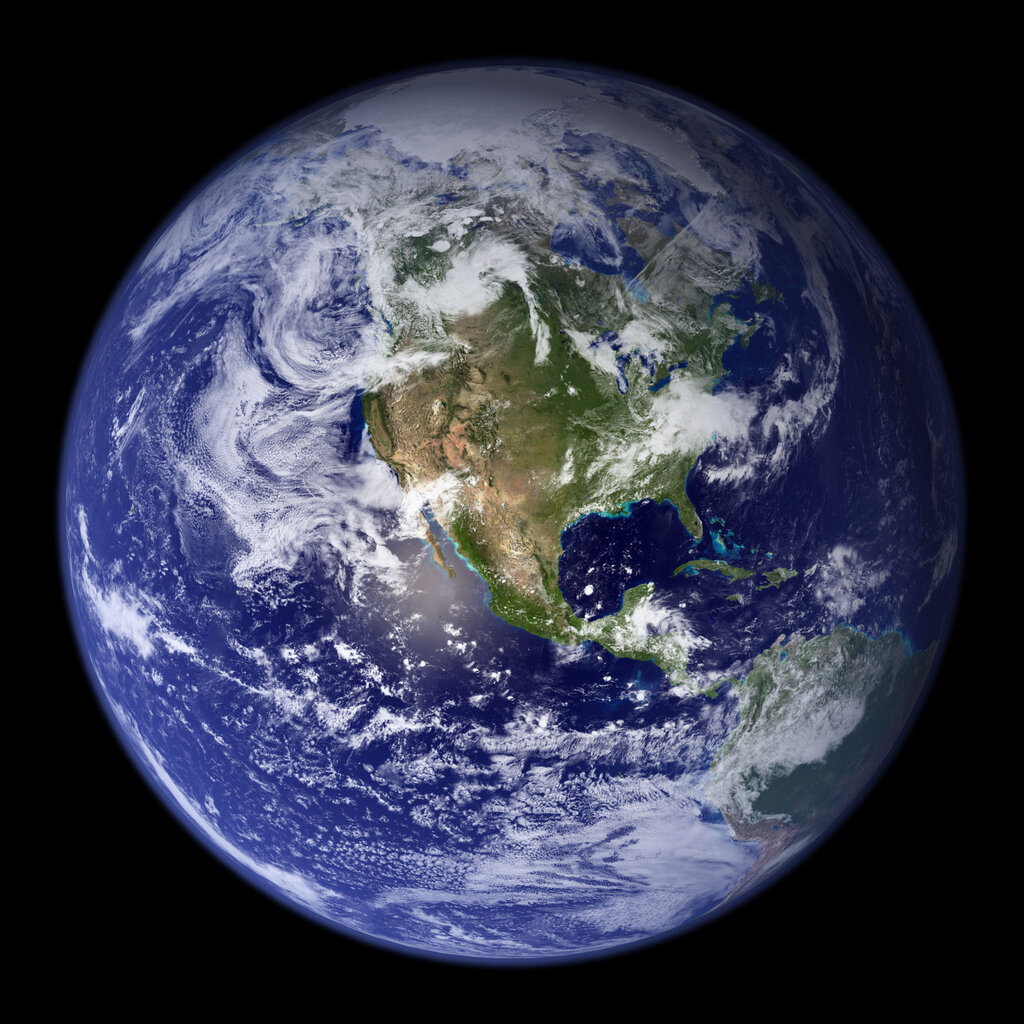
From space, our planet is a swirl of blue and white. The vast oceans dominate the view, covering over 70% of Earth's surface. This watery world is the subject of oceanography, the scientific study of the sea in all its aspects.
Oceanography
noun
The scientific study of the ocean, including its physical, chemical, geological, and biological features.
Oceanographers explore everything from the deepest trenches to the microscopic life within a single drop of seawater. They study how ocean currents move, how the seafloor was formed, and how marine life interacts. It's a field that blends geology, chemistry, physics, and biology to understand the largest and least-explored habitat on Earth.
A World of Water
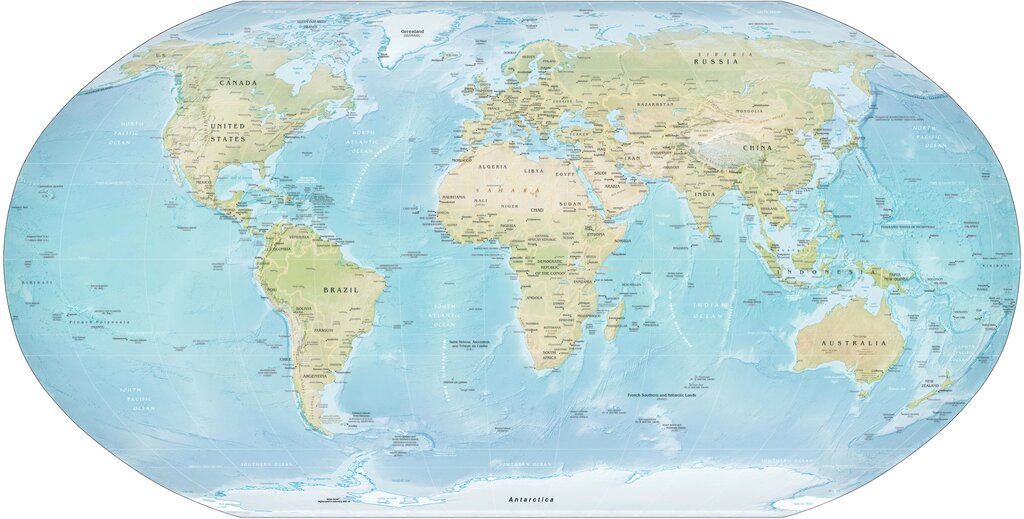
The world's oceans are all connected, forming one massive body of water often called the global ocean. For convenience, we divide it into five major basins: the Pacific, Atlantic, Indian, Southern, and Arctic Oceans. The Pacific Ocean alone is vast enough to hold all of the world's continents.
In total, the oceans contain about 1.35 billion cubic kilometers of water. That’s about 97% of all the water on Earth. The sheer volume is hard to grasp. This water isn't just spread out; it's also incredibly deep. While the average depth of the ocean is about 3,700 meters (12,100 feet), its deepest point, the Mariana Trench, plunges down nearly 11,000 meters.
If Mount Everest were placed in the Mariana Trench, its peak would still be more than 2,000 meters underwater.
More Than Just Water
Seawater is fundamentally different from the water in lakes and rivers. Its most defining characteristic is its saltiness, or salinity. This salt comes from rocks on land that are weathered and eroded over millions of years, with the dissolved minerals carried to the sea by rivers.
Salinity
noun
The concentration of dissolved salts in water, usually expressed in parts per thousand (ppt).
This means that if you evaporated 1,000 grams of seawater, you'd be left with about 35 grams of salt. Salinity isn't uniform across the globe. It can be lower near the poles where ice is melting, or higher in hot, dry regions where evaporation is rapid.
Salinity, along with temperature, controls another key property of seawater: density.
Density
noun
The mass of a substance per unit volume.
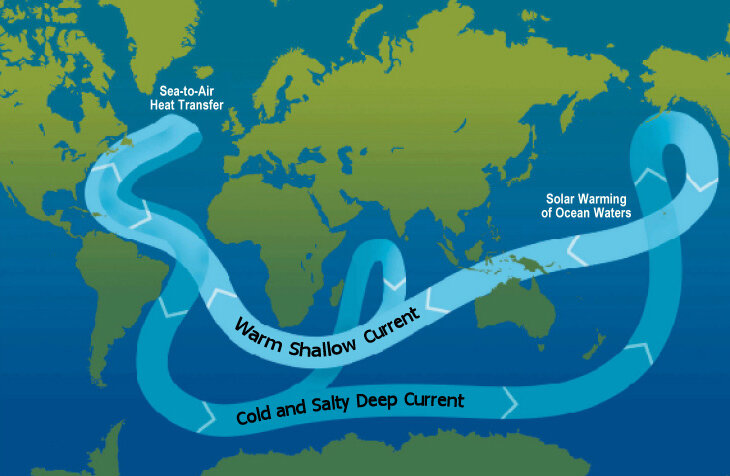
Cold, salty water is denser than warm, less salty water. This might seem like a small detail, but it's incredibly important. Denser water sinks, while less dense water rises. These differences in density are the primary engine driving the massive, slow-moving currents of the deep ocean, which act like a global conveyor belt transporting heat around the planet.
The Planet's Engine
The oceans play a critical role in regulating Earth's climate and supporting life. Because water can absorb a lot of heat without its own temperature changing much, the oceans act as a massive heat reservoir. They soak up solar energy, especially around the equator, and ocean currents transport this heat toward the poles. This process helps moderate global temperatures, making the planet more habitable.
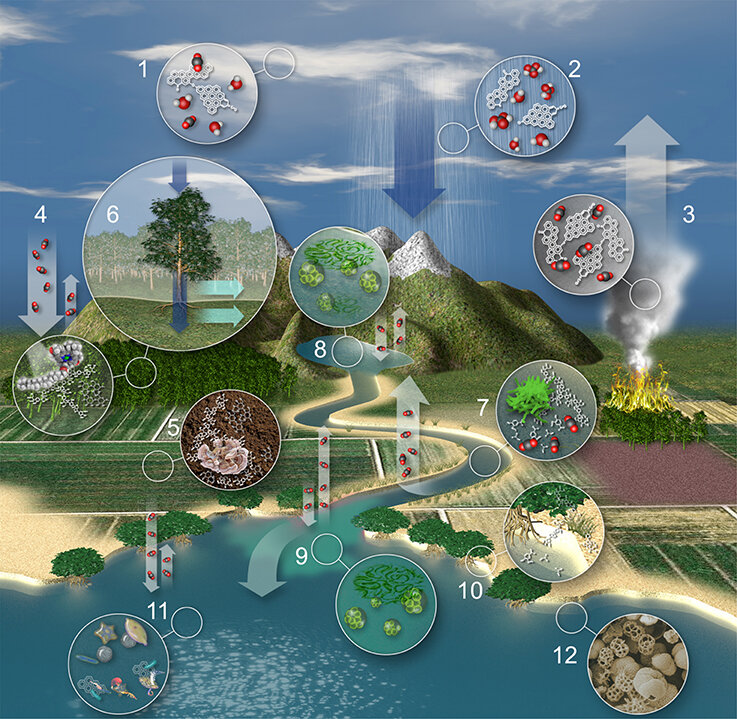
The ocean also plays a vital part in the carbon cycle. It absorbs about a quarter of the carbon dioxide that humans release into the atmosphere. Tiny marine organisms called phytoplankton use this carbon for photosynthesis, forming the base of the ocean food web. Without the oceans, Earth's climate would be far more extreme, and its ecosystems would look completely different.
Let's review some of the key terms we've covered.
Now, test your understanding of these foundational concepts.
What are the two primary factors that determine the density of seawater?
Approximately what percentage of the Earth's surface is covered by oceans?
Understanding these basics of the ocean's scale, composition, and function is the first step in appreciating its profound impact on our world.