The Vagina Explained
Vaginal Anatomy
The External Anatomy
Let's start with the parts you can see. The term for the external female genitals is the vulva. It's an umbrella term that covers several structures, each with its own role.
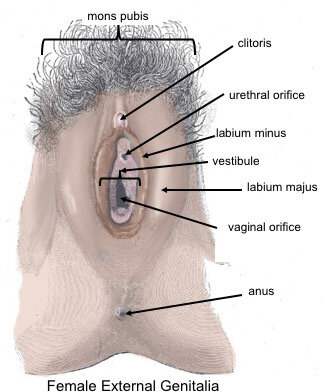
The most visible parts are the labia, which means "lips" in Latin. There are two sets. The outer, fleshier folds are the labia majora. They're covered with pubic hair after puberty and contain sweat and oil-secreting glands. Their main job is to protect the more delicate structures underneath.
Inside the labia majora are the labia minora, or inner lips. These folds are thinner, hairless, and more sensitive. They meet at the top to form a hood of skin over the clitoris, similar to the foreskin on a penis. The labia minora protect the openings of the urethra (where urine leaves the body) and the vagina.
vulva
noun
The external genital organs of a female, including the labia, clitoris, and the openings of the vagina and urethra.
The clitoris is located where the labia minora meet. While only a small part, the glans, is visible externally, the clitoris is a larger, complex structure that extends internally. It is composed of erectile tissue and is highly sensitive, containing thousands of nerve endings.
Inside the Body
Moving inward, we find the vaginal canal. This is a muscular tube, typically about 3 to 4 inches long, that connects the outside of the body to the cervix. It’s incredibly flexible and can stretch significantly. The walls of the vagina have folds of tissue called rugae, which allow it to expand during arousal and childbirth.
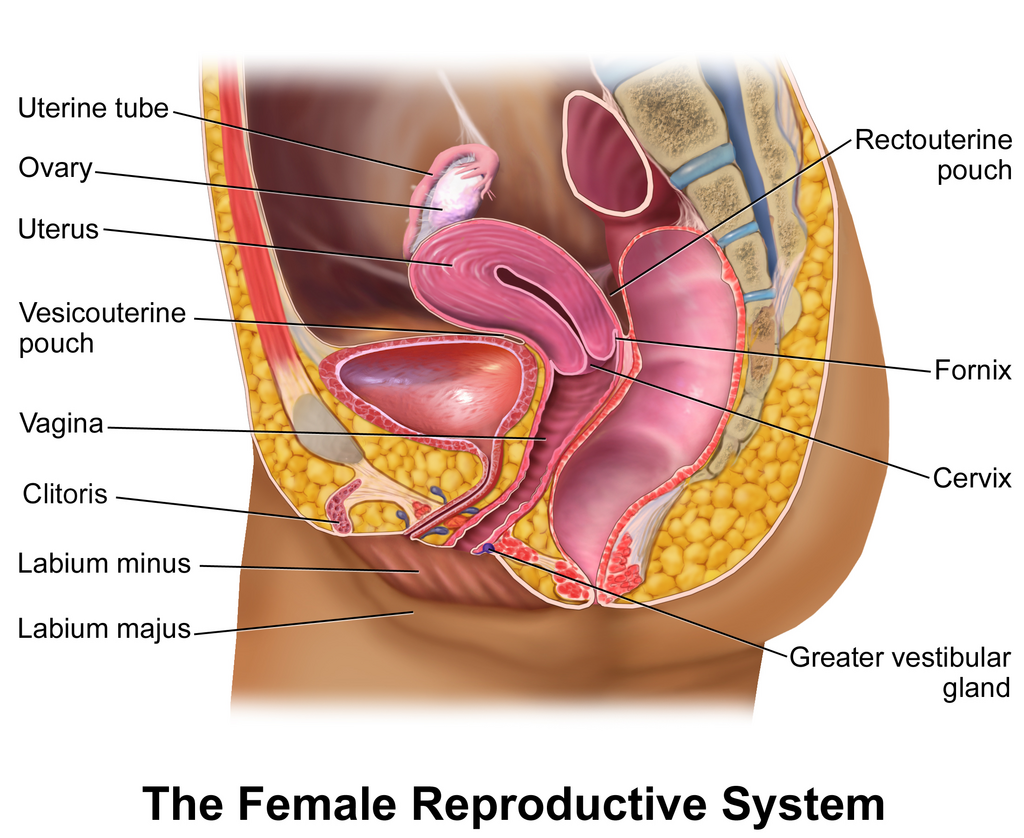
At the very top of the vaginal canal is the cervix, which is the lower, narrow part of the uterus. Think of it as a gateway. It has a tiny opening that allows sperm to enter the uterus and menstrual fluid to exit. The cervix plays a crucial role in pregnancy, staying firm and closed to protect the fetus, then softening and opening for delivery.
The vaginal canal isn't a hollow, open space. Its muscular walls are normally touching, only opening to accommodate something like a tampon or during intercourse.
The Neighborhood
The vagina doesn't exist in isolation. It's situated in a crowded neighborhood of other important organs. Understanding these relationships helps to picture the overall pelvic anatomy.
Immediately in front of the vagina is the bladder, which stores urine, and the urethra, the tube urine passes through. This close proximity is why pressure on the bladder can sometimes be felt through the vaginal wall.
Behind the vagina lies the rectum, the final section of the large intestine. Again, their shared wall is thin, which is why a doctor might perform a rectovaginal exam to feel for issues in either organ.
Above the vagina is the uterus, a pear-shaped organ where a fetus develops during pregnancy. The vagina connects directly to the cervix, the base of the uterus, creating a continuous pathway.
Now that we've covered the key structures, let's review with some flashcards.
Ready to test your knowledge? Let's see what you've learned.
What is the correct umbrella term for all of the external female genitals?
The labia minora meet at the top to form a protective hood over which highly sensitive structure?
Understanding this anatomy provides a foundation for knowing more about the body's functions and overall health. Each part has a specific place and purpose in a complex and interconnected system.