The Trinity Explained
Introduction to the Trinity
One God, Three Persons
The heart of Christian belief about God is a concept called the Trinity. It’s the idea that God is one being, yet exists as three distinct persons: the Father, the Son (Jesus Christ), and the Holy Spirit. This isn’t about three separate gods. It’s about one God in a mysterious, perfect unity.
Trinity
noun
The Christian doctrine that God exists as one being in three co-equal and co-eternal persons: the Father, the Son, and the Holy Spirit.
Thinking about the Trinity can be challenging. How can something be both one and three at the same time? Analogies often fall short, but a helpful way to start is to distinguish between what God is and who God is. The Father, Son, and Holy Spirit share the same divine nature—that's what they are. But they are distinct in their relationship to one another—that's who they are. Each is fully God, but each is also a distinct person.
This diagram helps visualize the relationships. The Father is God, the Son is God, and the Holy Spirit is God. However, the Father is not the Son, the Son is not the Holy Spirit, and the Holy Spirit is not the Father.
Finding the Trinity in Scripture
While the word "Trinity" doesn't appear in the Bible, Christians see the concept woven throughout its pages. In the Old Testament, there are hints of God's plurality. At creation, God says, "Let us make mankind in our image" (Genesis 1:26). This plural language, used by the one God, prompted early believers to reflect on the nature of God's being.
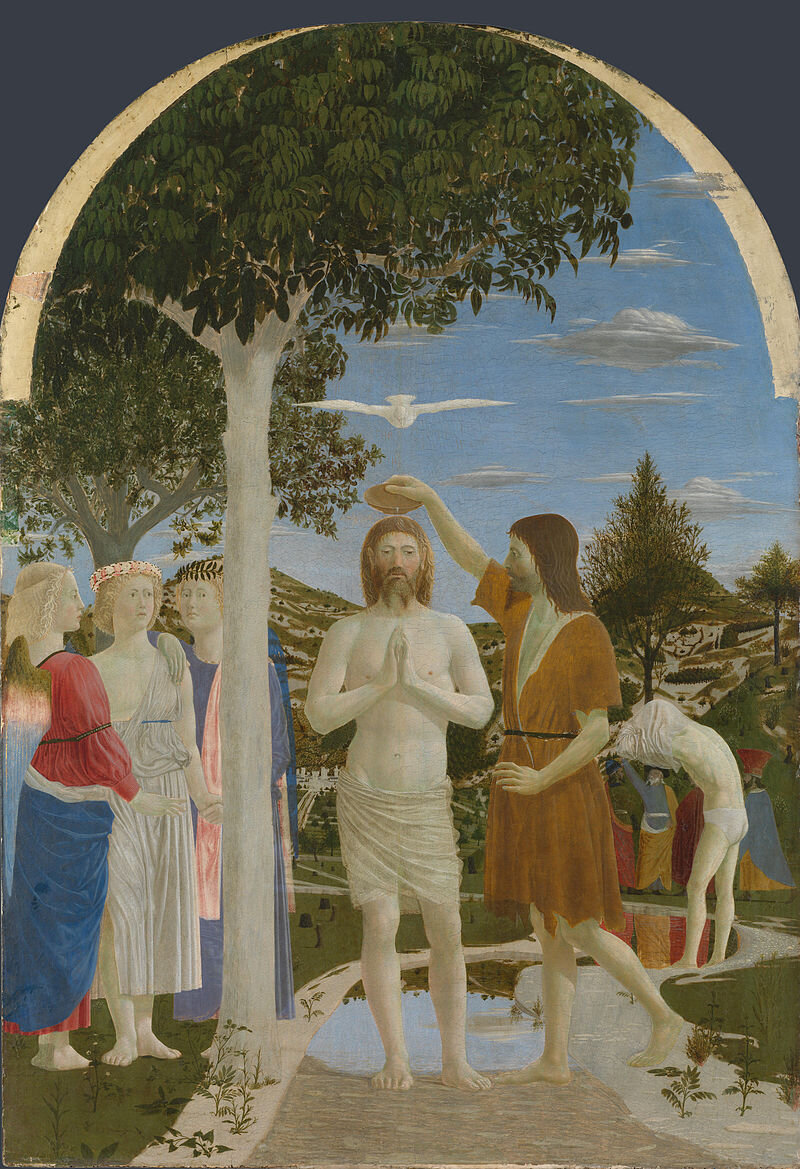
The New Testament provides a clearer picture. At the baptism of Jesus, all three persons of the Trinity are present and active. As Jesus (the Son) comes out of the water, the Holy Spirit descends like a dove, and a voice from heaven (the Father) says, "This is my Son, whom I love; with him I am well pleased" (Matthew 3:16–17).
Perhaps the most direct reference is the instruction Jesus gives his followers after his resurrection, known as the Great Commission.
"Therefore go and make disciples of all nations, baptizing them in the name of the Father and of the Son and of the Holy Spirit..." (Matthew 28:19).
Notice that Jesus says "name" (singular), not "names." This implies a shared identity and authority among the three distinct persons. They are one, unified being.
The Early Church's Understanding
The first Christians were devoutly monotheistic, meaning they believed in only one God, just as their Jewish ancestors did. But they also worshipped Jesus as divine and experienced the power of the Holy Spirit. The question became: how do we reconcile these truths? How can we affirm one God while also acknowledging the divinity of the Son and the Spirit?
The doctrine of the Trinity was their answer. It wasn't an invention, but an explanation of the reality they found in Scripture and experienced in their faith. Early Christian thinkers worked to find the right language to describe this mystery. Around the year 200, a church leader named Tertullian was the first to use the Latin word Trinitas (Trinity) to describe the concept of one God in three persons.
He is credited with being the first to use the Latin terms “Trinitas” (Trinity), “persona” (person), and “substantia” (substance) in a theological context.
These terms helped the church articulate that the Father, Son, and Holy Spirit are of one substance (substantia) but are three distinct persons (persona). This language provided a framework to talk about God in a way that was faithful to the whole of Scripture. It affirmed both God's oneness and the distinct, divine roles of the Father, Son, and Holy Spirit.
Before we review, let's take a moment for a quiz on what we've covered.
What is the central concept of the Christian doctrine of the Trinity?
True or False: The word "Trinity" is explicitly mentioned many times in the Bible.
The Trinity is a complex but central part of Christian faith. It describes a God who is both perfectly unified and profoundly relational, a community of love within the Godhead itself.