The Trials and Triumphs of Shaw's Saint Joan
Shaw's Historical Reinterpretation
Beyond the Saint
George Bernard Shaw had little interest in retelling a familiar story. When he tackled the legend of Joan of Arc, his goal wasn't to create a straightforward historical drama. He started with the official records of her 1431 trial, using them as a launchpad for a drama of ideas. Shaw saw the traditional portrayals of Joan, whether as a divine saint or a simple victim, as flat and uninteresting. He wanted to understand the woman behind the myth and the powerful forces that collided around her.
To Shaw, such interpretations oversimplify Joan’s story and don’t try to understand the institutional structures that informed Joan’s and her accusers’ ethical frameworks and, subsequently, influenced their actions.
This meant abandoning the usual stage conventions. In Saint Joan, there are no mustache-twirling villains. Her accusers, Bishop Cauchon and the Inquisitor, aren't evil men seeking to destroy a hero. Instead, Shaw presents them as intelligent, logical representatives of the established Church and feudal system. They see Joan's direct communication with God not as a miracle, but as a dangerous threat to the authority and order of their entire world. The conflict isn't between good and evil; it's an irreconcilable clash between individual genius and institutional power.
A Shavian Genius
For Shaw, Joan was a 'genius,' but not in the way we typically use the word. He defined a genius as someone with a powerful, practical intuition that allows them to see truths others cannot. This wasn't about divine visions in a mystical sense. Shaw rationalized her famous voices; he saw them as the manifestation of her own uncommon sense and brilliant ideas. Her 'voices' told her to crown the Dauphin and drive the English out of France because, in Shaw's view, these were the clear, logical steps needed to save the nation.
Genius
noun
In Shaw's view, a person of profound and practical insight who grasps reality more clearly than their contemporaries, often leading to conflict with established institutions.
This approach marks a deliberate shift from romanticism to realism. The romantic Joan is a vessel for God's will, whose miracles are literal and unexplained. Shaw's Joan is a pragmatic, strong-willed, and prodigiously talented young woman. Her success wasn't magic; it was the result of her ability to inspire and lead. She was, in Shaw's words, a 'galvanizer' of men.
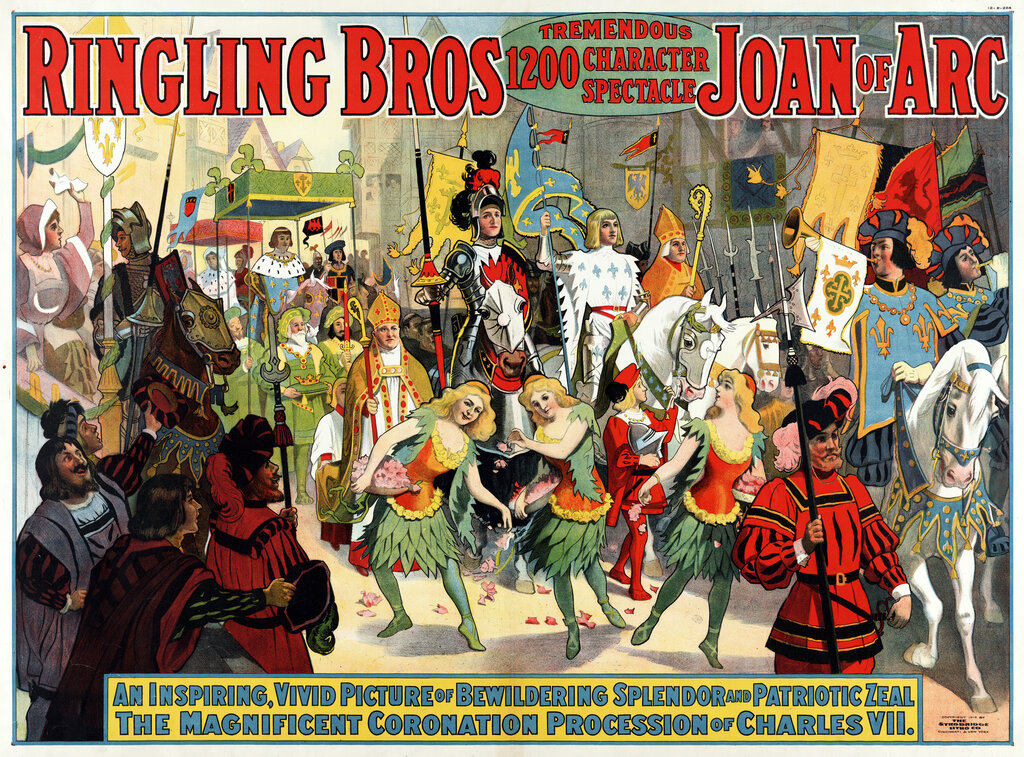
Think of her effect on the demoralized French army. Shaw suggests her confidence was so absolute, her vision so clear, that it became contagious. She convinced soldiers and captains that victory was not only possible but destined. This psychological impact, her sheer force of will, is Shaw's realistic explanation for her military triumphs. The 'miracle' was her personality, not a supernatural intervention.
Ideas on Trial
By grounding Joan's abilities in psychological realism, Shaw transforms her story. The play is no longer just about the fate of one young woman; it's about the birth of new ideas that threaten the old world order.
Joan's belief that she answered to God alone was a precursor to Protestantism, challenging the Church's role as the sole intermediary. Her loyalty to France above her feudal lord was an early form of nationalism, undermining the entire feudal system. Her accusers weren't just condemning her; they were trying to stamp out the dangerous ideas she represented.
Shaw's reinterpretation ensures that Joan's story remains profoundly relevant. He shows us that the conflict between individual conviction and the status quo is timeless, and that those who push humanity forward are often misunderstood and condemned by the very institutions they seek to save.
What did George Bernard Shaw use as the primary source material for his play Saint Joan?
In Saint Joan, how are Joan's accusers, like Bishop Cauchon and the Inquisitor, primarily portrayed?
By moving beyond a simple historical retelling, Shaw presents a more complex and enduring version of Joan's struggle.