The Tri-Modal Brain Network Explained
Introduction to Brain Networks
Your Brain is a Network
For a long time, scientists studied the brain by focusing on specific regions. One area was for vision, another for language, and so on. While true, this view is incomplete. It's like looking at a city and only studying the individual buildings. To understand how the city works, you need to see the roads, subways, and communication lines that connect everything.
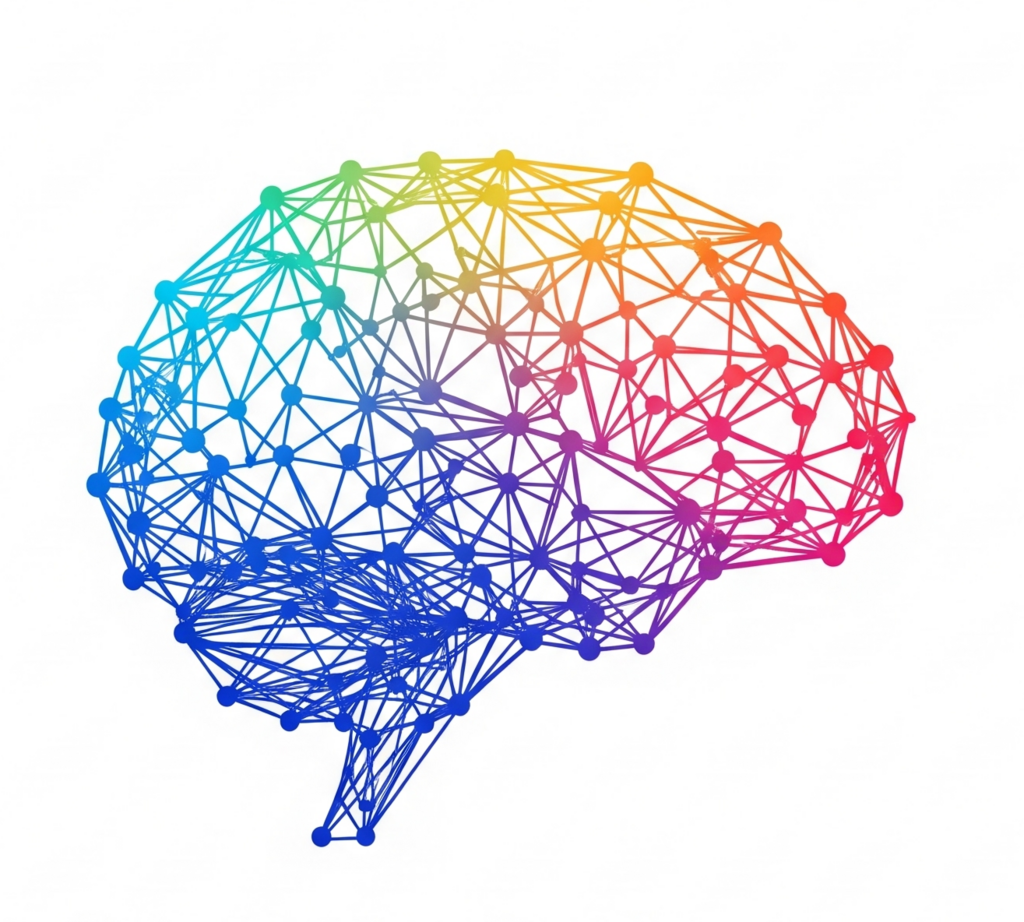
The brain works the same way. It's not just a collection of specialized parts; it's a deeply interconnected network. A brain network is a collection of different brain regions that are structurally connected and functionally linked, meaning they consistently activate together to perform a task. These connections, formed by bundles of nerve fibers, act like highways, allowing for rapid communication across distant areas of the brain.
Thinking, feeling, and acting aren't the products of single brain regions working in isolation. They emerge from the coordinated activity of multiple regions working together as a network.
Key Brain Networks
While there are many networks in the brain, neuroscientists have identified several major ones that are crucial for our daily mental life. Think of them as the brain's major highway systems. Here are a few examples:
-
Default Mode Network (DMN): This is your brain's “idle” state. It becomes active when your mind is wandering, daydreaming, remembering the past, or thinking about the future. It’s the network that hums along when you’re not focused on an external task.
-
Salience Network (SN): This network acts as a switch. It constantly monitors your internal state and the external environment for things that are important, or “salient.” When it detects something that needs your attention—like your name being called from across the room—it helps switch your brain's resources to focus on it.
-
Executive Control Network (ECN): This is your brain’s command center for focused tasks. It activates when you need to concentrate, make decisions, solve problems, or override a habitual response. It’s what you’re using right now to read and understand this text.
Networks in Action
These networks are constantly interacting, and their balance is key to healthy cognition. Imagine you are trying to solve a puzzle. Your Executive Control Network is in high gear, focusing your attention and planning your next move. Meanwhile, your Default Mode Network is suppressed—if it weren't, your mind would wander and you'd lose focus.
Suddenly, the fire alarm goes off. The Salience Network detects this critical, or salient, event. It acts like a circuit breaker, interrupting the ECN's focus on the puzzle and grabbing your brain's attention. Your focus immediately shifts from the puzzle to the alarm, allowing you to react to the potential danger.
This dynamic interplay between networks allows us to flexibly navigate a complex world, shifting from internal thoughts to external tasks as needed. Understanding the brain as a network of networks provides a powerful framework for comprehending not just simple tasks, but the very nature of human thought and behavior.
Let's review the main ideas.
What is the primary role of the Executive Control Network (ECN)?
You are sitting in a quiet room, letting your mind drift and think about your plans for the weekend. Which brain network is most active in this state?
This network-based view is fundamental to modern neuroscience and helps explain how our brains achieve so much with remarkable efficiency.