The Tragedy of Oedipus
Introduction to Greek Mythology
More Than Just Stories
Before science could explain the seasons or the sunrise, people told stories. Greek mythology was the ancient Greeks' way of making sense of the world. These weren't just simple tales; they were a complex web of narratives that explained everything from natural disasters to the complexities of human emotion.
mythology
noun
A collection of myths, especially one belonging to a particular religious or cultural tradition, used to explain the world and a culture's own customs and beliefs.
Myths were deeply woven into the fabric of Greek society. They formed the basis of religious rituals, inspired art and literature, and provided a shared cultural identity. When a Greek farmer prayed for a good harvest, they were thinking of Demeter, the goddess of agriculture. When a sailor faced a storm, they might blame the wrath of Poseidon, god of the sea. These stories provided a framework for understanding life's unpredictability.
The Major Players
At the heart of Greek mythology is a sprawling family of gods and goddesses who lived atop Mount Olympus. They were powerful and immortal, but they were far from perfect. They were driven by the same jealousy, pride, and passion that fueled human drama, which made their stories so compelling.
Greek mythology boasts a rich and complex pantheon of gods and goddesses, each with unique powers, personalities, and domains.
The main rulers were the Twelve Olympians. While the exact list can vary slightly, it generally includes Zeus, the king of the gods, his wife Hera, and their siblings and children.
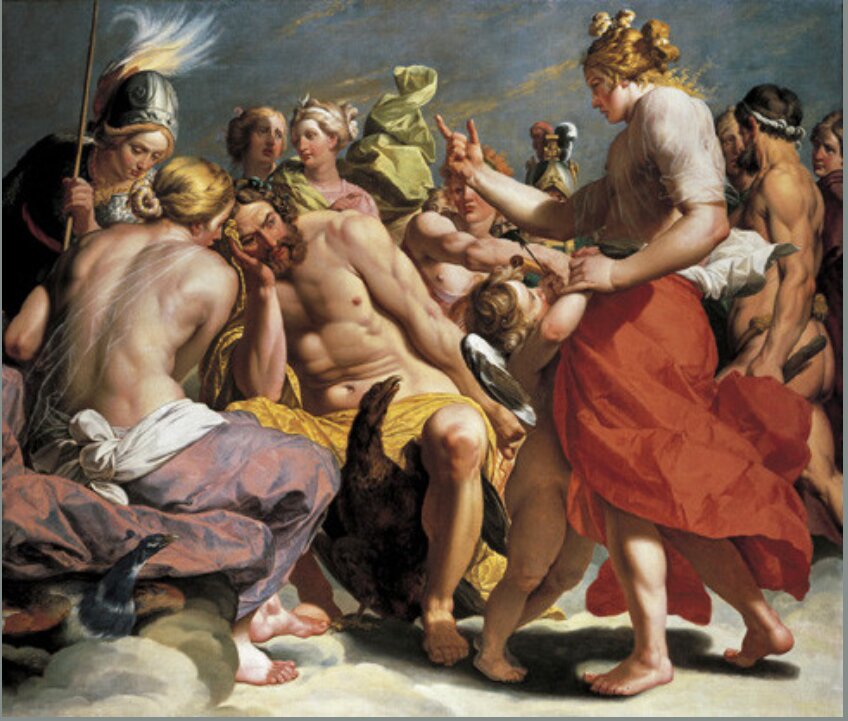
Here are some of the key figures you'll encounter again and again:
| God/Goddess | Domain | Roman Name |
|---|---|---|
| Zeus | King of the gods, sky, and thunder | Jupiter |
| Hera | Queen of the gods, marriage | Juno |
| Poseidon | God of the sea and earthquakes | Neptune |
| Hades | King of the Underworld | Pluto |
| Athena | Goddess of wisdom and warfare | Minerva |
| Apollo | God of music, arts, and prophecy | Apollo |
| Artemis | Goddess of the hunt and the moon | Diana |
| Ares | God of war | Mars |
| Aphrodite | Goddess of love and beauty | Venus |
| Hermes | Messenger of the gods | Mercury |
| Hephaestus | God of fire and metalworking | Vulcan |
| Demeter | Goddess of the harvest | Ceres |
Common Threads
As you explore Greek myths, you'll start to notice recurring themes. These ideas reveal what the ancient Greeks valued and feared.
One central theme is the inescapable nature of fate. Mortals and even gods often try to defy prophecies, but their actions ironically end up causing the very future they sought to avoid.
Another major theme is hubris, or excessive pride. Mortals who became too arrogant and challenged the gods were always punished for their presumption. This served as a cautionary tale about knowing one's place in the cosmic order. The gods demanded respect, and nemesis, or divine retribution, was swift for those who forgot it.
Finally, the relationship between gods and mortals is a constant source of drama. The gods frequently meddled in human affairs, helping their favorites and punishing their enemies. Heroes were often born from unions between a god and a mortal, giving them extraordinary abilities but also placing them at the center of divine conflicts.
Let's review some of these key figures and concepts.
Ready to test your knowledge?
What was the main function of mythology in ancient Greek culture?
The Greek gods were depicted as perfect, flawless beings who always acted with moral purity.
Understanding these core elements—the purpose of myths, the key deities, and their common themes—provides the foundation for exploring any specific story from this rich tradition.