The Tomahawk Cruise Missile
Introduction to Cruise Missiles
What Is a Cruise Missile?
A cruise missile is an unmanned, self-propelled guided vehicle that sustains flight through aerodynamic lift for most of its flight path. Think of it as a small, pilotless jet airplane designed for a one-way trip. Unlike ballistic missiles that follow a high, arching trajectory, cruise missiles fly low to the ground, hugging the terrain to avoid detection by radar.
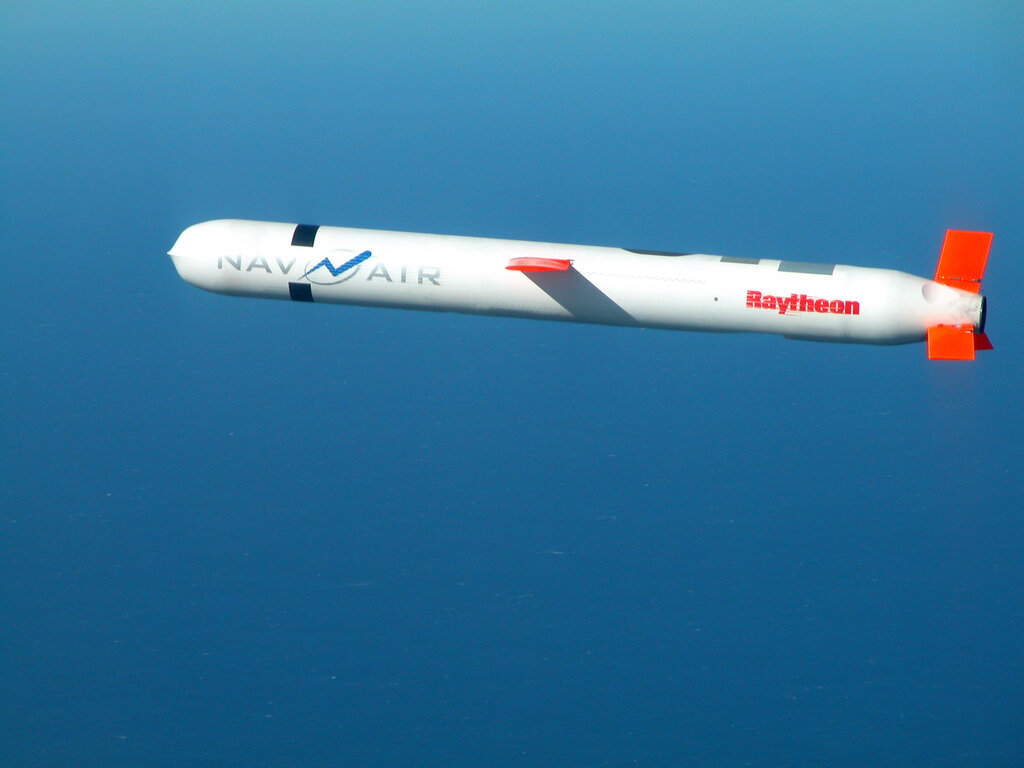
Their key characteristics are precision, range, and stealth. They typically travel at subsonic speeds, which allows them to fly more efficiently over long distances. Their ability to fly low and follow a pre-programmed path makes them incredibly accurate and difficult to intercept. They are designed to deliver a warhead to a specific target with a high degree of precision.
A Brief History
The concept isn't new. The earliest ancestor of the modern cruise missile was the German V-1 flying bomb used during World War II. It was a simple, pulsejet-powered weapon aimed at large targets like cities. While groundbreaking, its guidance system was primitive, making it notoriously inaccurate.
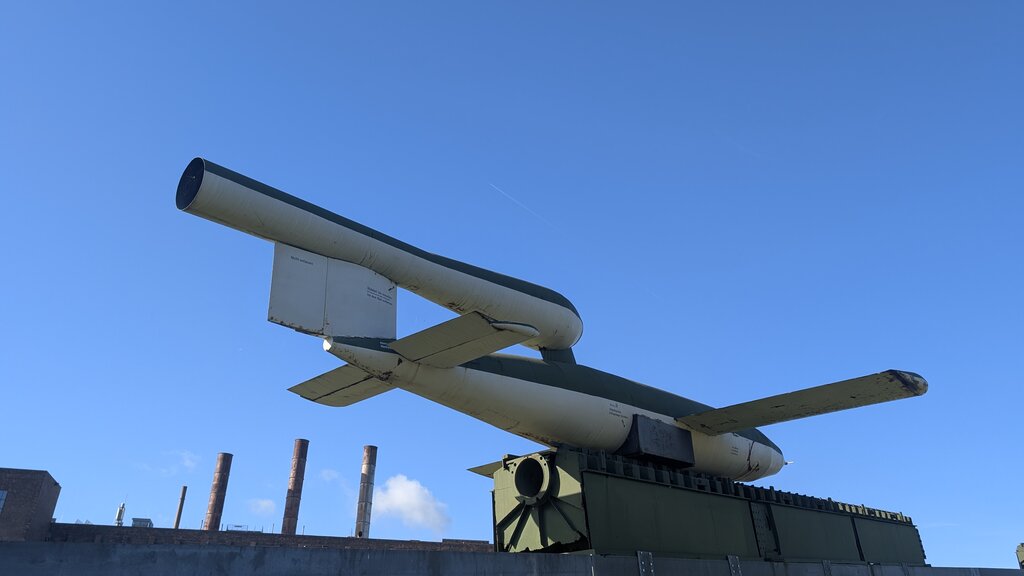
During the Cold War, the idea was refined. The United States and the Soviet Union developed more advanced cruise missiles as a way to deliver nuclear warheads while avoiding increasingly sophisticated air defenses. The real revolution came with the advent of miniaturized jet engines, compact and powerful computers, and satellite navigation. These technologies transformed cruise missiles from blunt instruments into surgical strike weapons.
Types and Propulsion
Cruise missiles can be categorized based on how they are launched, their range, and their payload. This versatility allows them to be used in many different military scenarios.
| Category | Types | Description |
|---|---|---|
| Launch Platform | Air-Launched (ALCM) | Fired from aircraft, extending the aircraft's strike range. |
| Ground-Launched (GLCM) | Fired from mobile launchers or fixed sites on land. | |
| Sea-Launched (SLCM) | Fired from surface ships or submarines. | |
| Range | Short, Medium, Long | Ranges can vary from under 300 km to over 2,500 km. |
| Payload | Conventional, Nuclear | Can carry high explosives for tactical targets or nuclear warheads for strategic deterrence. |
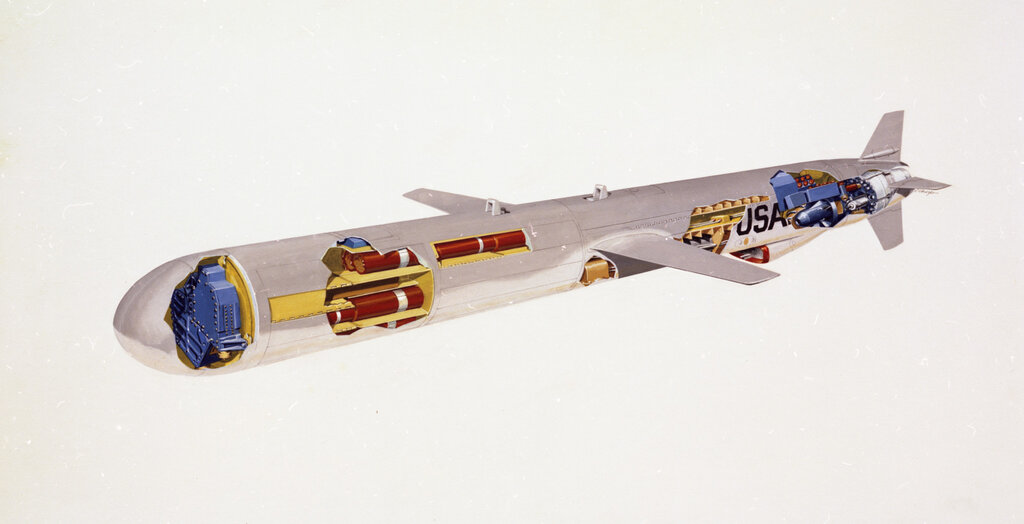
Most modern cruise missiles are powered by small, efficient turbofan or turbojet engines. These are essentially miniature jet engines that allow the missile to fly long distances at a constant speed, much like a commercial airliner. For launch, especially from submarines or ground launchers, a solid-fuel rocket booster is often used. This booster provides the initial thrust to get the missile into the air and up to speed before the main jet engine takes over.
Guidance and Navigation
The magic of a cruise missile is in its ability to navigate precisely to a target hundreds or even thousands of miles away. This is achieved through a combination of sophisticated guidance systems that work together.
Inertial Navigation System (INS)
noun
A self-contained navigation technique in which measurements provided by accelerometers and gyroscopes are used to track the position and orientation of an object relative to a known starting point.
The INS is the missile's internal compass. It knows where it started and continuously calculates its position, velocity, and orientation without needing any external signals. However, over a long flight, small errors in the INS can add up.
To correct for this drift, other systems are used. One of the most important is Terrain Contour Matching (TERCOM). Before the mission, a 3D map of the missile's flight path is loaded into its memory. During flight, a downward-looking radar altimeter measures the elevation of the ground below. The missile compares this real-time data to its stored map, allowing it to figure out its exact location and adjust its course. It's like navigating by feeling the shape of the landscape.
Many modern cruise missiles also incorporate the Global Positioning System (GPS) for highly accurate navigation anywhere in the world. For the final attack phase, some missiles use an optical or infrared sensor. This system, known as Digital Scene Matching Area Correlator (DSMAC), compares a live image from its camera with a stored satellite image of the target area, allowing it to identify and strike a specific feature, like a particular building or even a window.
Ready to test your knowledge?
What is a primary characteristic that distinguishes a cruise missile from a ballistic missile?
The German V-1 flying bomb from World War II is considered an early ancestor of the modern cruise missile.
This combination of low-altitude flight, long range, and multi-layered guidance makes the cruise missile a powerful and flexible tool in modern military strategy. They set the stage for advanced systems like the BGM-109 Tomahawk.