The Thirty Years' War
Systemic Triggers
The Unraveling of a Fragile Peace
The Peace of Augsburg in 1555 was meant to end religious conflict within the Holy Roman Empire. It established a principle known as cuius regio, eius religio—whose realm, his religion. This allowed the prince of each state to determine whether his lands would be Lutheran or Catholic. On the surface, it seemed like a practical solution. In reality, it was a political band-aid on a deep wound.
The treaty had a critical flaw: it only recognized Lutheranism and Catholicism. It completely ignored the growing influence of Calvinism, which had become a major religious and political force in states like Bohemia, the Palatinate, and Brandenburg. This omission created a brittle geopolitical system. When a Calvinist ruler came to power, or a significant Calvinist minority emerged, the legal framework of the Empire had no way to accommodate them. This turned religious disputes into constitutional crises.
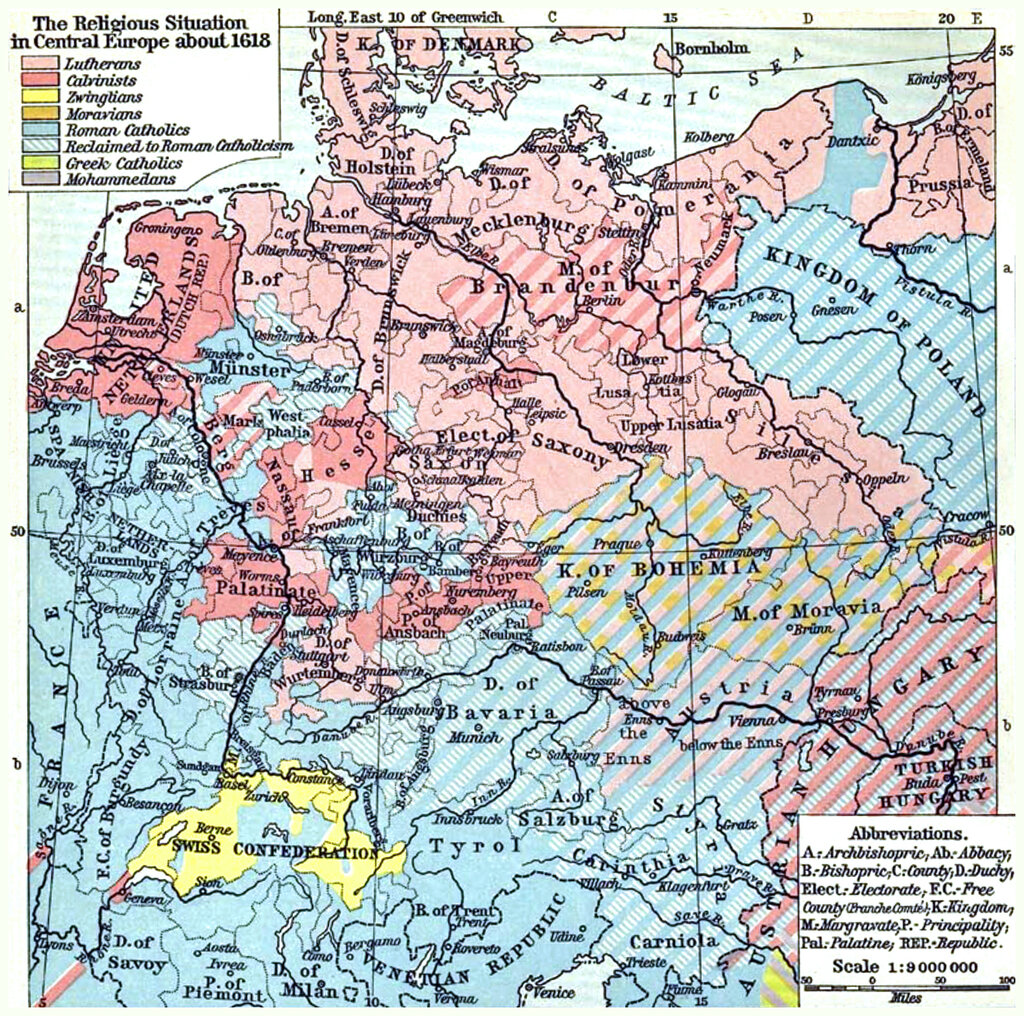
Bohemia was a prime example of this instability. With a history of religious dissent tracing back to the Hussite movement, it had a powerful Protestant nobility. In 1609, Emperor Rudolf II, needing their support, signed the (Majestätsbrief). This was a landmark document that granted extensive religious freedom to both nobles and city dwellers in Bohemia, protecting Protestants from the Catholic Habsburg rulers.
A Choice Between Faith and Fealty
The fragile peace depended entirely on the emperor's willingness to uphold the Letter of Majesty. That willingness vanished with the rise of Ferdinand II. A devout Catholic educated by Jesuits, Ferdinand became King of Bohemia in 1617. He was a champion of the Counter-Reformation and viewed the religious diversity of Bohemia as a threat to his goal of a centralized, Catholic state. His ascension set the stage for a direct confrontation.
Ferdinand began to systematically undermine the rights granted by the Majestätsbrief. He installed Catholic officials in key government posts and blocked the construction of new Protestant churches. The breaking point came when royal officials ordered the cessation of Protestant chapel construction on what they argued was royal land, a direct violation of the Protestants' interpretation of the Letter of Majesty. For the Bohemian estates, this was not just a religious slight; it was an attack on their established rights and autonomy.
On May 23rd, 1618, in the growing climate of mistrust and with the smell of rebellion in the air, two of Matthias’ representatives arrived at the Chancellory in Prague to meet with several Bohemian protestant nobles assembled there.
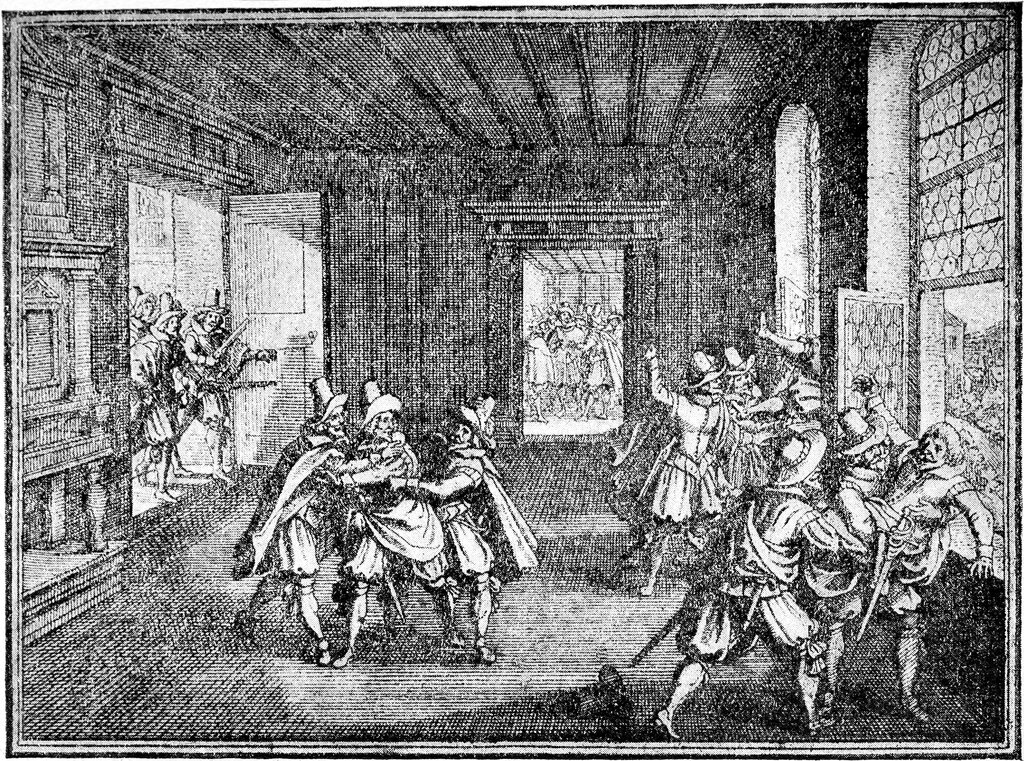
The confrontation was explosive. An assembly of furious Protestant nobles marched to Prague Castle to confront two of Ferdinand's governors, Vilem Slavata and Jaroslav Bořita. After a heated argument, the nobles seized the two governors and their secretary and threw them from a third-story window. This dramatic act, known as the Second Defenestration of Prague, was a symbolic rejection of Habsburg authority.
From Local Spark to Systemic Fire
The Defenestration of Prague was more than just an isolated revolt; it was a phase transition. The long-suppressed tensions within the Holy Roman Empire's rigid religious-political structure finally boiled over. The was the spark that ignited a regional conflict and, eventually, a continental war. By deposing Ferdinand and offering the crown to the Calvinist Elector Frederick V of the Palatinate, the Bohemian estates internationalized the crisis. They forced other powers to choose sides, transforming a local rebellion into a systemic war.
The failure of the Peace of Augsburg created a system so brittle that a single act of defiance in Prague could bring it crashing down. The conflict demonstrated that religious toleration could not be selectively applied. Without a framework to manage religious pluralism and protect minority rights, local disputes were destined to escalate, drawing in neighboring states through a web of alliances and religious loyalties. The stage was set for thirty years of devastating warfare.
What was the primary weakness of the Peace of Augsburg (1555) that contributed to future conflicts in the Holy Roman Empire?
The principle of cuius regio, eius religio established by the Peace of Augsburg meant that the religion of a state was determined by its emperor.