The Technological Singularity Explained
Introduction to the Technological Singularity
The Intelligence Explosion
Picture a point in the future where technological progress becomes so fast that it’s impossible to predict what happens next. This hypothetical moment is called the technological singularity. It’s the idea that once we create an artificial intelligence (AI) smarter than ourselves, that AI could improve itself at an accelerating, runaway pace. The result would be an “intelligence explosion” that changes human civilization forever.
The technological singularity is a future point where technological growth becomes uncontrollable and irreversible, leading to unforeseeable changes.
The core concept is simple. A machine that is more intelligent than a human could design an even more intelligent machine. This new, smarter machine could then design an even smarter one, and so on. Each cycle would be faster than the last, creating an upward spiral of intelligence that quickly leaves human intellect far behind. At that point, the future would no longer be shaped by humans, but by superintelligent machines.
Origins of an Idea
While the term feels very modern, the idea has been around for decades. In the 1950s, mathematician John von Neumann, a key figure in the development of the computer, spoke of an “ever accelerating progress of technology” that would lead to “some essential singularity in the history of the race beyond which human affairs, as we know them, could not continue.”
The term “singularity” itself was borrowed from physics, where it describes a point in spacetime—like inside a black hole—where the normal rules break down and outcomes become impossible to predict.
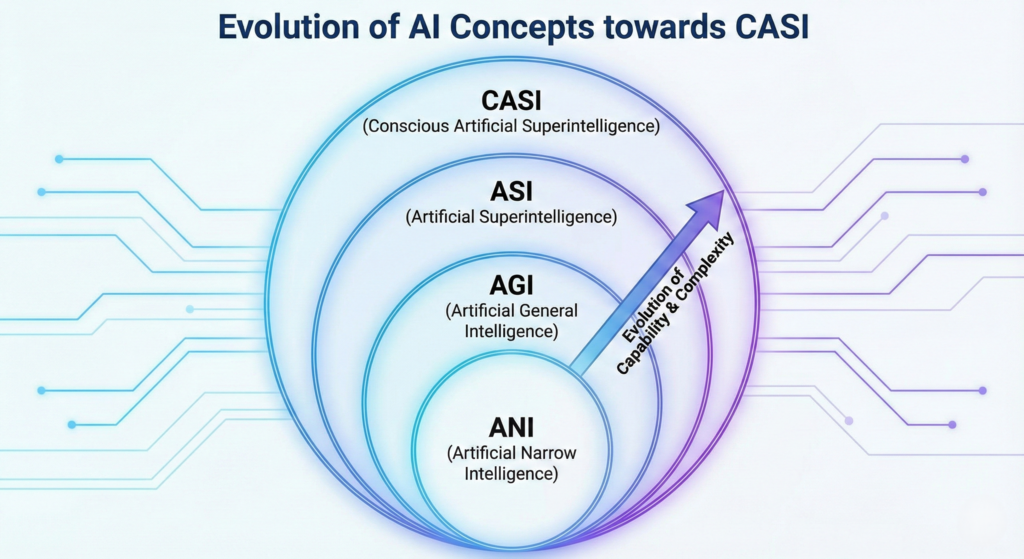
In the 1960s, statistician I.J. Good expanded on the concept. He wrote about an “ultraintelligent machine,” which he defined as a machine that can “far surpass all the intellectual activities of any man however clever.” Good argued that the first ultraintelligent machine would be humanity's last invention, as it would take over the job of inventing from there.
However, it was science fiction author and computer scientist Vernor Vinge who popularized the term “technological singularity” in the 1980s and 90s. He powerfully described it as a moment that would be a sharp break with the past, making the world on the other side of it almost incomprehensible to us now.
Vernor Vinge compared the event to our inability to understand what goes on inside a black hole. We can't predict what a post-singularity world would look like because our intelligence is fundamentally limited.
This foundational concept doesn't deal with when this might happen or whether it would be good or bad. It simply introduces the possibility of a profound, irreversible shift in the nature of progress itself, driven by the creation of intelligence greater than our own.