The Sweet Science of Boxing
Boxing Origins
Ancient Roots
Fist-fighting as a sport isn't a modern invention. The earliest traces of boxing date back over 5,000 years to Sumerian carvings in present-day Iraq. Ancient Egyptian reliefs from around 1350 BC show both fighters and spectators, suggesting organized bouts. The sport eventually found its way into the ancient Greek Olympic Games in 688 BC, where it was a brutal, respected event.
Early Greek boxing was far more dangerous than what we see today. Fighters wrapped their hands in leather thongs, sometimes studded with metal, designed to inflict maximum damage. There were no rounds and no weight classes. A fight only ended when one man was knocked out or admitted defeat. It was a raw test of endurance and toughness.
The Bare-Knuckle Era
After the fall of the Roman Empire, prize fighting largely disappeared for centuries. It reemerged in 17th-century England, taking the form of bare-knuckle contests. These early fights were chaotic and often brutal, with very few rules. They were held in taverns, fields, or any open space that could draw a crowd. The sport's popularity grew, and with it came the need for champions.
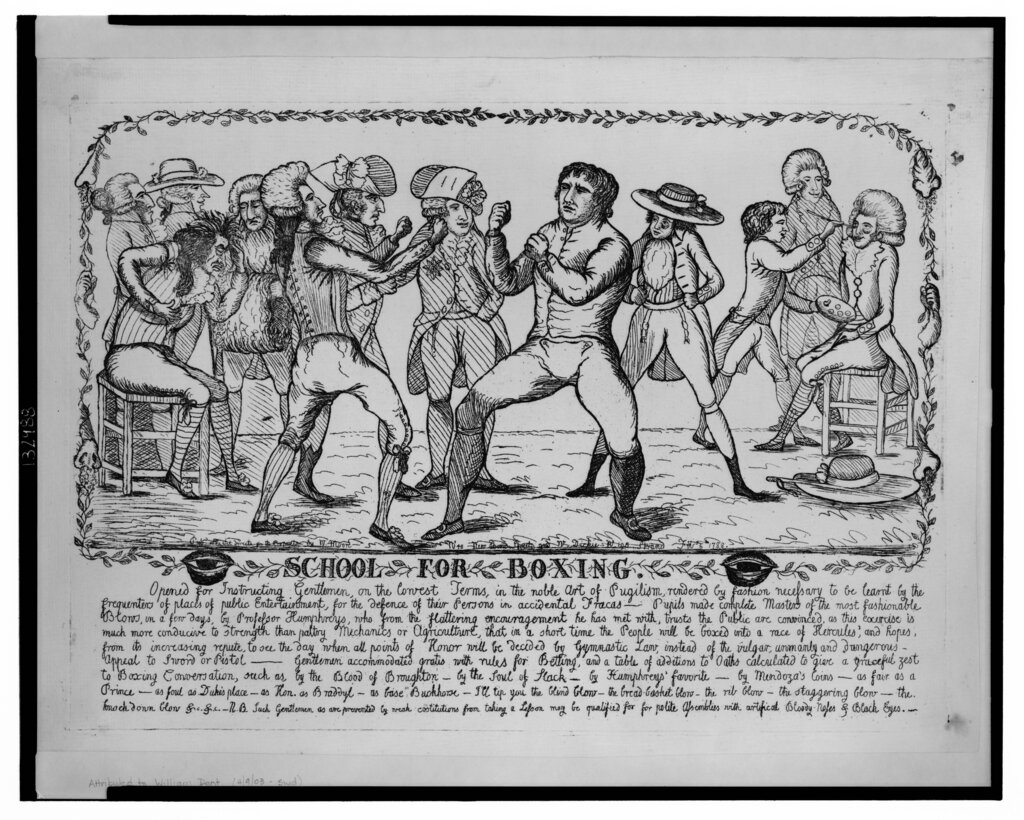
James Figg is widely considered the first heavyweight champion of England, a title he claimed in 1719 and held for over a decade. Figg wasn't just a boxer; he was a master of self-defense who also taught fencing and cudgeling. He opened an amphitheater in London where he staged fights and trained aspiring pugilists. By promoting events and teaching his craft, Figg helped elevate boxing from a back-alley brawl to a spectator sport.
The First Rules
While Figg popularized boxing, one of his students, Jack Broughton, gave it structure. Broughton was a formidable champion himself, but a tragic event in 1741 changed the course of the sport. He fought a match against George Stevenson, who died from his injuries a few days later. Deeply affected by the death, Broughton recognized the need for rules to protect fighters.
In 1743, Broughton introduced a set of rules that would govern boxing for nearly a century. They were simple, but revolutionary for their time.
Broughton's rules established a few key principles:
- A square yard was marked in the middle of the stage. After a knockdown, each fighter had 30 seconds to return to their side of the square.
- Hitting an opponent who was down was forbidden.
- Only the fighters and their seconds were allowed on the stage.
- Wrestling holds were limited to above the waist.
These rules didn't eliminate the brutality of bare-knuckle boxing, but they introduced a sense of fair play and basic safety measures. They created a clear distinction between a fighter being knocked down and being knocked out. Broughton also invented "mufflers," a forerunner to modern boxing gloves, for use in sparring to prevent injuries in his gym.
The efforts of pioneers like James Figg and Jack Broughton laid the groundwork for modern boxing. They took a chaotic pastime and transformed it into a structured sport, setting the stage for the rules and regulations that would follow.
The earliest known evidence of boxing as an organized sport comes from carvings found in the ancient civilization of:
What was the primary contribution of James Figg to the sport of boxing in the 18th century?