The Strategic Pivot: Mental Models for AI Decision Making
Bayesian Updating Fundamentals
Beyond a Simple Yes or No
You're already familiar with Instrumented Exposure Loops (IELs): you frame a problem, expose it to an AI, and observe the results to update your strategy. But the real power of the 'Update' step isn't just deciding if your initial idea was right or wrong. It's about adjusting your confidence based on the strength of the feedback you receive.
Instead of treating feedback as a binary switch, we can think more like a statistician. This is where Bayesian updating comes in. It provides a mathematical framework for refining a belief when you get new evidence. Every loop becomes a chance to get a little less wrong, moving from a hunch to a data-informed probability.
The core of Bayesian thinking (or Bayesian updating, as it can be called) is this: given that we have limited but useful information about the world, and are constantly encountering new information, we should probably take into account what we already know when we learn something new.
Your Starting Bet: The Prior
Every strategy begins with an assumption. This initial belief, before you've gathered new evidence, is your Prior. It’s your starting point, your best guess based on existing knowledge. It isn't just the strategy itself; it's the degree of confidence you have in it.
For example, let's say you believe that a formal tone in customer support emails increases user satisfaction. You're not 100% certain, but based on past experience, you feel pretty confident. You might quantify this belief as a 70% probability. This is your Prior. In Bayesian terms, we'd write this as , where A is the hypothesis "A formal tone improves satisfaction."
Prior
noun
An initial belief about the probability of an event or hypothesis, formulated before new evidence is considered.
This isn't a random guess. It’s an explicit statement of your current model of the world. By putting a number on it, you create a baseline that can be precisely adjusted. This is the first step in moving from vague intuition to a measurable, updatable strategy. This concept is named after , an 18th-century statistician and minister.
Weighing the New Evidence
Next, you run your IEL. You might ask an AI to analyze 100 emails from your most satisfied customers. The AI reports back that 80% of those emails actually used an informal tone. This new information is your Evidence.
The key is to evaluate how likely this evidence is, given your initial hypothesis. This is called the Likelihood. It connects your Prior belief to the data you just observed. In our example, the evidence (80% informal tone) directly contradicts our hypothesis that a formal tone is better. This means the likelihood of seeing this evidence, if our hypothesis were true, is low.
This step forces you to confront your assumptions with data. You're not just collecting feedback; you're measuring how well that feedback aligns with your starting belief. This is the core of the in statistics, which is a cornerstone of how many machine learning models learn from data.
A simple linear loop might just conclude: "Formal tone is wrong." A weighted feedback loop asks: "How much should this new evidence shake my confidence in the formal tone strategy?"
Updating Your Beliefs
Now you combine your Prior with your new Evidence. The result is your Posterior—an updated, more refined belief. This is the goal of the loop: to arrive at a new probability that reflects what you've learned.
The calculation itself is done using a formula that mathematically combines your prior belief with the likelihood of your new evidence.
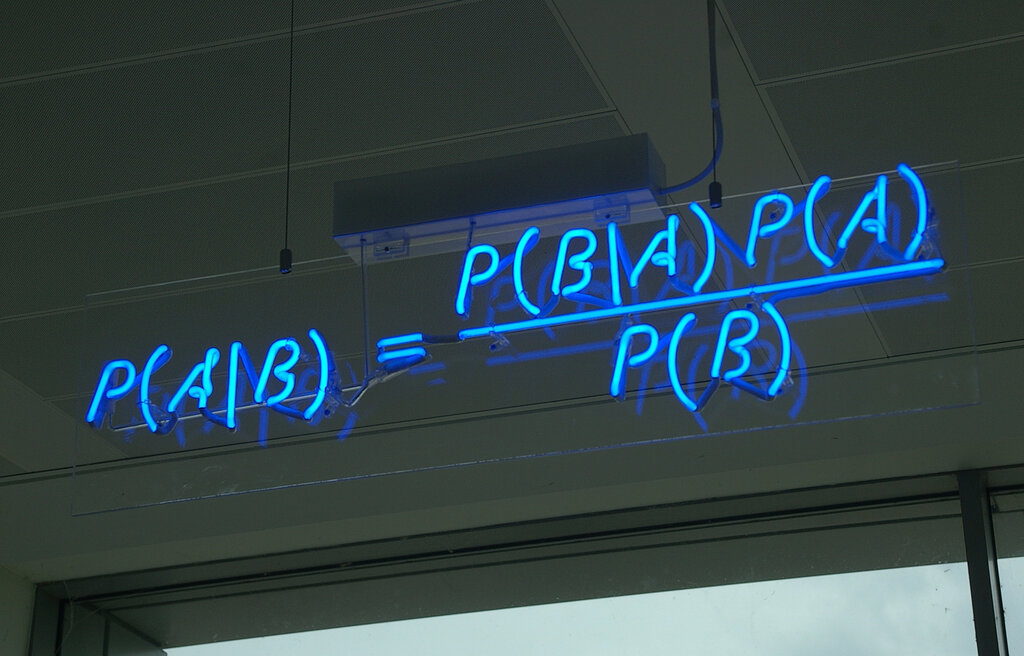
In our example, the strong evidence for an informal tone would significantly lower the probability of our initial hypothesis. Our Posterior belief—say, —would reflect a major shift. We've moved from being 70% confident that a formal tone is best to being only 25% confident.
This new Posterior doesn't become dogma. It becomes the Prior for your next IEL. This iterative process of updating your beliefs is how you systematically refine your strategy, loop after loop.
In the context of Bayesian updating, what is the term for your initial degree of confidence in a hypothesis before you gather new evidence?
You start an IEL with a strong belief (a high Prior probability) that using complex vocabulary in an AI prompt yields more creative outputs. After running an experiment, the AI consistently produces more creative results with simpler language. What is the most likely outcome of this IEL?
By applying this framework, you transform feedback from a simple judgment into a weighted input. Each cycle gives you a more accurate map of reality, allowing you to make smarter, data-driven decisions.