The Story of Japan
Jomon and Yayoi Periods
The Age of Rope Designs
Japan's story begins long before written records. For thousands of years, during a period known as the Jomon, the islands were home to a sophisticated hunter-gatherer culture. This era, stretching from roughly 14,000 to 300 BCE, gets its name from the distinctive pottery its people created.
Living in small communities, often in pit dwellings, the Jomon people were expert foragers. They hunted deer and boar, fished in the rich coastal waters, and gathered nuts, berries, and edible plants. While they didn't farm in the modern sense, they managed their environment, creating a stable lifestyle that lasted for millennia.
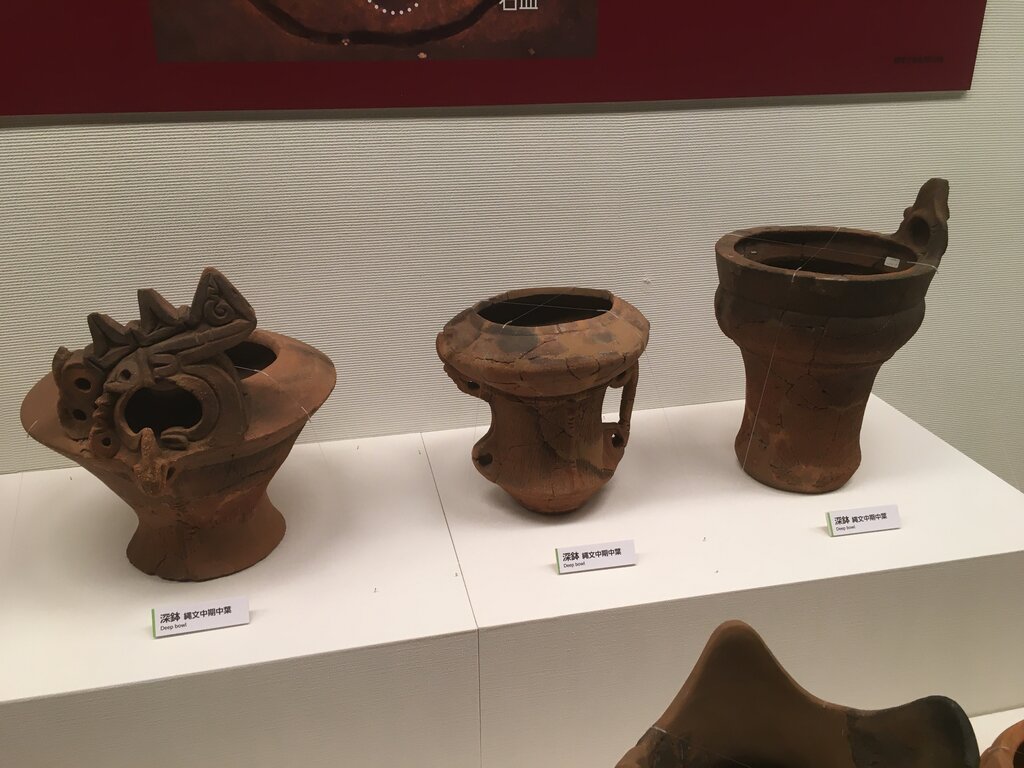
The rope designs that decorate the pottery are where the Jōmon era gets its name: 縄文, the Chinese characters that represent Jōmon, literally read ‘rope design’.
The pottery itself is remarkable. Jomon pots are some of the oldest in the world, initially simple but growing incredibly ornate over time. They were used for cooking, storage, and possibly for rituals.
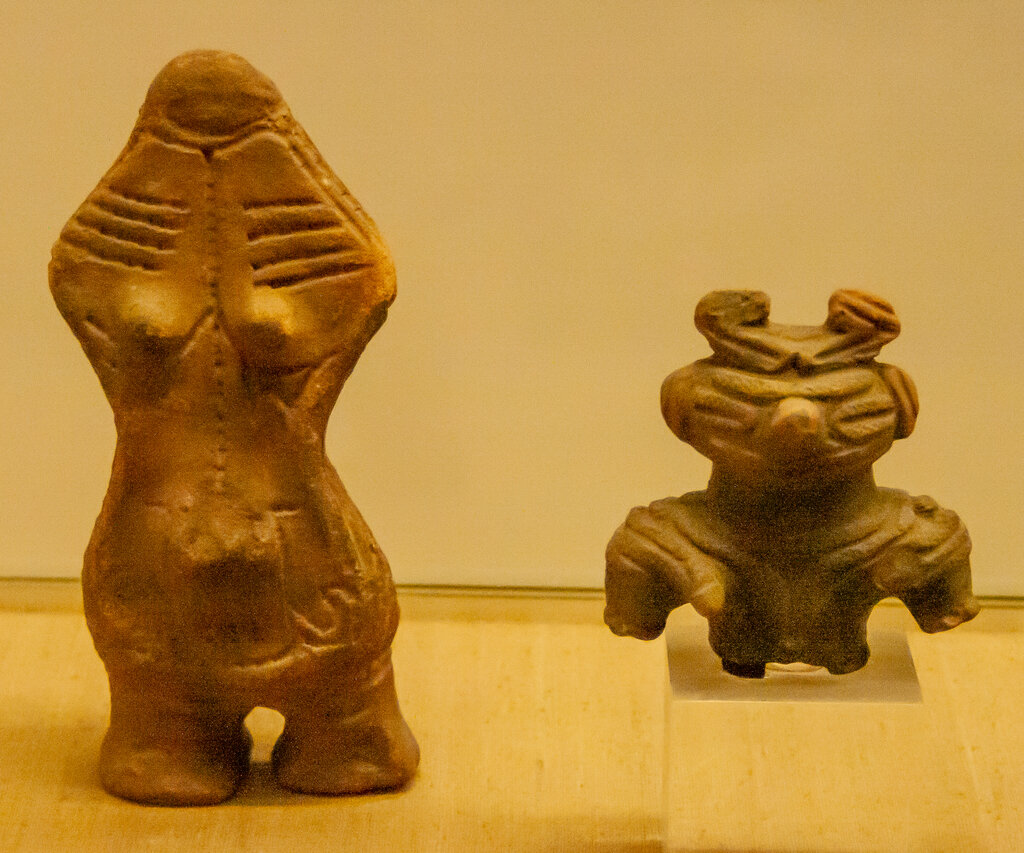
Spiritual life was deeply connected to nature. The Jomon people created mysterious clay figurines known as dogu. These figures, often depicting female forms with exaggerated features, are thought to be tied to fertility rituals or shamanistic practices, perhaps used to pray for health or a good harvest.
A New Way of Life
Around 300 BCE, a wave of change swept across Japan, marking the beginning of the Yayoi period. Newcomers from the Asian mainland introduced revolutionary technologies that would fundamentally reshape society. The most important of these was wet-rice agriculture.
Cultivating rice in flooded paddies allowed for a reliable and abundant food source. People began to settle in permanent villages, which grew larger and more complex than the Jomon settlements. This agricultural revolution was the foundation for everything that followed.
Along with farming, the Yayoi period brought knowledge of metallurgy. Bronze and iron tools made farming more efficient and led to new kinds of weapons. Bronze was often used for ceremonial objects like bells and mirrors, while iron was preferred for practical tools and weapons. Weaving techniques also arrived, allowing people to create textiles from plants like hemp.
These changes had profound social consequences. A food surplus meant that not everyone had to be a farmer or hunter. This led to the emergence of different social classes: powerful chiefs, warriors, artisans, and common laborers. Villages began to band together or fight, forming early state-like political structures.
The shift from hunting and gathering to settled agriculture created social hierarchies and the first powerful clans that would come to rule Japan.
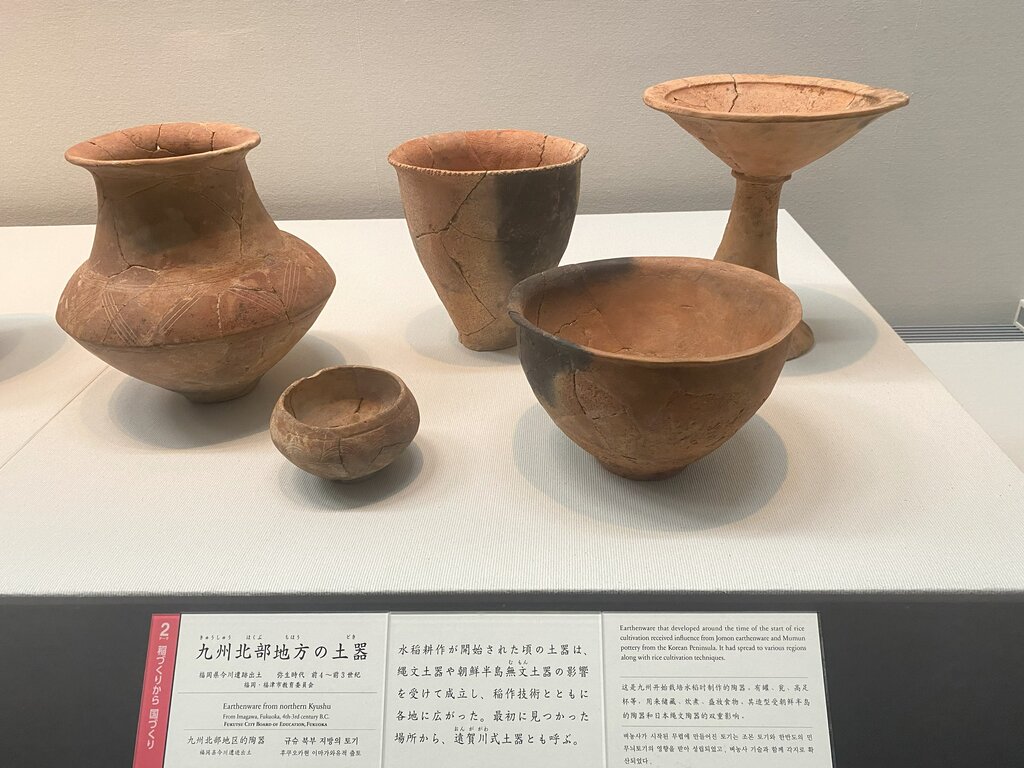
This era is named after the Yayoi district in Tokyo, where archaeologists in 1884 first discovered the distinctive, less-adorned pottery that signaled a departure from the Jomon tradition. This shift from decorated rope patterns to practical, smooth-surfaced pots mirrors the period's larger transition toward a more structured and technologically driven society.
Let's test your knowledge of Japan's earliest eras.
The name of Japan's earliest major culture, "Jomon," refers to what feature of their society?
What was the primary societal consequence of the shift from a hunter-gatherer lifestyle to wet-rice agriculture during the Yayoi period?
The innovations of the Yayoi period laid the groundwork for the formation of a unified Japanese state in the centuries to come.