The Story of Evolution
Introduction to Evolution
Life's Unfolding Story
At its heart, evolution is a process of change. It’s not about an individual animal or plant changing during its lifetime. Instead, it’s about how the inherited traits of a whole population shift from one generation to the next. Think of it as a grand, slow-moving story where the characters—all living things—gradually transform over millions of years.
Evolution is the change in heritable characteristics of biological populations over successive generations.
These changes are passed down through genes, the blueprints for life. Over time, these small genetic shifts can add up, leading to the incredible diversity of life we see all around us, from the smallest bacterium to the largest whale.
Descent with Modification
Charles Darwin used a simple, elegant phrase to describe this process: “descent with modification.” It’s a powerful idea with two main parts. “Descent” refers to the fact that living things inherit traits from their ancestors. “Modification” means that these traits can change over time.
Put them together, and you get a picture of life as a vast, branching family tree. Every species alive today is a modified descendant of an earlier one. This means all life on Earth is related, sharing common ancestors if you go back far enough. Just as you and your cousins share grandparents, humans and chimpanzees share a common ancestor that lived millions of years ago.
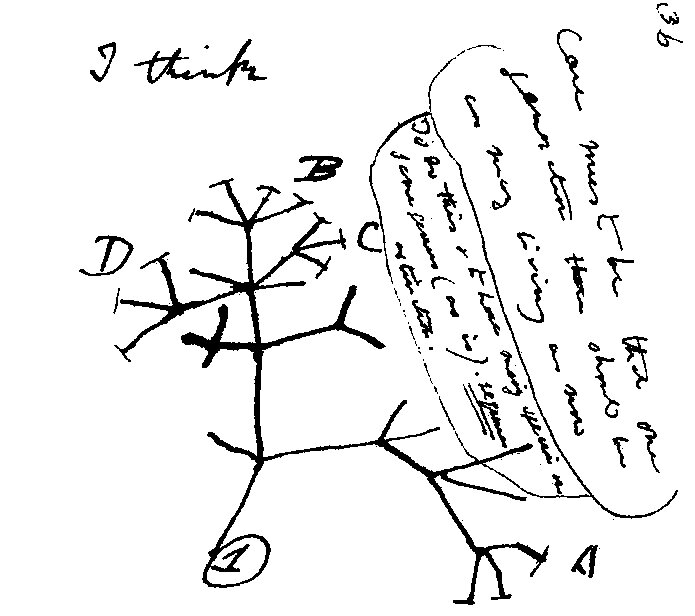
This concept of a common ancestor is central to evolution. It's the point from which new species branch off. We can see this branching pattern everywhere in nature, linking groups of organisms based on their shared features.
In this simple tree, Species B and C are more closely related to each other because they share a more recent common ancestor than either does with Species A. All three ultimately trace their lineage back to a single common ancestor.
The Pace of Change
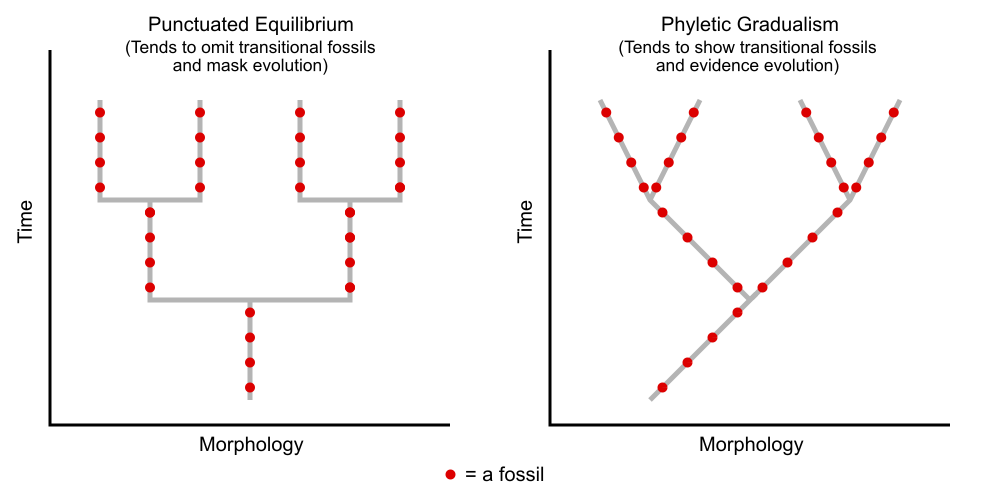
Evolutionary change is typically slow, a concept known as gradualism. It happens over vast stretches of geological time, far too long for us to witness in a human lifetime. Small changes accumulate generation after generation, eventually leading to significant transformations. A species doesn't just decide to grow wings overnight; rather, the process would unfold over countless generations of subtle modifications.
While some scientists believe evolution can also happen in rapid bursts followed by long periods of stability (an idea called punctuated equilibrium), the underlying principle is that change is cumulative and occurs over long timescales.
The Evidence Trail
Evolution isn't just a clever idea; it's a scientific theory supported by a mountain of evidence from many different fields of study. Like detectives solving a case, scientists have pieced together clues from the past and present to build a clear picture of how life has changed over time.
The Fossil Record: Layers of rock act like pages in Earth's history book. Fossils preserved in these layers show a progression from simpler organisms in older rocks to more complex ones in younger rocks. They reveal species that no longer exist and show the evolutionary steps of modern organisms.
Comparative Anatomy: By comparing the bodies of different creatures, we find remarkable similarities. For example, the forelimb of a human, the wing of a bat, the flipper of a whale, and the leg of a cat all share the same basic bone structure. These are called homologous structures. They might be used for different purposes, but their shared blueprint points to a common ancestor that had that original forelimb.
Embryology: The study of embryos provides another clue. In their early stages of development, the embryos of very different animals—like fish, reptiles, birds, and humans—look strikingly similar. For example, human embryos have gill slits at one stage, just like fish embryos. These features disappear as the embryo develops, but their temporary appearance hints at a shared aquatic ancestor.
Molecular Biology: In the modern era, the strongest evidence for evolution comes from DNA. All living organisms use DNA as their genetic material, and the genetic code is nearly universal. By comparing the DNA sequences of different species, we can see how closely they are related. The DNA of humans and chimpanzees, for instance, is about 98% identical, confirming our close evolutionary relationship.
Biogeography: This is the study of where life is found. The distribution of plants and animals across the planet doesn't make sense unless viewed through the lens of evolution. For example, islands often have unique species that are closely related to species on the nearest mainland. This suggests that ancestors from the mainland colonized the island and evolved into new species in isolation.
Together, these different lines of evidence create a powerful and consistent story of how life has evolved and diversified over billions of years.