The Story of Australopithecus
Introduction to Australopithecus
The Southern Apes
Roughly four million years ago, a new group of hominins emerged on the African savanna. They were a fascinating mix of ape and human traits, walking upright on two legs but still retaining features suited for climbing trees. This group was Australopithecus, a name that literally means “southern ape.”
Australopithecus
noun
An extinct genus of hominins that lived in Africa between approximately 4.2 and 1.9 million years ago. They are considered crucial early ancestors in the human evolutionary line.
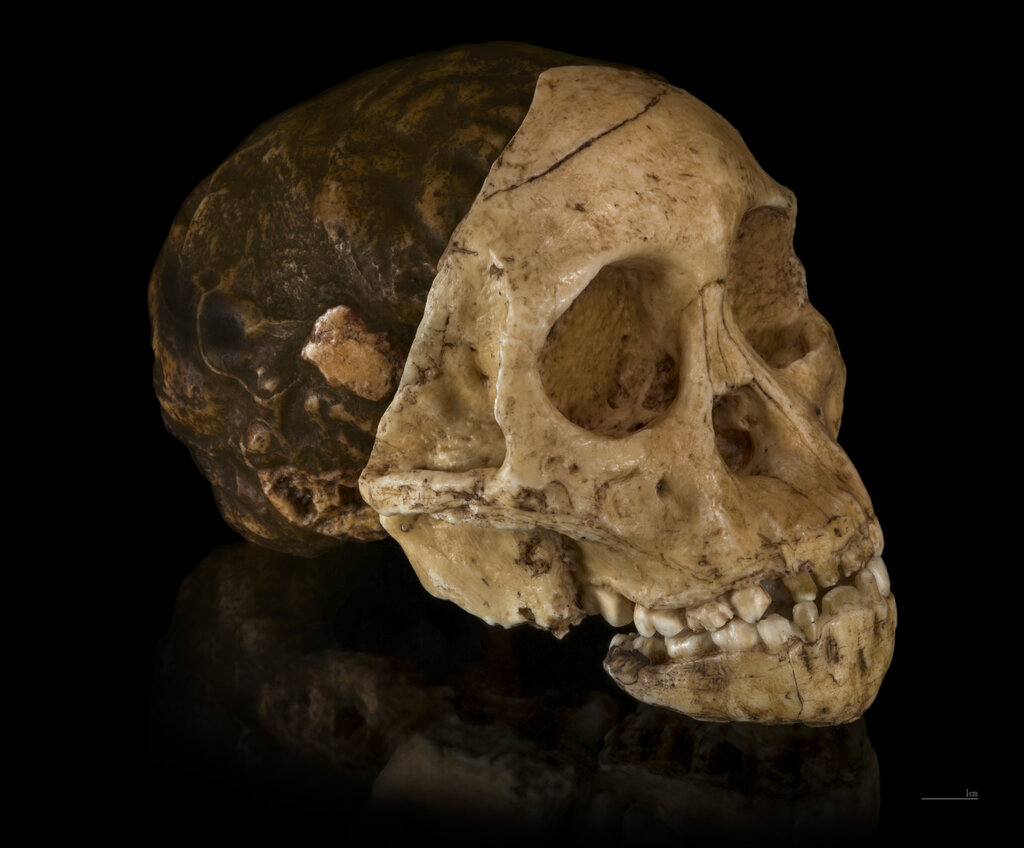
Finding the first Australopithecus fossil in 1924 was a turning point. Before then, scientists thought human evolution began in Asia or Europe with the development of a large brain. But the discovery of a small child's skull in Taung, South Africa, challenged everything. This fossil, known as the Taung Child, had a small, ape-sized brain but features suggesting it walked upright. This showed that walking on two feet, not a big brain, was one of the first major steps on the path to becoming human.
A Foot in Two Worlds
Australopiths weren't a single species but a diverse group that roamed across eastern and southern Africa for over two million years. They were generally small, with long arms and curved fingers well-suited for climbing. Their brains were only slightly larger than a chimpanzee’s.
Their most significant trait was how they moved. The shape of their hips, knees, and feet shows they were bipedal, meaning they walked on two legs. This was a revolutionary adaptation. Walking upright freed their hands to carry food, tools, or infants, and it may have helped them stay cooler in the hot African sun.
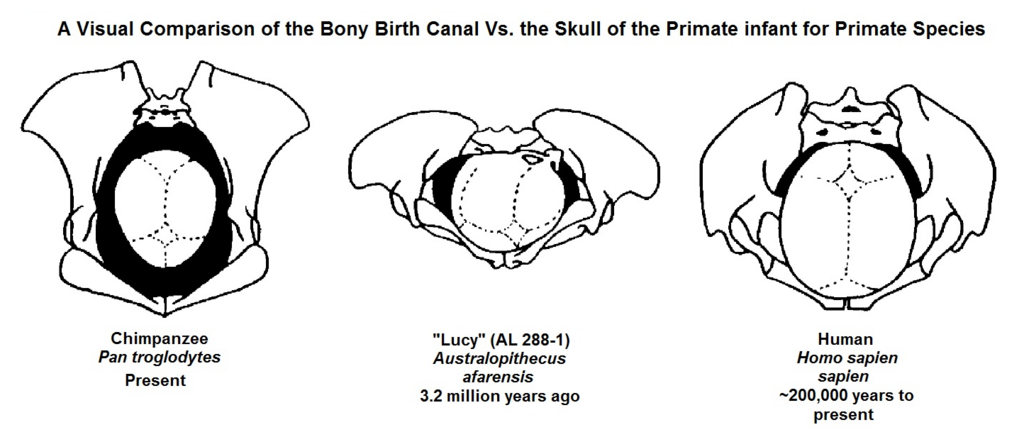
The image above shows the dramatic change in the shape of the pelvis. The Australopithecus pelvis is much broader and shorter than a chimpanzee's, creating a bowl-like structure that could support the upper body's weight for walking upright. It was a crucial skeletal change that paved the way for future hominins.
They were essentially apes that could walk upright. This combination of traits marks their unique and vital place in our family tree.
Why They Matter
Australopithecus is not just another fossil. This genus represents the bridge between our more ape-like ancestors and the first members of our own genus, Homo. By studying them, we learn about the critical experiments in locomotion, diet, and social behavior that occurred after our lineage split from that of chimpanzees.
They show us that evolution is not a straight line toward a predetermined goal. It's a messy, branching process. Some Australopithecus species were likely direct ancestors of humans, while others represented side branches that eventually died out. All of them, however, provide invaluable clues about the challenges our ancestors faced and the adaptations that allowed our lineage to survive and eventually thrive.
What does the name Australopithecus literally mean?
The discovery of the Taung Child in 1924 was a turning point in paleoanthropology because it suggested that...