The Stern-Gerlach Experiment Explained
Introduction to Quantum Mechanics
The Quantum Rules
At the scale of everyday life, things are predictable. A ball has a definite position and momentum. You can measure both without much fuss. But when we zoom way down to the level of atoms and electrons, the rules change completely. This is the realm of quantum mechanics, and it's built on a few core ideas that defy our everyday intuition.
Wave or Particle?
In our world, things are either particles (like a grain of sand) or waves (like a ripple in a pond). A single thing can't be both. In the quantum world, however, everything can be both. This is called wave-particle duality.
An electron, for example, can act like a tiny, solid particle. But it can also behave like a wave, spread out in space. It's not that it switches between the two; it's that it is both at the same time, until we measure it. The type of experiment we do determines which aspect of its nature we see.
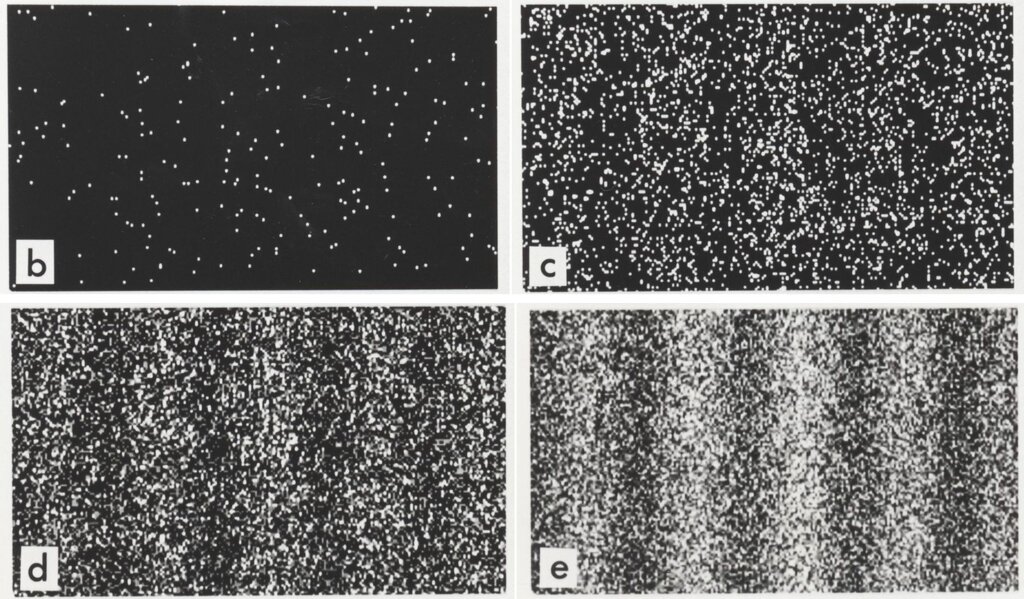
This dual nature is fundamental. Light is made of particles called photons, but it also travels as an electromagnetic wave. This isn't just a quirky feature; it's the very fabric of the subatomic world.
Everything Comes in Chunks
Imagine a ramp. You can stand at any point along its length. Now, imagine a staircase. You can only stand on one step or another, never in between. Classical physics is like the ramp—properties like energy or speed can have any continuous value. Quantum mechanics is like the staircase.
This idea is called quantization. It means that many physical properties can only have specific, discrete values. They come in little packets, or "quanta."
quantum
noun
The minimum amount of any physical entity or property involved in an interaction.
Energy is a great example. In an atom, an electron can't just have any amount of energy it wants. It's restricted to specific energy levels, like the steps on a ladder. To move from one level to another, it must absorb or emit a precise quantum of energy, and nothing in between.
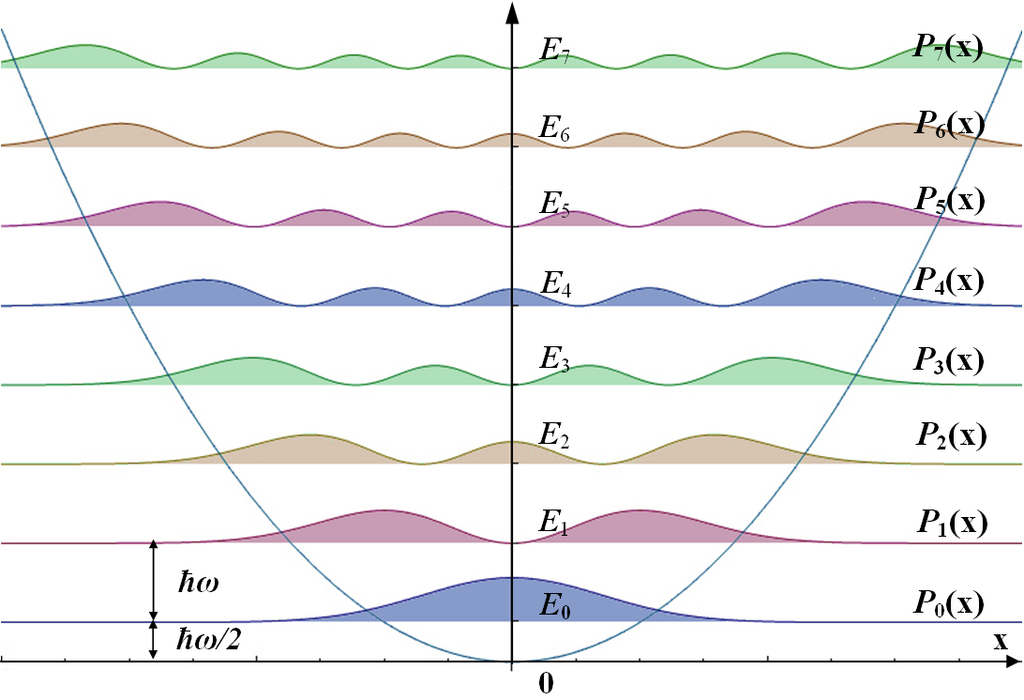
This principle applies to many other properties, including momentum, electric charge, and a purely quantum property called spin. You can't have half a charge or 1.2 units of spin. It's all or nothing, in discrete, quantized steps.
The Act of Looking
Perhaps the strangest quantum rule is about measurement. In the classical world, we can observe something without really changing it. You can look at a spinning basketball to see which way it's spinning without affecting its motion in a meaningful way.
In the quantum world, the act of measurement fundamentally alters the system. Before you measure it, a quantum particle exists in a cloud of possibilities called a superposition. An electron might not have a definite position; instead, it has a range of possible positions, each with a certain probability. The same is true for its spin—it might be in a superposition of spinning up and spinning down simultaneously.
When you make a measurement, this cloud of possibilities collapses into a single, definite reality. The particle is forced to "choose" one state.
The outcome of this choice is probabilistic. We can't know for certain what we'll find before we look. We can only calculate the odds. For example, we might calculate a 50% chance an electron's spin will be "up" and a 50% chance it will be "down." Once we measure it and find it's "up," it is definitively up. The superposition is gone.
This isn't a limitation of our instruments. It's a fundamental feature of reality. The universe, at its core, doesn't deal in certainties, but in probabilities. The act of observation is what turns these probabilities into the concrete reality we experience.
Which of the following best describes the principle of wave-particle duality?
The idea that physical properties like energy in an atom can only have specific, discrete values is known as ________.