The Spectrochemical Series of Ligands
Introduction to Coordination Chemistry
The Heart of the Complex
Many chemical compounds are simple partnerships. Think of table salt, NaCl, where a sodium ion and a chloride ion are held together by their opposite charges. But some compounds are more like a central figure surrounded by a dedicated entourage. These are called coordination compounds.
A coordination compound consists of a central metal atom or ion bonded to a group of surrounding molecules or ions. These surrounding players are called ligands.
Coordination Compound
noun
A substance containing a central metal atom or ion bonded to one or more molecules or ions, known as ligands.
Imagine a copper ion, , floating in water. If you add ammonia (), the ammonia molecules will surround the copper ion and form bonds with it. The result is a new, stable entity called a complex ion, specifically . This complex ion is the core of a coordination compound.
Why Transition Metals?
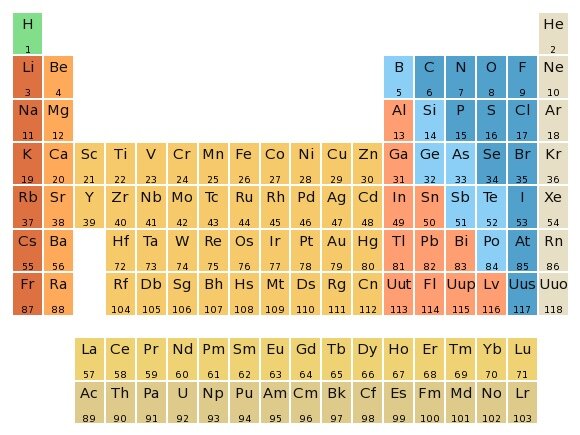
You'll notice that the central atom in these compounds is often a transition metal. There’s a good reason for this. Transition metals, the elements in the middle block of the periodic table, have unique electronic structures. They possess partially filled d-orbitals, which makes them excellent at accepting pairs of electrons from other molecules.
In chemical terms, the central metal atom acts as a Lewis acid, an electron-pair acceptor. This ability to welcome electron pairs allows them to form multiple bonds with surrounding ligands.
Meet the Ligands
If the metal is the Lewis acid, the ligands are the Lewis bases. They are the electron-pair donors. A ligand must have at least one lone pair of electrons to share with the central metal atom.
Ligands are classified by the number of donor atoms they use to bond to the metal. This property is called denticity.
Monodentate ligands bond to the metal using one atom. Common examples include water (), ammonia (), and chloride (). They form a single coordinate bond.
Polydentate ligands can form two or more bonds with the central metal atom. They're like a pair of hands that can grab onto the metal in multiple places.
- Bidentate ligands have two donor atoms. A classic example is ethylenediamine (, often abbreviated as 'en'). Both nitrogen atoms can donate their lone pairs to the metal.
- Hexadentate ligands have six donor atoms. The most famous is ethylenediaminetetraacetate, or EDTA. EDTA is so effective at bonding to metal ions that it can wrap around one completely, forming an incredibly stable complex. This makes it useful in everything from medicine to food preservation.
Shape and Structure
The structure of a coordination complex is defined by two key features: the coordination number and the geometry.
The coordination number is simply the total number of donor atoms bonded to the central metal ion. It's not necessarily the same as the number of ligands. For example, in , there are three ligands, but since ethylenediamine (en) is bidentate, the coordination number is .
The coordination number determines the complex's three-dimensional shape, or geometry. While many shapes are possible, a few are very common.
| Coordination Number | Geometry | Example |
|---|---|---|
| 2 | Linear | |
| 4 | Tetrahedral or Square Planar | (Tetrahedral) (Square Planar) |
| 6 | Octahedral |
An octahedral complex, with a coordination number of 6, is one of the most prevalent arrangements in coordination chemistry. It features the central metal atom with six ligands positioned at the vertices of an octahedron, like the six points of a 3D compass (north, south, east, west, up, and down).
Let's review the key terms we've covered.
Now, check your understanding of these fundamental concepts.
What is the primary role of the central metal atom in a coordination compound?
The property that classifies a ligand based on the number of donor atoms it uses to bond to the central metal is called...
These basic ideas about ligands, metals, and geometry are the foundation for understanding the fascinating properties and reactions of coordination compounds.