The Spatial Race
Origins of the Space Race
A New Kind of Battlefield
After World War II ended, the world quickly split into two camps. On one side was the United States and its allies, champions of capitalism and democracy. On the other was the Soviet Union and its sphere of influence, promoting communism. This standoff, known as the Cold War, wasn't fought with direct, large-scale battles between the two superpowers. Instead, it was a tense competition for global influence, waged through politics, economics, and propaganda.
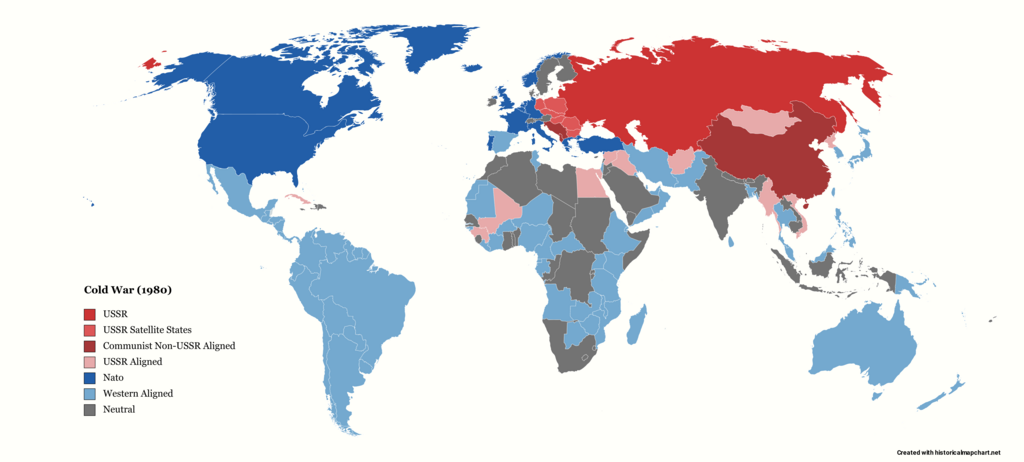
A key part of this rivalry was the race for technological superiority. Each side believed that demonstrating advanced technology would prove the strength of its political and economic system. This contest would soon extend beyond Earth's atmosphere, turning the vast emptiness of space into a new arena for competition.
From Weapons to Rockets
The story of the Space Race begins in the ashes of World War II. During the war, Germany developed the V-2, the world's first long-range guided ballistic missile. It was a terrifying weapon, but it was also a revolutionary piece of technology. When the war ended, both the United States and the Soviet Union scrambled to capture German rocket engineers and technology.
The U.S. program to recruit these German specialists was called Operation Paperclip. The Soviets had a similar, though less formally named, initiative. Both nations knew that the minds behind the V-2 held the keys to the future of rocketry.
These captured scientists and their designs formed the bedrock of the American and Soviet missile programs. For years, both countries focused on developing rockets primarily for military purposes, creating intercontinental ballistic missiles (ICBMs) capable of carrying nuclear warheads across the globe. But some saw another potential: using these powerful rockets to explore space.
The Race Begins
The scientific community provided the spark that officially ignited the Space Race. For the International Geophysical Year (IGY) in 1957-58, a global scientific collaboration, both the U.S. and the USSR announced they would launch artificial satellites into orbit. It was framed as a peaceful scientific endeavor, but the underlying rivalry was unmistakable.
The world watched, waiting to see who would get there first. On October 4, 1957, the answer arrived in the form of a faint, steady beep from orbit. The Soviet Union had successfully launched Sputnik 1, a small, polished metal sphere that became the first man-made object to orbit the Earth.
For the United States, the launch of Sputnik was a profound shock. It wasn't just that the Soviets had beaten them into space. The rocket that carried Sputnik into orbit, a modified R-7 Semyorka ICBM, could just as easily carry a nuclear weapon to an American city. The "Sputnik crisis" triggered a wave of fear and a massive U.S. response. The government poured billions of dollars into research, education, and the creation of a new civilian space agency: the National Aeronautics and Space Administration (NASA). The race to the moon, and for dominance in space, had begun.