The Spartan Military Machine
Spartan Social Structure
The Spartan Pyramid
Spartan society wasn't built on equality. It was a rigid, three-tiered system designed for one purpose: to maintain the most formidable army in ancient Greece. At the top were the Spartiates, the elite warrior citizens. Below them were the Perioeci, free non-citizens who ran the economy. At the very bottom were the Helots, a vast population of state-owned serfs whose labor supported everyone else. Your status was determined entirely by birth, and moving between these classes was nearly impossible.
The Spartiates, or Homoioi (equals), were the masters of Sparta. From birth, male Spartiates were groomed for war. They were forbidden from farming, trade, or any craft. Their entire existence revolved around military training and service to the state. Land was their source of wealth, but they didn't work it themselves. That job fell to the Helots.
A Spartiate owned a plot of land (kleros) that was assigned to him by the state. This land, and the Helots tied to it, provided the food and resources needed to support his family and his contributions to the communal mess hall (syssitia). Full citizenship depended on completing the brutal state education system, the Agoge, and being able to make these contributions. Failure meant losing your status and becoming an outcast.
The Middle Rung
The Spartan war machine needed weapons, armor, and supplies, but the Spartiates couldn't be bothered with making them. This is where the Perioeci came in. They were the merchants, craftsmen, and manufacturers of Spartan society.
Perioeci
noun
Free inhabitants of the communities around Sparta who were not citizens. They controlled the commerce and industry of the state.
The name Perioeci means "dwellers around," which accurately describes their situation. They lived in the towns and villages surrounding the city of Sparta proper. While they were free and not serfs like the Helots, they had no political rights in Sparta. They couldn't vote, hold office, or influence state policy.
However, they did have an important military role. The Perioeci served as hoplites in the Spartan army, often forming their own units alongside the Spartiates. Their loyalty was crucial, as they acted as a buffer between the Spartan heartland and the outside world.
The Foundation of Fear
The entire Spartan system rested on the backs of the Helots. The Helots were not slaves owned by individuals; they were serfs owned by the state. They were primarily the conquered populations of Messenia and Laconia, tied to the land they worked.
Their job was simple and brutal: farm the kleros of a Spartiate and turn over a large portion of the harvest. This agricultural surplus is what allowed the Spartiate class to dedicate itself entirely to warfare. Without Helot labor, there would have been no Spartan army.
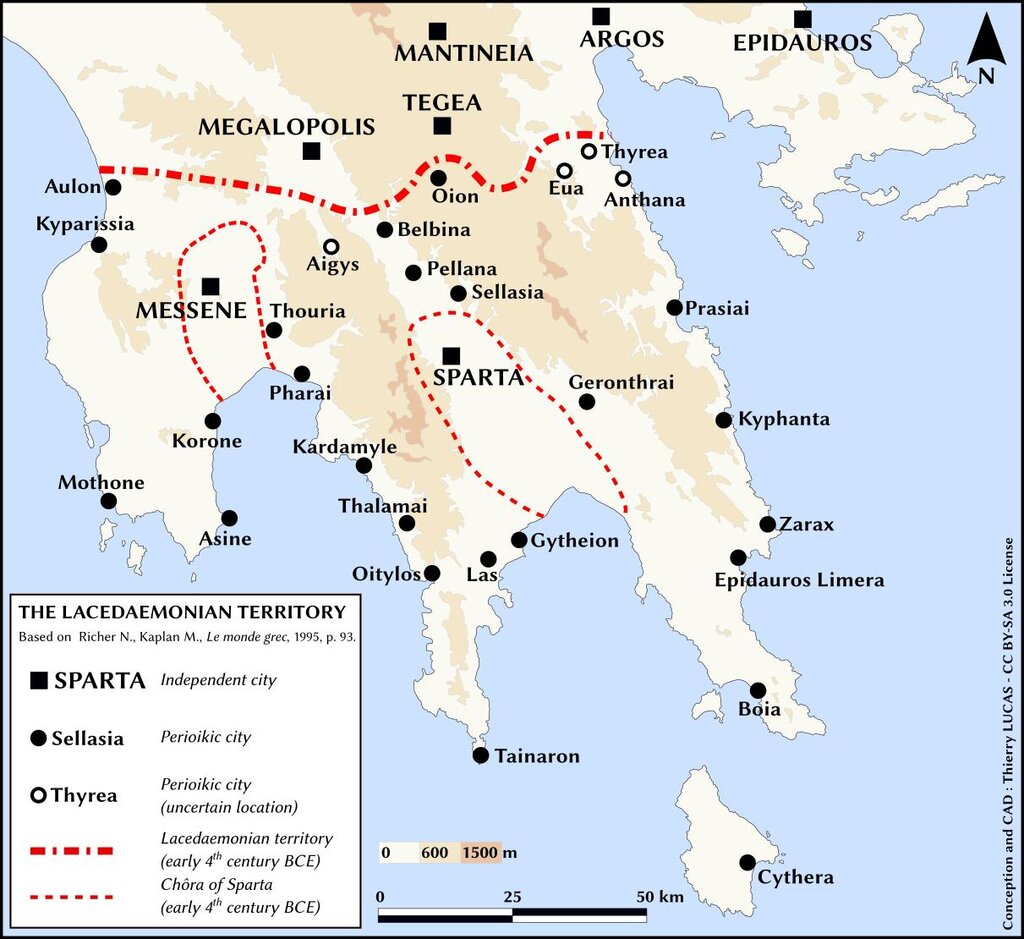
Life for a Helot was one of constant toil and humiliation. The Spartiates lived in perpetual fear of a Helot uprising, as they were outnumbered by a huge margin, perhaps as much as ten to one. To maintain control, the Spartans used systematic terror.
Each year, the leaders of Sparta, the Ephors, would formally declare war on the Helot population. This ritual allowed any Spartiate to kill a Helot without fear of religious or legal consequence. The Krypteia, a kind of secret police made up of young Spartiates, would stalk the countryside at night, assassinating any Helot deemed too clever, too strong, or a potential leader.
This relationship was not one of master and slave, but of oppressor and oppressed. The Spartan way of life was only possible through the constant, violent suppression of the people who fed them.
This three-part structure defined Sparta. The Spartiates provided the military and political leadership, the Perioeci supplied the economic engine, and the Helots performed the labor. It was a precarious balance, a society built for war but constantly teetering on the edge of internal collapse.