The Solow Growth Model Explained
Introduction to Economic Growth
What is Economic Growth?
Economic growth is an increase in the production of goods and services in an economy. Think of a country's economy as a single, giant bakery. In its first year, the bakery produces one million loaves of bread. The next year, thanks to new ovens and more bakers, it produces 1.1 million loaves. That 10% increase in output is economic growth.
For a country, this isn't just about bread. It's about producing more cars, developing more software, providing more healthcare services, and building more homes. When an economy grows, it creates more opportunities and wealth for its citizens.
Economic growth leads to higher incomes, better jobs, and improved public services like schools and hospitals, which are funded by tax revenues from a larger economy.
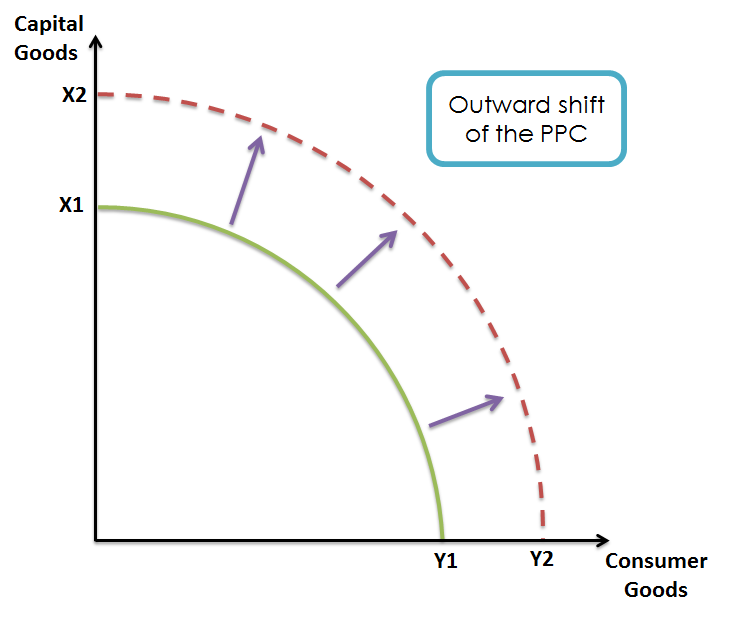
This expansion is often visualized using a concept called the Production Possibilities Frontier (PPF). The PPF shows the maximum amount of two goods an economy can produce with its available resources. Economic growth pushes this frontier outward, meaning the country can produce more of everything.
How We Measure Growth
To track this growth, economists use a key metric: Gross Domestic Product, or GDP. GDP is the total market value of all final goods and services produced within a country's borders in a specific period, usually a year or a quarter. It’s like adding up the price tags on every new car, smartphone, and cup of coffee sold in the country.
Gross Domestic Product
noun
The total monetary or market value of all the finished goods and services produced within a country’s borders in a specific time period.
But GDP alone doesn't tell the whole story. A country with a large population will naturally have a larger GDP. To get a better sense of individual prosperity, we use GDP per capita. This is simply the total GDP divided by the number of people in the country. It represents the average economic output per person.
A high GDP per capita often correlates with a higher standard of living, though it's an average and doesn't show how wealth is distributed.
| Country | Total GDP (Trillions) | Population (Millions) | GDP Per Capita |
|---|---|---|---|
| Country A | $20 | 330 | $60,606 |
| Country B | $15 | 1,400 | $10,714 |
As you can see, even though Country B has a very large economy, its GDP per capita is much lower than Country A's because its population is so much larger.
The Engines of Growth
What makes an economy grow? Several key factors work together. They are often categorized into four main areas.
Physical Capital: This includes the tools, machinery, and infrastructure like roads and bridges. More and better equipment allows workers to produce more.
Human Capital: This refers to the skills, knowledge, and experience of the labor force. A well-educated and healthy population is more productive.
Natural Resources: Inputs from nature like land, water, and minerals can be a major driver of growth, especially in early stages of development. However, countries with few natural resources, like Japan, have shown that this isn't a prerequisite for wealth.
Technology: This is arguably the most important engine of long-term growth. Technological innovation means finding new and better ways to produce goods and services. The invention of the steam engine, the computer, and the internet all sparked massive periods of economic expansion.
A stable government, clear laws, and policies that encourage investment and trade also create an environment where these factors can flourish. Together, these elements determine how quickly an economy can expand its potential.
What is the most accurate definition of economic growth?
Country X has a GDP of 10 trillion and a population of 500 million. Based on this information, which statement is true?
Understanding these core concepts is the first step in analyzing how economies work. They provide the foundation for exploring why some countries are rich while others are poor, and what policies can promote a better standard of living for everyone.