The Social Impact of the Industrial Revolution
Introduction to the Industrial Revolution
The World Remade
For most of human history, life didn't change much from one generation to the next. People worked the land, made things by hand, and traveled at the speed of a horse. Then, starting in Great Britain around 1760, a series of inventions and new ways of thinking kicked off a period of massive change known as the Industrial Revolution.
This wasn't a war fought with armies, but a revolution in how things were made, how people worked, and where they lived.
Before this era, economies were agrarian. Most families lived in rural areas and farmed for a living. What little manufacturing existed was done on a small scale, often in people's homes. A weaver, for instance, might own a single loom. This was known as the 'cottage industry.' The Industrial Revolution flipped this world on its head, moving production from the cottage to the factory and from the country to the city.
The First Sparks
The transformation began in the textile industry. For centuries, spinning wool or cotton into thread was a slow, manual process. But as Britain's population and trade grew, so did the demand for cloth. Inventors rose to the challenge, creating machines that could spin thread much faster than a person ever could.
Inventions like the spinning jenny and the water frame revolutionized textile production. Suddenly, one worker could produce the same amount of yarn that once took dozens. These new machines, however, were large, expensive, and needed a power source stronger than human muscle.
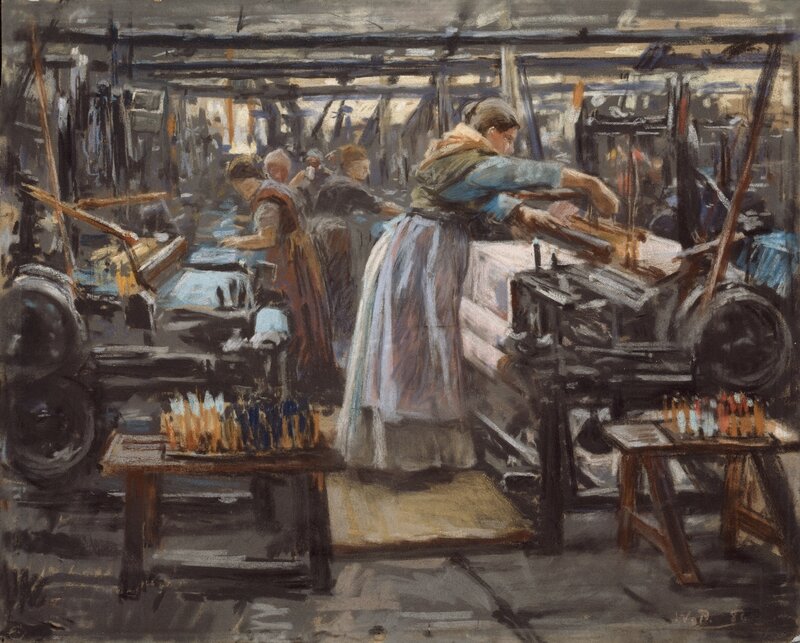
The solution was to build large workshops, or factories, to house them. The earliest factories were built along fast-flowing rivers, using water wheels to power the machinery. This marked a fundamental shift. For the first time, workers traveled to a central location to do their jobs, their days dictated by the rhythm of the machines instead of the rising and setting of the sun.
Enter the Steam Engine
Water power was a huge step forward, but it had a major limitation: you had to build your factory on a riverbank. The next great leap in technology freed industry from this constraint. That leap was the steam engine.
While early versions of the steam engine existed, it was Scottish inventor James Watt who, in the 1760s and 1770s, dramatically improved its efficiency. Watt's engine used burning coal to heat water into steam, and the pressure from that steam drove a piston to create powerful, reliable motion. It was a breakthrough that would power the revolution for the next century.
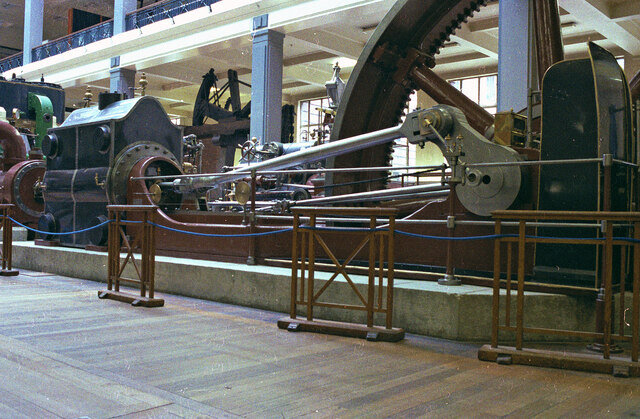
With steam power, factories could be built anywhere—in the middle of cities, near coal fields, or close to shipping ports. This incredible flexibility accelerated the growth of industrial centers. The steam engine didn't just power factories; it would soon be adapted to power trains and ships, shrinking the world and connecting markets in ways never before possible.
The Industrial Revolution was a sudden large improvement in technology, which resulted in significant increases in human wealth and life spans.
These foundational changes—the mechanization of textile production and the harnessing of steam power—set the stage for everything that followed. They transformed the economy from one based on farming and craftsmanship to one dominated by machinery and mass production. Let's review some key ideas from this period.
Before the Industrial Revolution, the economy in Great Britain was primarily:
The development of the steam engine by James Watt was a major turning point because it: