The Shifting Sands of National Borders
Introduction to Borders
What Are Borders?
Borders are the lines that separate one place from another. Think of them as the outlines of a country, state, or even a city. They tell us where one area of control ends and another begins. On a map, they look like simple lines, but in the real world, they are complex and have a huge impact on our lives.
The main function of a border is to define a political entity. It establishes the territory where a government's laws apply. This is known as sovereignty—the authority of a state to govern itself. Borders also control the movement of people, goods, and ideas. They are where customs agents check passports and where trade policies come into effect.
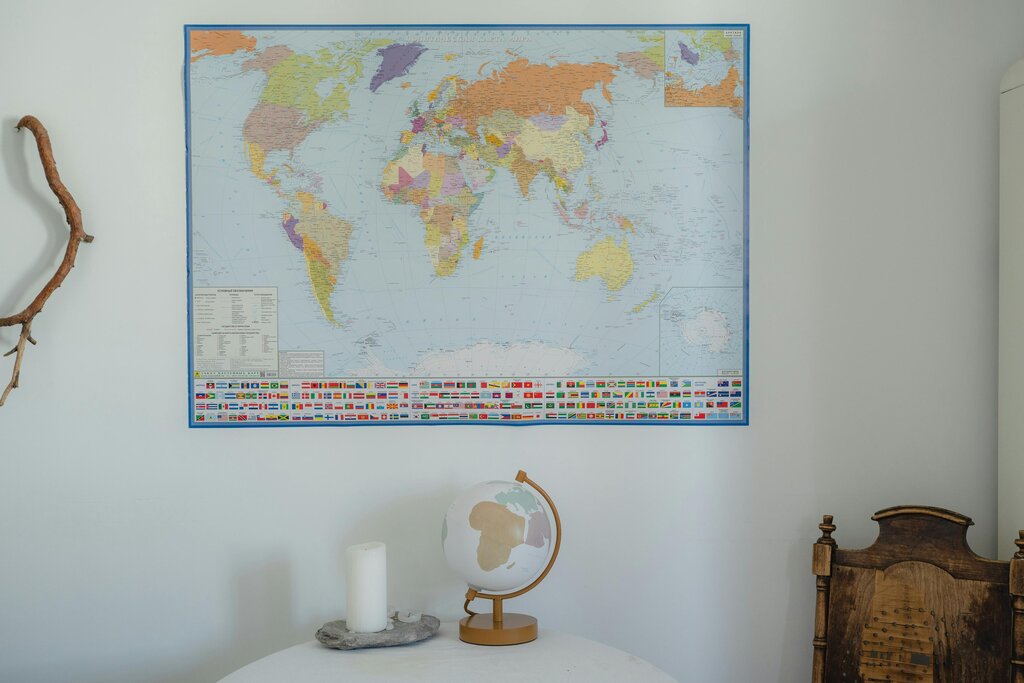
Beyond politics and economics, borders also help shape our identity. They can create a sense of belonging to a nation, a shared community with its own culture, history, and values. They are a fundamental part of how we organize and understand our world.
Lines on a Map, Lines in Nature
Not all borders are the same. They can be drawn for different reasons and take different forms.
Political borders are the most common type we think of. These are human-made lines agreed upon by governments, often through treaties, wars, or negotiations. They can cut across landscapes without regard for what's on the ground.
Natural borders, on the other hand, follow geographical features. A river might separate two states, a mountain range might divide two countries, and an ocean can define the edge of a continent. The Rio Grande, for example, forms a long natural border between the United States and Mexico. These borders are often easier to see but can still be sources of dispute.
Then there are cultural borders. These are invisible lines that separate groups of people based on shared characteristics like language, religion, or ethnicity. A cultural border might exist within a single country or stretch across several political ones. For instance, the line separating French-speaking and German-speaking areas of Switzerland is a cultural border, even though everyone is Swiss.
Shaping Our World
Historically, borders have been markers of power. The walls of an ancient city, the edge of a Roman province, or the frontier of an empire all served to protect territory and define influence. They were often fluid, shifting with conquests and collapses.
Borders are not neutral lines on maps but socio-political constructions laden with power, identity, and contested meanings.
The creation of a border has profound effects on the people living near it. It can divide communities that have existed for centuries, separating families and disrupting traditional ways of life. It can also create new opportunities by regulating trade and encouraging cooperation between neighbors.
By defining who is "in" and who is "out," borders influence everything from national security to economic well-being. They are central to the very idea of a nation, giving a physical shape to a collective identity. Understanding what borders are and how they function is the first step to understanding how our modern world is organized.
The authority of a state to govern itself within its own territory is known as what?
A mountain range that divides two countries is an example of a...