The Self as Illusion in Meditation
Introduction to Anatta
The Idea of No-Self
Many philosophical and spiritual traditions encourage us to look inward and ask, "Who am I?" The Buddhist answer to this question is both simple and profound: there is no permanent, unchanging "I" to be found.
This core doctrine is called anatta, and it's one of the most fundamental teachings in Buddhism. It challenges the common assumption that inside each of us is a fixed, essential self or soul that stays the same throughout our lives.
anatta
noun
The Buddhist doctrine that there is no permanent, unchanging, independent self or soul.
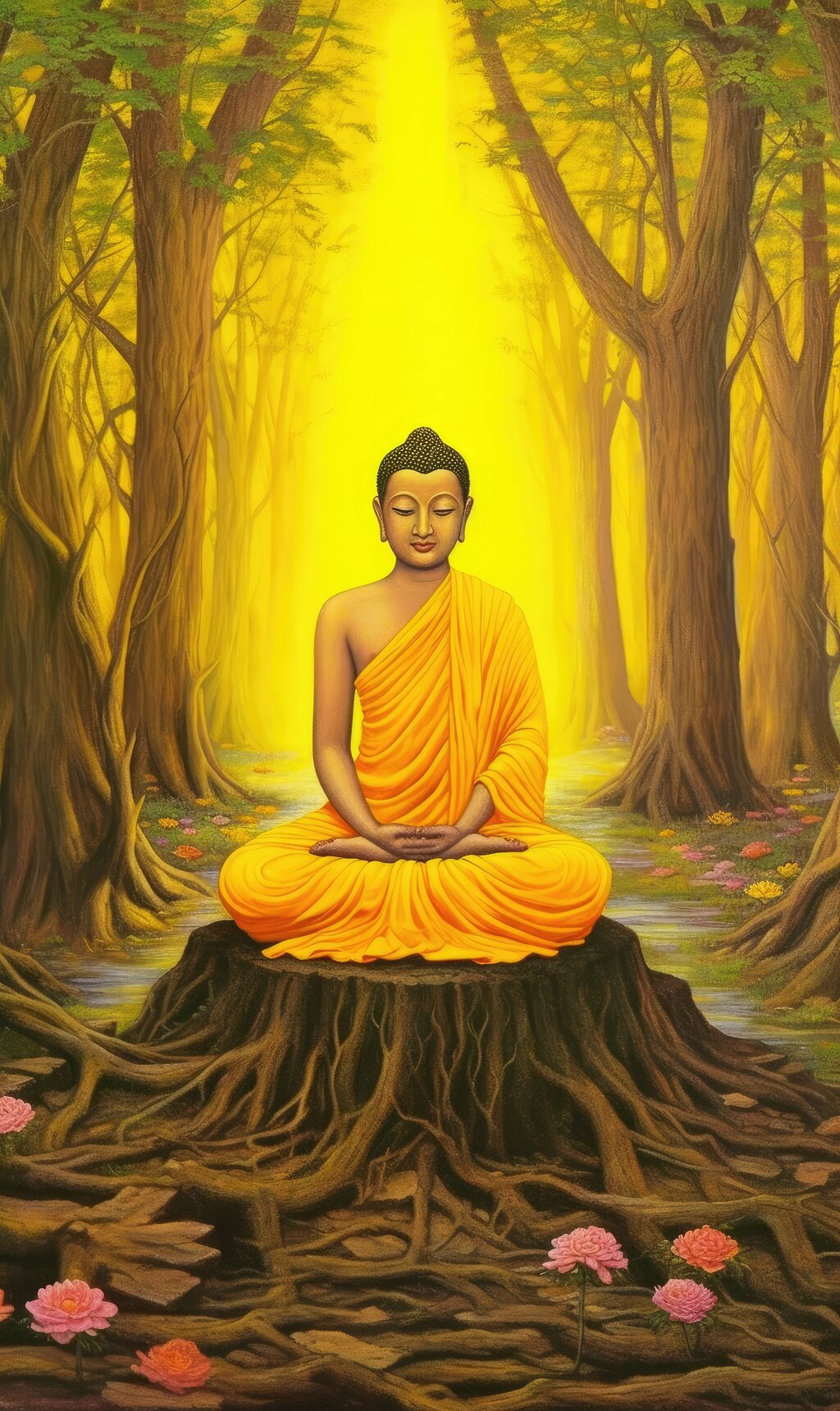
Instead of a solid, continuous self, Buddhism teaches that what we call "I" is actually an ever-changing process. It's a combination of physical and mental components that are constantly in flux. Think of a river. You can point to it and call it the Mississippi River, but the water you see one moment is gone the next. The river is a continuous process, not a static thing. According to anatta, the self is like that river.
Anatta vs. Atman
To better understand anatta, it helps to contrast it with the Hindu concept of atman. Many spiritual traditions that were prevalent during the Buddha's time taught that every living being possesses an atman, an eternal, unchanging soul that is the true essence of a person.
atman
noun
In Hinduism, the spiritual life principle of the universe, especially when regarded as inherent in the real self of the individual. An eternal, unchanging soul.
Buddhism takes a radically different view. The doctrine of anatta directly rejects the idea of an atman. It asserts that searching for a permanent, eternal soul is a futile exercise, because one simply doesn't exist. This was a major point of departure from the other Indian religions of the era.
| Concept | Anatta (Buddhism) | Atman (Hinduism) |
|---|---|---|
| Meaning | No-Self | Eternal Self / Soul |
| Nature | Impermanent, a changing process | Permanent, unchanging essence |
| Existence | A combination of changing components | An independent, singular entity |
| Goal | To understand its non-existence | To realize its true nature |
The Three Marks of Existence
Anatta is not a standalone idea; it's part of a trio of core Buddhist teachings known as the Three Marks of Existence. These are three universal truths that apply to all of phenomenal existence. They are impermanence (anicca), suffering or dissatisfaction (dukkha), and no-self (anatta).
These three characteristics are deeply intertwined. Because all things are impermanent (anicca), there can be no permanent, unchanging self (anatta). The human tendency to crave and cling to things as if they were permanent—including our own sense of self—inevitably leads to suffering (dukkha) when change occurs.
Recognizing these three truths is not meant to be pessimistic. Instead, it is presented as a realistic assessment of the nature of reality. By understanding and accepting impermanence, suffering, and no-self, one can begin to let go of the attachments that cause suffering, leading toward a state of liberation, or Nirvana.