The Secrets of DNA Sequencing
Introduction to DNA
The Blueprint of Life
Every living organism, from the smallest bacterium to the largest whale, contains a detailed instruction manual inside its cells. This manual governs everything from eye color to how cells function. It's called DNA, which stands for deoxyribonucleic acid.
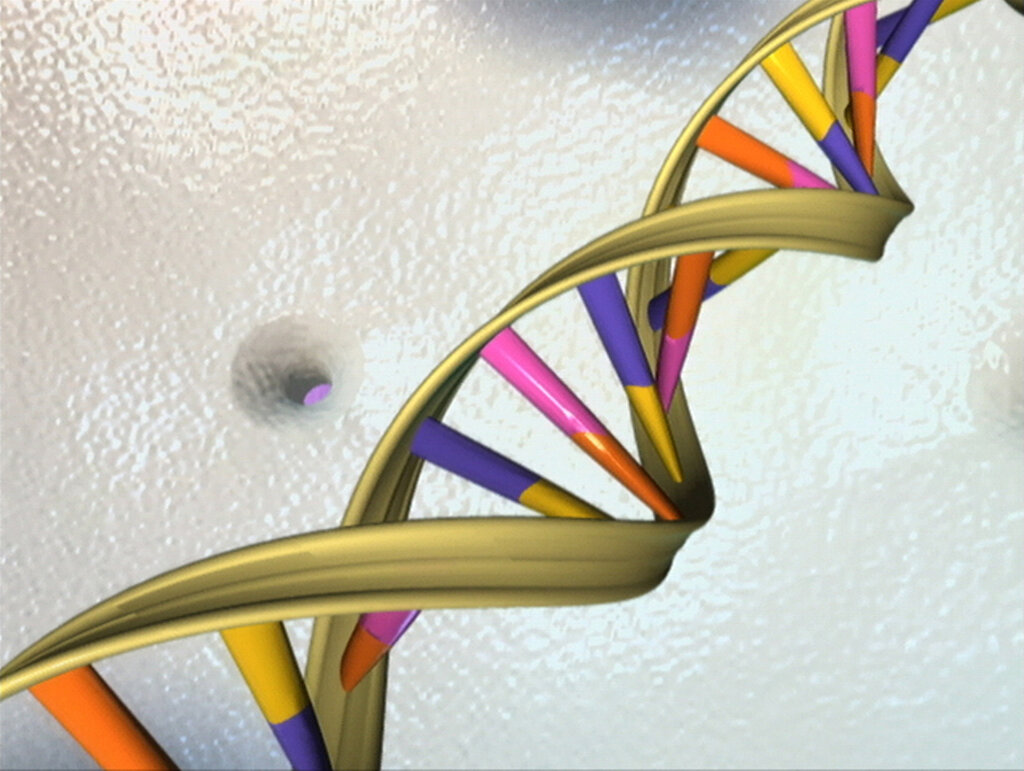
Think of DNA as the master blueprint for life. It holds all the genetic information needed for an organism to develop, survive, and reproduce. This information is passed down from one generation to the next, which is why we inherit traits from our parents.
A Twisted Ladder
DNA has a famous shape called a double helix, which looks like a twisted ladder. The two long, twisting sides of the ladder are known as the sugar-phosphate backbones. The rungs connecting these backbones are what make DNA so special.
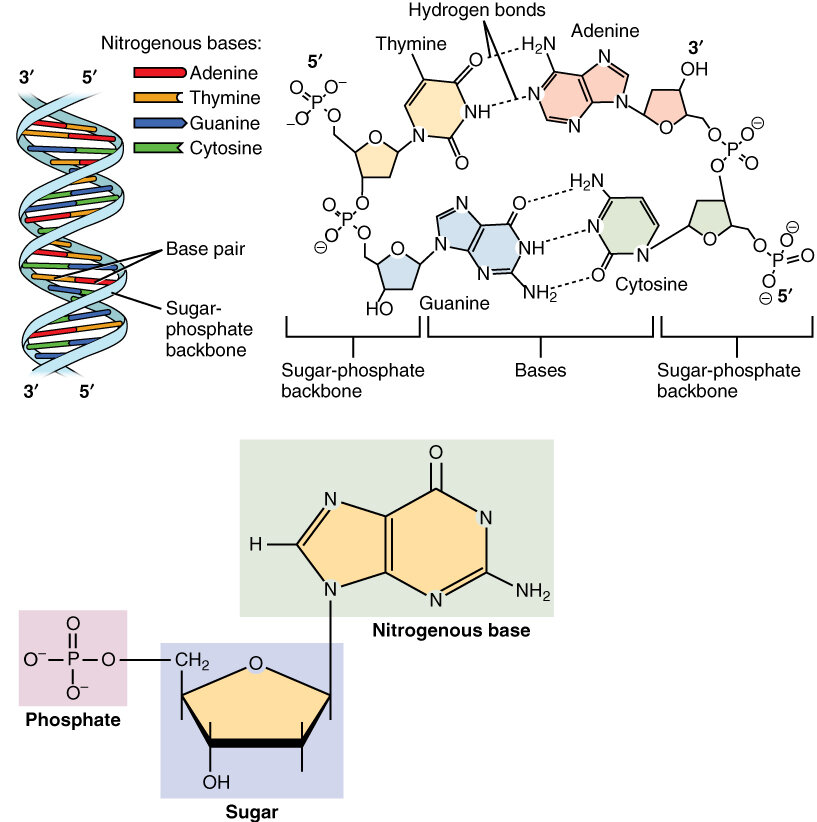
Each rung is made of two smaller molecules called nitrogenous bases, and the entire structure of the backbone and the rung is built from repeating units called nucleotides.
Nucleotide
noun
The basic building block of DNA, consisting of a sugar molecule, a phosphate group, and a nitrogenous base.
These three components—sugar, phosphate, and base—are the fundamental units that assemble into the massive DNA molecule.
The Genetic Alphabet
The information in DNA is stored in a simple, four-letter alphabet. These letters correspond to four different nitrogenous bases. Each rung of the DNA ladder is formed by a pair of these bases.
| Base Name | Abbreviation |
|---|---|
| Adenine | A |
| Guanine | G |
| Cytosine | C |
| Thymine | T |
The bases don't pair up randomly. There's a strict rule, known as the base-pairing rule, that governs how they connect. Adenine (A) always pairs with Thymine (T), and Cytosine (C) always pairs with Guanine (G). These specific pairings are essential for DNA's structure and its ability to be copied accurately.
The base pairing rules are simple but powerful:
- A always pairs with T
- C always pairs with G
The sequence of these bases along one strand of the DNA determines the sequence on the other. For example, if one strand has the sequence A-C-T-G, the opposite strand must have the sequence T-G-A-C. This sequence of millions or even billions of bases is the genetic code that carries the instructions for life.
From DNA to Protein
So, how does the cell use the blueprint stored in DNA? The information doesn't just sit there. It has to be read and put into action. This flow of information is described by what's known as the central dogma of molecular biology.
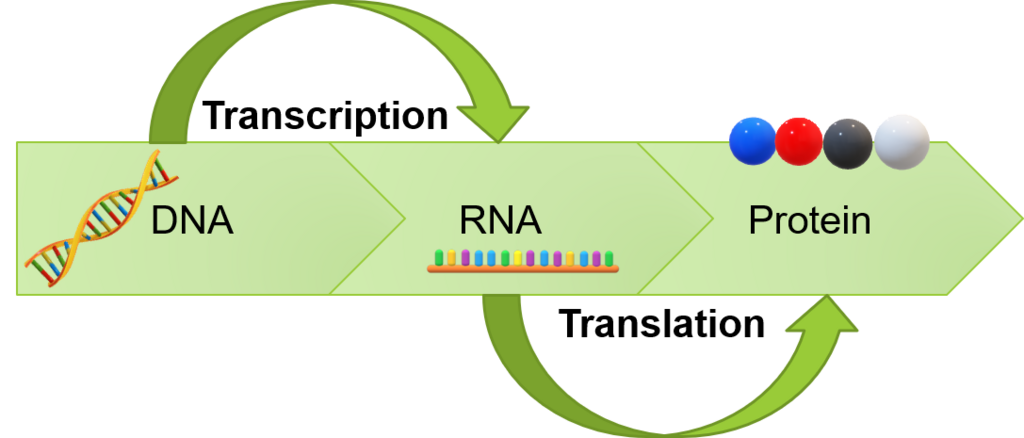
It's a two-step process:
-
Transcription: First, a specific segment of DNA is copied into a temporary message molecule called messenger RNA (mRNA). This is like photocopying a single page from a giant reference book. The process is called transcription because the genetic code is transcribed, or rewritten, from DNA into RNA.
-
Translation: Next, the mRNA message is carried out of the cell's nucleus to cellular machinery called ribosomes. The ribosomes read the mRNA sequence and translate it into a specific protein. Proteins are the workhorses of the cell, carrying out a vast array of tasks, from building structures to catalyzing chemical reactions.
In short: DNA makes RNA, and RNA makes protein. This simple flow is the foundation of how genetic information brings an organism to life.
Now that you understand the fundamental building blocks and processes, you're ready to explore how this elegant system works in more detail. Let's test your knowledge.
What is the shape of a DNA molecule famously described as?
According to the base-pairing rules in DNA, Adenine (A) always pairs with which base?