The Secret Mission of Sticky Phlegm
Sticky Shield Trap
The Body's Sticky Shield
When you get sick, it's easy to think of mucus as just a nuisance. But that thick, gooey substance is actually a crucial first line of defense. Think of it as a sticky shield, a physical barrier designed to trap invaders like viruses before they can ever reach your cells.
This isn't just random slime. It's a complex hydrogel made mostly of water, salts, and long, stringy proteins called mucins that give it its characteristic stickiness. These molecules form a dense, web-like structure that physically immobilizes pathogens. As you breathe in, viruses and other debris get caught in this trap, preventing them from traveling deeper into your respiratory system where they could cause more harm.
Some of the important components of airway mucus are mucins (sticky, sugar-coated proteins), defense proteins, salt, and water.
The entire system is a protective layer, coating the surfaces of your respiratory and digestive tracts. This physical defense works hand-in-hand with microscopic systems like RNAi. First, the mucus traps the enemy, then cellular defenses can go to work.
The Shield Makers
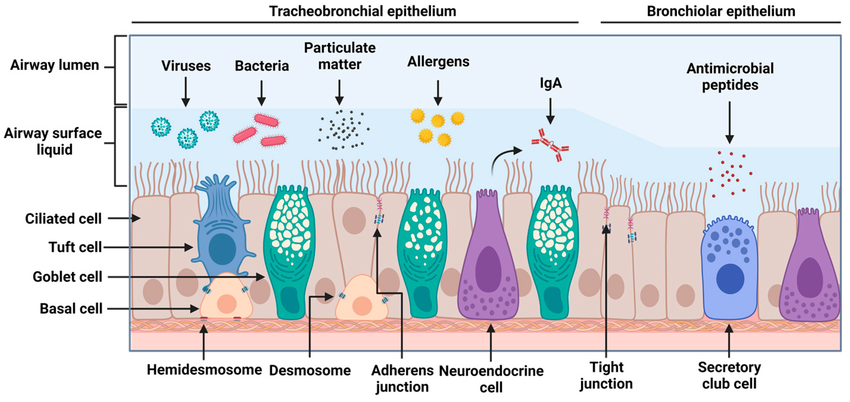
This protective shield isn't static; your body can produce more of it on demand. The factories responsible for this are specialized , which are scattered throughout the epithelial lining of your airways and intestines. Their name comes from their distinctive wineglass shape.
When these cells detect the presence of irritants or pathogens, they kick into high gear. They rapidly synthesize and secrete mucins, which then combine with water to form mucus. This surge in production is what causes a runny nose or chest congestion. It’s a sign that your body's defenses are actively working, creating a thicker, more extensive barrier to trap the increased number of invaders.
Clearing the Traps
Trapping viruses is only half the battle. The body also needs a way to dispose of the mucus and everything caught inside it. This is where cilia come in. Cilia are microscopic, hair-like structures that cover the surface of airway cells, sitting right underneath the mucus layer.
These cilia beat in a coordinated, wave-like motion, constantly pushing the mucus layer upward, away from the lungs. This process, known as the mucociliary escalator, works like a biological conveyor belt. It carries the mucus, along with all the trapped viruses, dust, and debris, up to the throat.
From there, it's typically swallowed. While it sounds unpleasant, the acid in your stomach is strong enough to destroy most pathogens that have survived the journey. This continuous cleaning process is vital for keeping your lungs clear and preventing infections from taking hold.
What is the primary function of mucus in the respiratory system?
Which component is most responsible for giving mucus its sticky, gel-like consistency?
So, the next time you have a cold, remember that the mucus is your body's way of fighting back. It's a sticky, clever trap that forms a critical part of your immune system's frontline defenses.