The Second World War
Origins of World War II
A Peace Built on Resentment
World War I, the “war to end all wars,” concluded in 1918. The victorious Allied powers met in Paris to hammer out a peace treaty, aiming to ensure such a devastating conflict could never happen again. The result was the Treaty of Versailles, signed in 1919. While it officially ended the war, it also planted the seeds for the next one.
The treaty imposed severe terms on Germany. It was forced to accept full responsibility for the war through the War Guilt Clause. It lost significant territory, including Alsace-Lorraine to France and lands that formed the new nation of Poland. Its military was drastically reduced, and it was ordered to pay crippling financial reparations to the Allied nations.
Many Germans viewed the treaty not as a negotiated peace but as a "Diktat"—a dictated peace they were forced to sign without any real say.
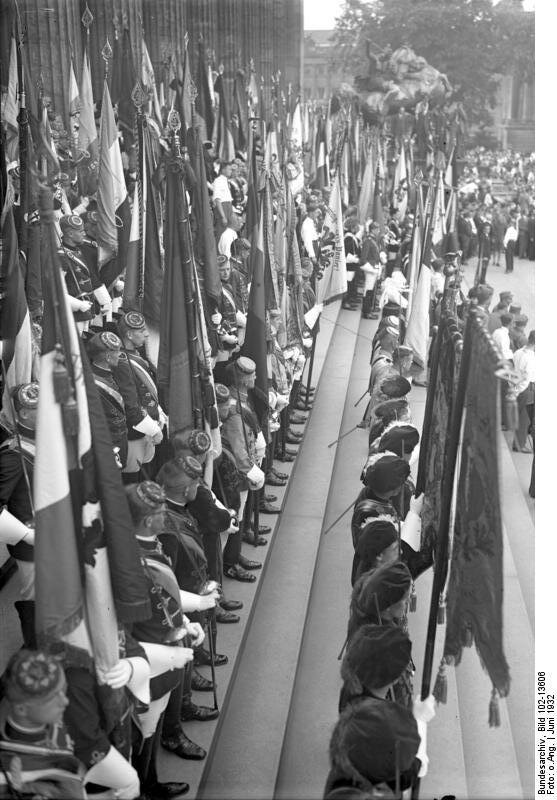
These terms created a deep sense of national humiliation and economic hardship in Germany. The new democratic government, the Weimar Republic, was immediately associated with this unpopular treaty. This widespread resentment created a fertile breeding ground for extremist political movements that promised to restore Germany's strength and honor.
The Rise of Strongmen
The 1920s and 1930s were a time of global economic turmoil, especially after the Great Depression began in 1929. In this climate of instability and despair, many people lost faith in democracy and looked for strong, decisive leaders. This led to the rise of totalitarian regimes in several countries.
In Italy, Benito Mussolini and his Fascist Party came to power, promising to restore the glory of the Roman Empire. In Germany, Adolf Hitler and the Nazi Party capitalized on the public's anger over the Treaty of Versailles and the economic crisis. Hitler promised to rebuild the military, reclaim lost lands, and create a powerful German empire. In Japan, a powerful military faction gained control of the government, pushing for aggressive expansion across Asia to secure natural resources.
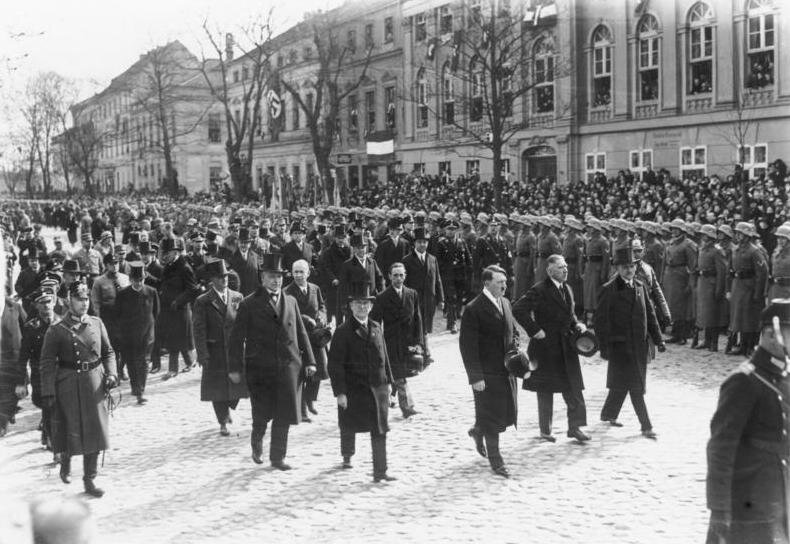
These regimes shared common traits: intense nationalism, a powerful military, and a desire for territorial expansion. They suppressed all political opposition and controlled every aspect of public and private life. Germany, Italy, and Japan would eventually form an alliance known as the Axis Powers, united by their aggressive ambitions.
Unresolved issues from Versailles Treaty contributed to rise of fascism
Gambling on Appeasement
As Germany began to rearm and expand in the mid-1930s, Britain and France faced a difficult choice. Haunted by the memory of World War I, they were desperate to avoid another conflict. They adopted a policy known as appeasement.
Appeasement
noun
A political policy of conceding to the demands of an aggressive or hostile power in order to avoid conflict.
The idea was to give Hitler what he said he wanted, assuming his demands were reasonable and limited. This policy was put to the test several times:
-
1936: Remilitarization of the Rhineland. Hitler sent troops into the Rhineland, a region of Germany that the Treaty of Versailles had demilitarized. Britain and France did nothing.
-
1938: The Anschluss. Hitler annexed Austria, his birth country, uniting it with Germany. The Allies again protested but took no action.
-
1938: The Sudetenland. Hitler next demanded the Sudetenland, a German-speaking region of Czechoslovakia. At the Munich Conference, Britain and France agreed to his demand in exchange for a promise that he would seek no more territory. British Prime Minister Neville Chamberlain returned home declaring he had secured "peace for our time."
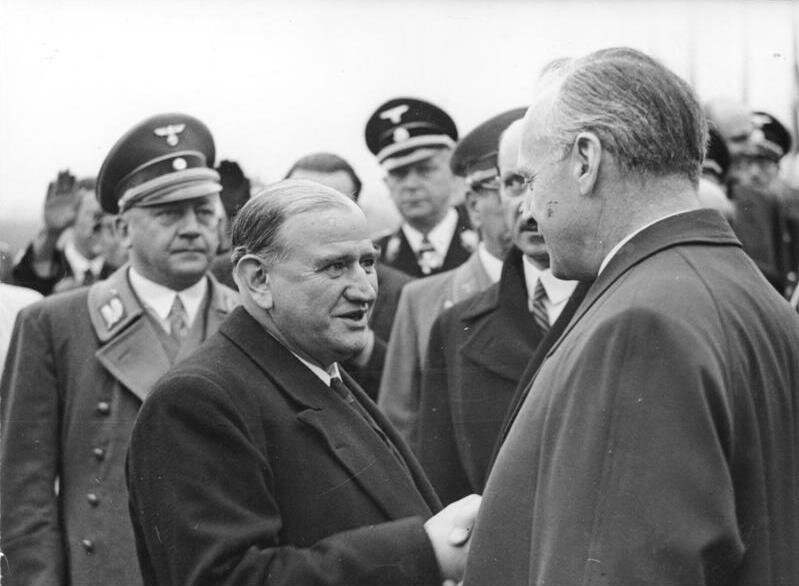
Appeasement failed. Instead of satisfying Hitler, it emboldened him. He saw the Western democracies as weak and unwilling to fight. In March 1939, just six months after the Munich Agreement, he broke his promise and invaded the rest of Czechoslovakia. The policy of appeasement was over.
The Final Straw
After the seizure of Czechoslovakia, Britain and France finally realized that Hitler's ambitions were limitless. They pledged to defend Poland, which was clearly Hitler's next target. In August 1939, the world was shocked when Nazi Germany and the communist Soviet Union signed a non-aggression pact. Secretly, they agreed to divide Poland between them.
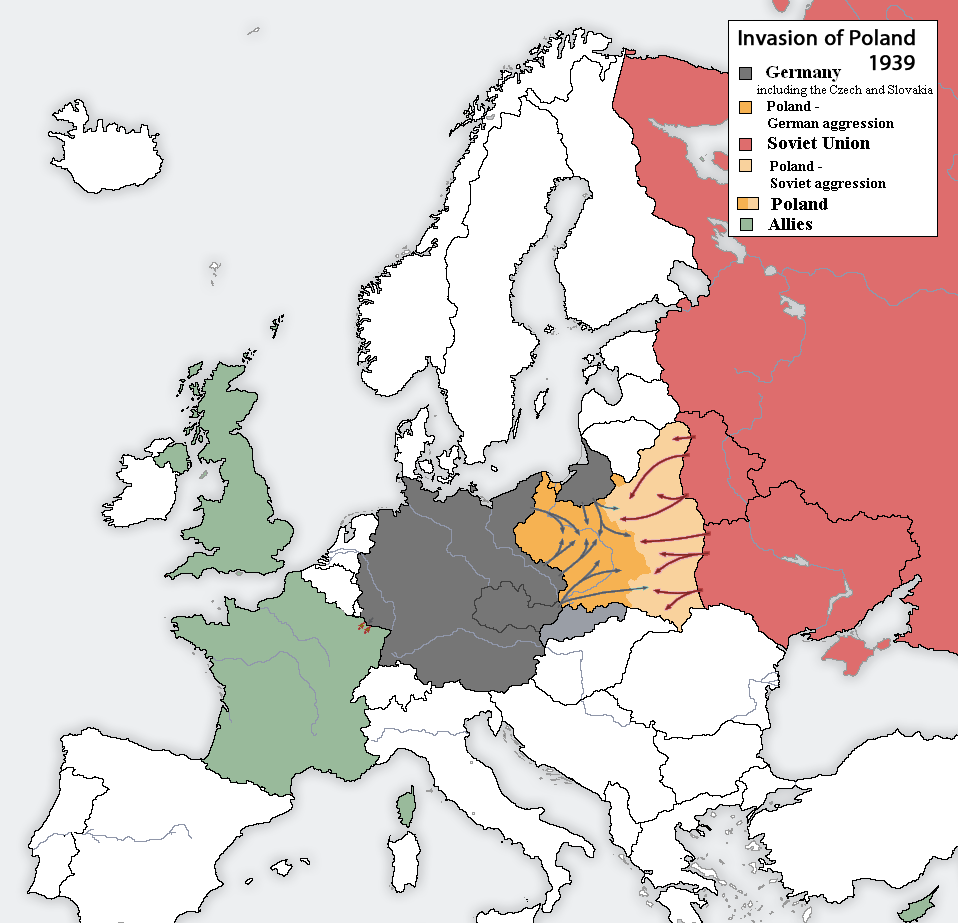
With the threat of a two-front war removed, Hitler was free to act. On September 1, 1939, German forces invaded Poland. Honoring their guarantee, Great Britain and France declared war on Germany two days later, on September 3. The Second World War had begun.
What was a major consequence of the harsh terms imposed on Germany by the Treaty of Versailles?
The policy of appeasement, adopted by Britain and France in the 1930s, was primarily motivated by a desire to...
The war's origins were a complex mix of lingering resentments, economic desperation, aggressive ideologies, and diplomatic failures. The harsh peace of 1919, far from ending all wars, had helped create the conditions for an even more terrible global conflict just two decades later.