The Science of Poop
Introduction to Feces
The Final Product
After your body has extracted all the useful nutrients from the food you eat, what's left over has to go somewhere. This leftover material is called feces. It’s the solid or semi-solid waste that exits the digestive tract.
Biologically, feces serve the essential function of excreting indigestible dietary components, metabolic byproducts, and excess bacteria from the gastrointestinal tract, thereby maintaining homeostasis and preventing toxicity.
So, what exactly is it made of? It’s not just old food. Feces is a complex mixture. Roughly 75% of it is water. The solid part consists of several things:
- Undigested Food: Tough materials like fiber, which the body can't break down.
- Bacteria: A large portion of the dry weight is made up of bacteria, both living and dead, from the gut microbiome.
- Metabolic Waste: This includes old red blood cells that have been broken down, which give feces its characteristic brown color, as well as sloughed-off cells from the lining of the intestines.
The Exit Strategy
The process of eliminating feces from the body is called defecation. After the small intestine absorbs most of the nutrients, the remaining waste moves into the large intestine, also known as the colon. The main job of the large intestine is to absorb the remaining water and electrolytes from the waste, turning it from a liquid into a solid mass.
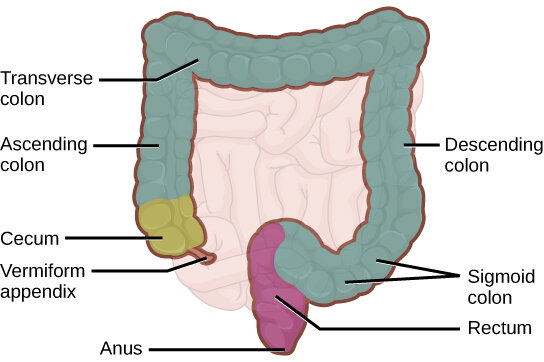
This solid waste, now feces, is stored in the rectum, the final section of the large intestine. As the rectum fills, it stretches, which sends a signal to the brain that it's time to find a bathroom. When the time is right, sphincter muscles in the anus relax, and contractions of the rectum push the feces out of the body.
Not All Poop Is the Same
The appearance of feces varies widely across the animal kingdom, largely due to differences in diet and digestive systems. An animal's droppings can tell you a lot about what it eats.
| Diet Type | Feces Characteristics | Examples |
|---|---|---|
| Herbivore | Often large, fibrous, and pellet-shaped. Less pungent odor. | Rabbits, deer, cows |
| Carnivore | Typically smaller, darker, and more uniform. Strong, unpleasant odor. | Lions, cats, wolves |
| Omnivore | Highly variable, changing based on the last few meals. | Humans, bears, pigs |
For example, rabbits produce two types of pellets. One is a hard, dry pellet they leave behind. The other is a soft, nutrient-rich pellet called a cecotrope, which they eat again to absorb more nutrients. Birds, on the other hand, don't produce separate urine and feces. They excrete a combined waste product called guano, which is a pasty substance.
Understanding feces is a fundamental part of biology, offering insights into digestion, health, and the diverse strategies life has evolved to process food and handle waste.