The Science of Oxytocin
Oxytocin Basics
The Messenger Molecule
Oxytocin is a powerful chemical messenger in the body. It acts as both a hormone, traveling through the bloodstream to distant targets, and as a neuropeptide, signaling between neurons in the brain. This dual role allows it to coordinate complex physiological processes.
neuropeptide
noun
A relatively short chain of amino acids that serves as a signaling molecule between brain cells.
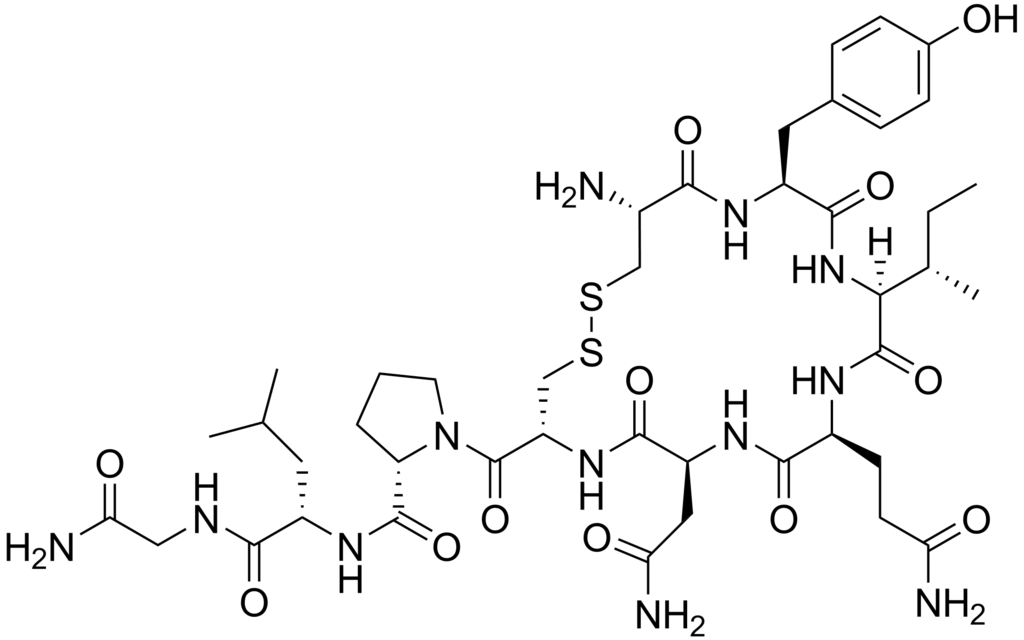
Structurally, oxytocin is a peptide hormone composed of nine amino acids. A disulfide bridge between two cysteine amino acids gives the molecule a distinctive ring shape. This specific structure is crucial for it to bind to its receptors and exert its effects.
From Brain to Body
Oxytocin's journey begins in the hypothalamus, a small but vital region of the brain that links the nervous system to the endocrine system. Specifically, it's synthesized within two clusters of neurons: the paraventricular nucleus (PVN) and the supraoptic nucleus (SON).
Once produced, oxytocin doesn't act right away. Instead, it's packaged into vesicles and transported down the long nerve fibers (axons) of these neurons. These axons extend from the hypothalamus down to the posterior pituitary gland, a small pea-sized structure at the base of the brain. There, oxytocin is stored, waiting for the right signal to be released into the bloodstream.
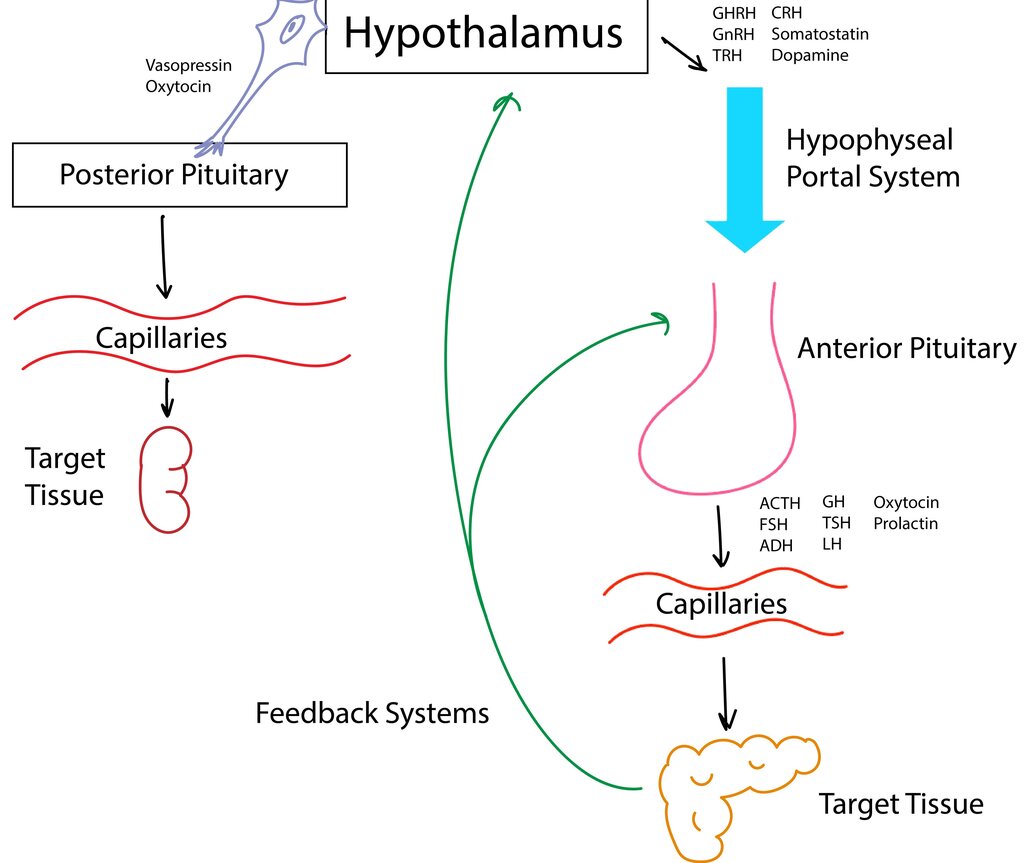
When the body needs oxytocin, nerve impulses from the hypothalamus trigger its release from the posterior pituitary. From there, it enters the circulation and travels to target cells throughout the body, such as those in the uterus and mammary glands.
A Key Role in Reproduction
The discovery of oxytocin is tied directly to its most well-known functions. In 1906, British pharmacologist Sir Henry Dale found that an extract from the pituitary gland could cause uterine contractions. This substance was later identified as oxytocin.
Its role in childbirth is a classic example of a positive feedback loop. When labor begins, the baby's head pushes against the cervix, sending nerve signals to the hypothalamus. This stimulates the posterior pituitary to release oxytocin, which travels to the uterus and intensifies contractions. Stronger contractions push the baby further, triggering even more oxytocin release. This cycle continues and strengthens until the baby is born.
Oxytocin's other primary function is in lactation. When a baby suckles at the breast, sensory nerves are stimulated, sending a signal to the mother's hypothalamus. This triggers the release of oxytocin, which causes smooth muscle cells in the mammary glands to contract. This process, known as the milk let-down reflex, ejects milk for the nursing infant.
With the evolution of mammals, oxytocin became integrally involved in controlling birth and lactation; as a result, the young acquired life sustaining functions and skills not in the context of the group but within the intimacy of the mother-infant bond.
These two roles highlight oxytocin's critical importance in mammalian reproduction, a significance recognized by its name, which comes from the Greek words oxys (sharp) and tokos (birth).
Time to review what you've learned about this important hormone.
In which part of the brain is oxytocin synthesized?
The process where uterine contractions during labor stimulate more oxytocin release, which in turn causes stronger contractions, is an example of what?