The Science of Diffusion
Introduction to Diffusion
What is Diffusion?
Picture a clear glass of water. If you add a single drop of food coloring, it doesn't just sit at the bottom. At first, you see a concentrated swirl of color. But over time, without any stirring, that color spreads out until the entire glass of water is uniformly tinted. This process is diffusion.
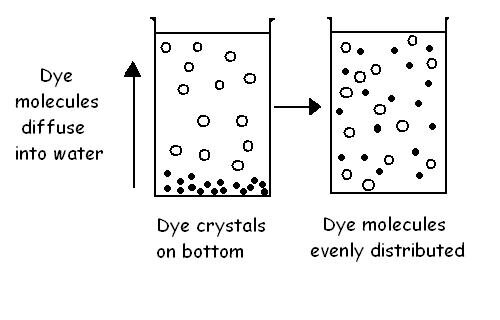
Diffusion is the natural movement of particles from an area of higher concentration to an area of lower concentration. It happens with gases, liquids, and even solids, although it's much slower in solids. It’s the reason you can smell cookies baking from another room or why sugar dissolves in your coffee.
In short, diffusion is the process of things spreading out.
The Driving Force
What makes these particles move? There isn't an invisible force pulling them from crowded areas to empty ones. The answer is simpler: random motion.
Every atom and molecule is in constant, random motion. They jiggle, vibrate, and bounce off each other endlessly. In an area with a high concentration of particles, there are more collisions and more movement in every direction. Think of a packed room where people are wandering around randomly. It's much more likely that someone will wander out into an empty hallway than it is for someone from the empty hallway to wander into the packed room.
This difference in concentration is called a concentration gradient. Diffusion is simply the net result of random particle movement down this gradient, from high concentration to low. It continues until the particles are spread out evenly, a state known as equilibrium.
Concentration Gradient
noun
The difference in the concentration of a substance between two areas. Particles naturally move "down" the gradient, from high to low concentration.
Why Diffusion Matters
Diffusion is a fundamental process that underpins countless phenomena in science. It's not just an abstract concept; it’s essential for life and the physical world.
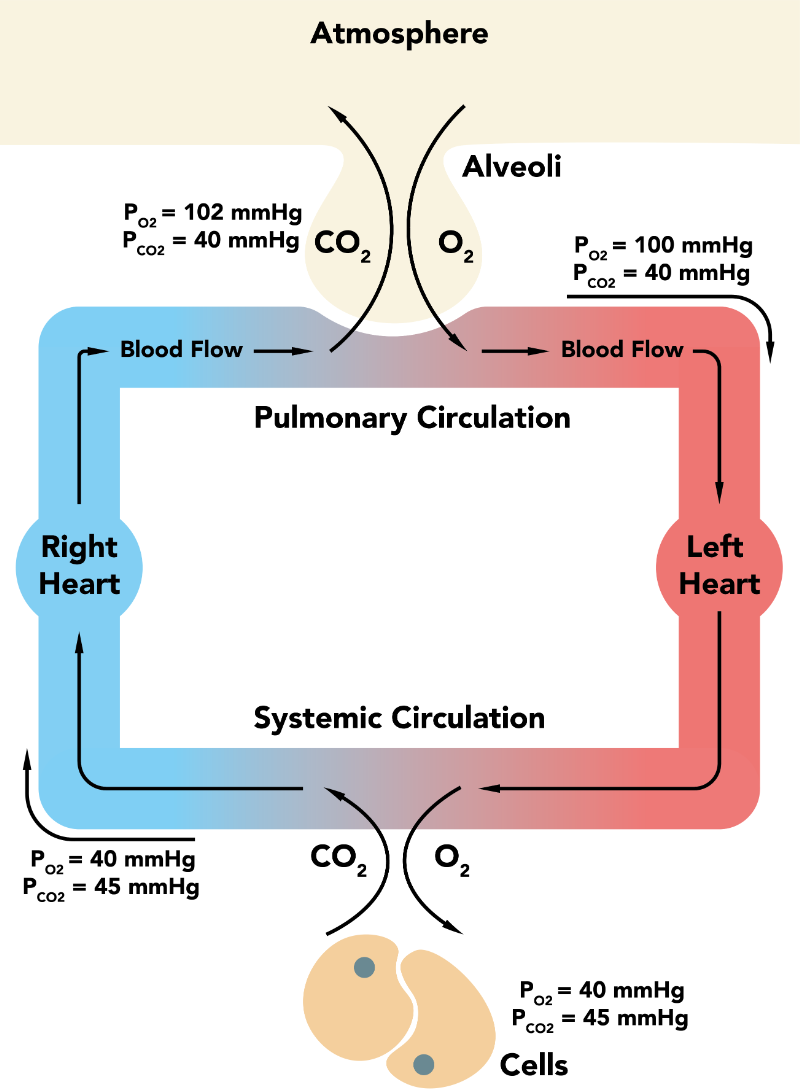
In biology, your cells rely on diffusion to survive. Oxygen diffuses from your lungs into your bloodstream, and then from your blood into your cells, all by following a concentration gradient. At the same time, carbon dioxide, a waste product, diffuses out of your cells and into your blood to be carried away.
In chemistry, diffusion allows reactants in a solution to mix and collide, enabling chemical reactions to occur. In physics, it helps explain how heat transfers through materials and how different gases mix together in the atmosphere. Understanding this simple spreading-out process is a key building block for exploring much more complex systems.
Now, let's test your knowledge of these core concepts.