The Science of Breathing
Respiratory System Anatomy
The Pathway of Air
Every breath you take begins a journey. Air enters your body through the upper respiratory tract, a series of connected passages that warm, moisten, and filter the air before it reaches your lungs. This journey starts in your nasal cavity.
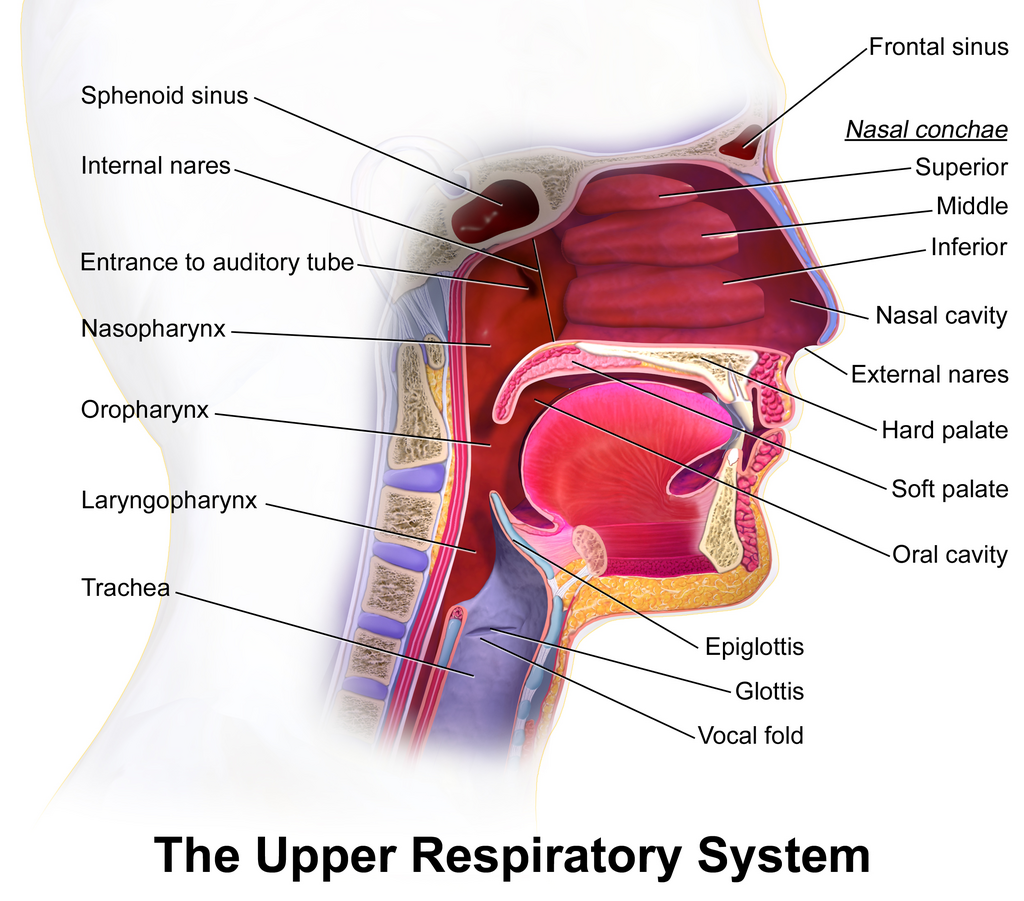
The nasal cavity is lined with a mucous membrane and tiny hairs called cilia. The mucus traps dust, pollen, and other debris, while the cilia sweep it away. This cavity also warms and humidifies the air, protecting the delicate tissues deeper inside your respiratory system. From the nasal cavity, air moves into the pharynx, a muscular tube that serves as a passageway for both air and food. The pharynx is divided into three regions: the nasopharynx (behind the nose), the oropharynx (behind the mouth), and the laryngopharynx (just above the larynx).
Because the pharynx is a shared pathway, a small flap of tissue called the epiglottis plays a crucial role. It covers the opening to the larynx when you swallow, preventing food and drink from entering your airway.
Below the pharynx lies the larynx, or voice box. This structure is made of cartilage and contains the vocal cords. As air passes over the vocal cords, they vibrate to produce sound. The larynx marks the end of the upper respiratory tract and the gateway to the lower tract.
Into the Lungs
After passing through the larynx, air enters the trachea, commonly known as the windpipe. It's a rigid tube, kept open by C-shaped rings of cartilage, that extends down into the chest. The trachea is also lined with cilia and mucus to continue filtering the air.
trachea
noun
A large membranous tube reinforced by rings of cartilage, extending from the larynx to the bronchial tubes and conveying air to and from the lungs; the windpipe.
The trachea divides into two smaller tubes called the primary bronchi (one for each lung). This is where the bronchial tree begins. Each bronchus enters a lung and continues to split into smaller and smaller branches, much like the branches of a tree. The secondary bronchi supply air to the lobes of the lungs (three on the right, two on the left), and these further divide into tertiary bronchi. The branching continues, creating narrower tubes called bronchioles.
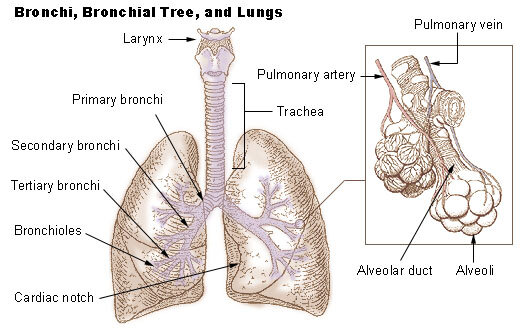
Unlike the trachea and bronchi, bronchioles do not have cartilage to keep them open. Instead, their walls contain smooth muscle that can contract or relax to control airflow. This branching network ensures that air is distributed efficiently throughout the entire lung.
The Lungs and Gas Exchange
The lungs are a pair of spongy, air-filled organs located on either side of the chest. The right lung is slightly larger and has three sections, or lobes, while the left lung has two lobes to make room for the heart. Each lung is enclosed by a thin, double-layered membrane called the pleura.
The outer pleural layer attaches to the chest wall, while the inner layer covers the lung. Between these two layers is the pleural cavity, a thin space containing a small amount of fluid. This fluid lubricates the surfaces, allowing the lungs to expand and contract smoothly during breathing.
At the very end of the tiniest bronchioles are clusters of microscopic air sacs called alveoli. This is where the critical work of the respiratory system happens. There are hundreds of millions of alveoli in the lungs, creating a massive surface area for gas exchange—roughly the size of a tennis court.
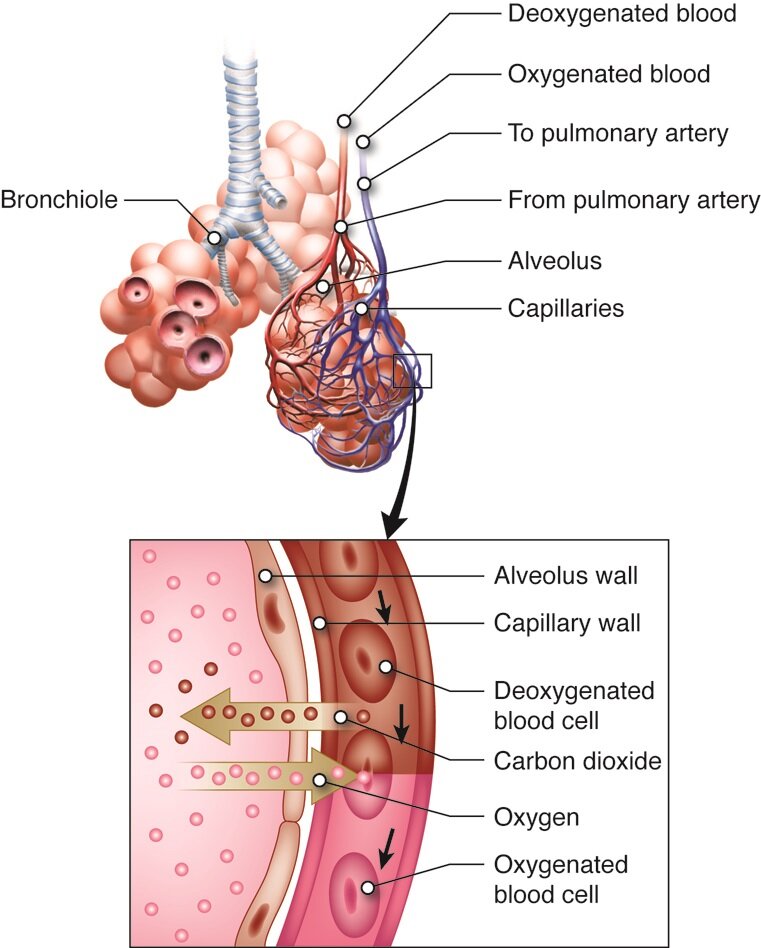
Each alveolus is wrapped in a dense network of tiny blood vessels called capillaries. The walls of both the alveoli and the capillaries are incredibly thin, just a single cell thick. This allows oxygen from the inhaled air to pass easily into the blood, while carbon dioxide, a waste product from the body, passes from the blood into the alveoli to be exhaled.
Now, let's test your knowledge of the respiratory system's anatomy.
What is the primary function of the cilia in the nasal cavity and trachea?
Air passes through the three regions of the pharynx in what order during inhalation?
Understanding these structures provides the foundation for learning how the process of breathing and gas exchange actually works.