The Science of Bird Flight
Introduction to Bird Flight
Designed for the Sky
Flight is the defining characteristic of most birds, but it’s not just about having wings. Every part of a bird’s body, from its bones to its heart, is fine-tuned for life in the air. These remarkable adaptations work together as a single, highly efficient system, turning the dream of flight into a daily reality.

To understand how birds fly, we need to look under the feathers. The secret lies in a combination of low weight, high power, and incredible efficiency. These three principles have guided the evolution of birds, resulting in some of the most specialized anatomy in the animal kingdom.
Hollow Bones and a Fused Frame
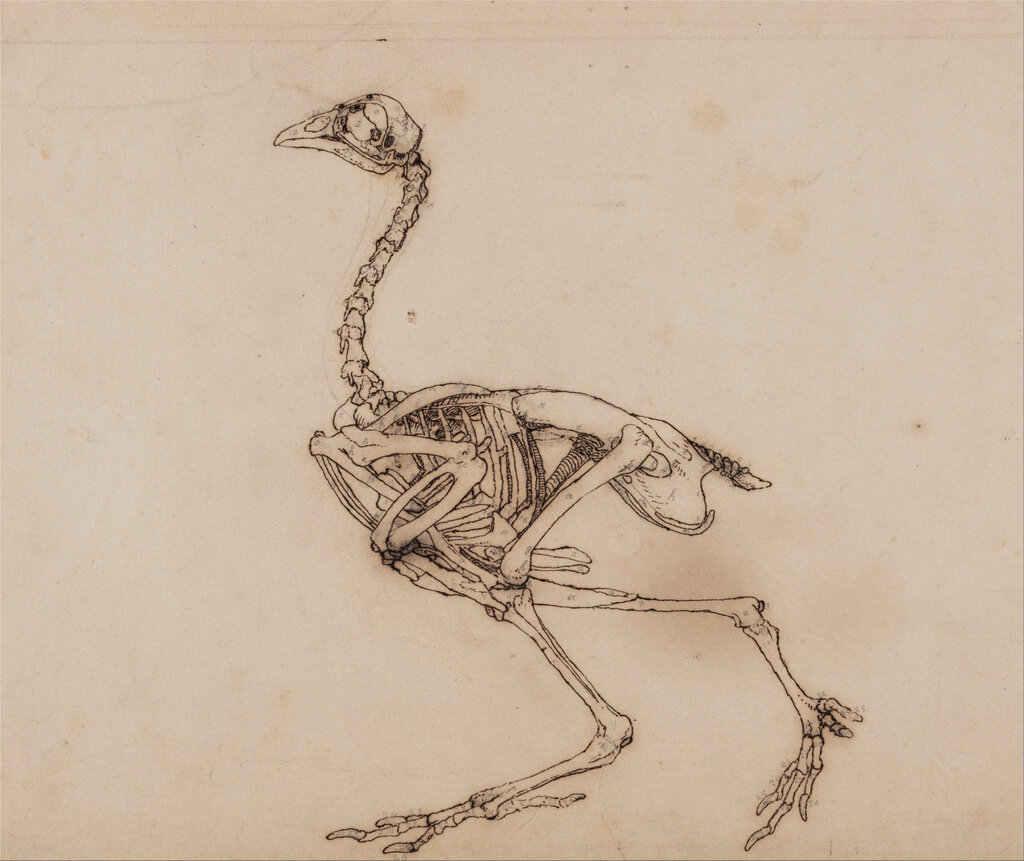
Imagine trying to fly with heavy, solid bones. It would be impossible. Birds solved this problem with a lightweight yet incredibly strong skeleton. Many bird bones are hollow, reinforced by internal struts or trusses. This structure, called pneumatization, makes them light without sacrificing strength, much like the hollow tubes of a bicycle frame.
But lightness isn't enough. The skeleton also needs to be rigid to withstand the stresses of flight. Many bones that are separate in other animals are fused in birds. The collarbones are fused to form the furcula, or wishbone, which acts like a spring during the wingbeat. Vertebrae in the lower back are fused with the pelvis to create a sturdy platform called the synsacrum, providing solid support for landing and takeoff.
The Engine of Flight
A bird's flight muscles are its engine, and they are immense. The two main muscles responsible for flapping are the pectoralis and the supracoracoideus. The pectoralis muscles, the largest in a bird's body, pull the wings down in the powerful downstroke that generates most of the lift. They can make up to 15% of a bird's total body weight.
Getting the wings back up is the job of the smaller supracoracoideus muscles. In a clever bit of biological engineering, these muscles are also located on the bird's chest. They connect to the top of the wing bone via a tendon that loops through a hole in the shoulder, acting like a rope and pulley system to lift the wing.
Both of these massive muscles attach to a large, flat extension of the breastbone called the keel, or carina. This provides a large surface area for muscle attachment, similar to the keel of a boat providing stability.
An Internal Powerhouse
Powering those massive muscles requires a tremendous amount of oxygen. A bird's respiratory system is the most efficient in the animal kingdom. Unlike mammals, who breathe in and out of static lungs, birds have a system of air sacs that allows for a one-way flow of air. This means their lungs receive a constant supply of fresh, oxygenated air, both when they inhale and when they exhale. It's like having a supercharger built in.
This oxygen is delivered by an equally impressive circulatory system. Birds have a large, four-chambered heart that beats incredibly fast, pumping oxygen-rich blood to the flight muscles with extreme efficiency. A hummingbird's heart, for example, can beat over 1,200 times per minute during flight.
The Path to the Sky
Birds didn't just appear one day. Their ability to fly is the result of a long evolutionary journey that began with their dinosaur ancestors. The fossil record shows that birds evolved from a group of two-legged dinosaurs called theropods, the same group that includes Tyrannosaurus rex and Velociraptor.
One of the most famous transitional fossils is Archaeopteryx, which lived about 150 million years ago. It had features of both birds and dinosaurs. Like modern birds, it had feathered wings. But it also had teeth in its beak, claws on its wings, and a long, bony tail—all features of its dinosaur relatives.
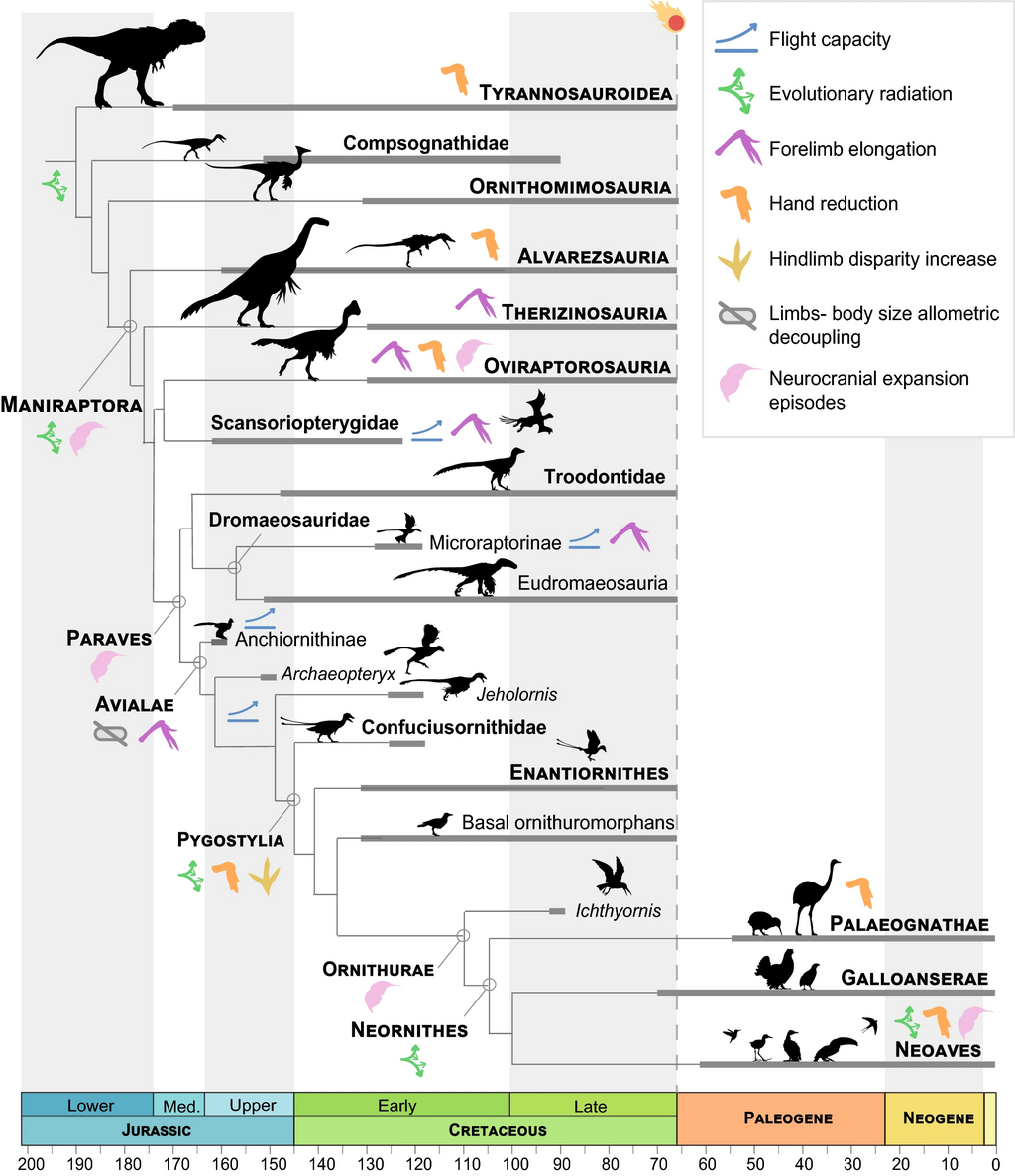
Early bird-like dinosaurs likely used their feathers for insulation or display before they were adapted for flight. The evolution from ground-dweller to master of the sky was a gradual process, involving the shrinking of the body, the fusion of bones, and the refinement of the wing and feather structure over millions of years.
Powered flight—flapping rather than gliding—probably evolved multiple times in dinosaurs, but only one of those lineages survived to become the birds we see today.
It's time for a quick review of these adaptations.
Now, let's test your understanding of what makes avian flight possible.
What is the primary advantage of the pneumatization (hollow structure) of bird bones?
Which structure in a bird's skeleton is formed by the fusion of the collarbones and acts like a spring during the wingbeat?
These interconnected systems of lightweight bones, powerful muscles, and super-efficient internal organs are what allow birds to conquer the skies.