The Science Behind Acne
Introduction to Acne
What Is Acne?
Almost everyone gets a pimple at some point. But when breakouts are frequent or widespread, it’s known as acne vulgaris. This is the most common skin condition in many parts of the world, affecting millions of people, primarily during their teenage years but often extending into adulthood.
Acne isn't just one type of blemish. It can show up as:
- Whiteheads: Pores that are clogged and closed off.
- Blackheads: Clogged pores that remain open, allowing the contents to oxidize and turn dark.
- Pimples (Papules/Pustules): Inflamed red bumps, sometimes with a white or yellow center of pus.
- Nodules and Cysts: Deeper, larger, and often painful lumps under the skin.
A Look Beneath the Skin
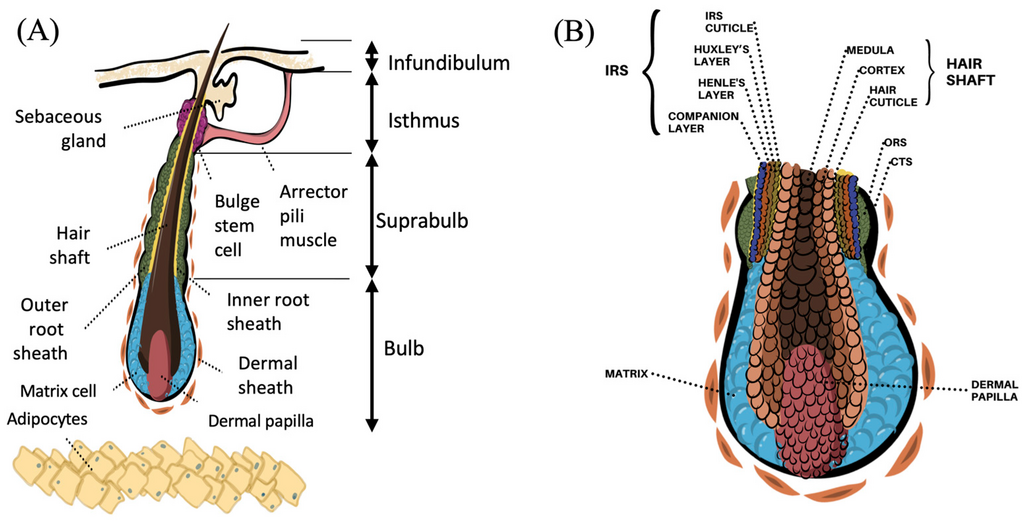
To understand acne, we need to look at the tiny structures within our skin called hair follicles. You might think of them as just the place where hair grows, but they're more complex. Each follicle is like a microscopic canal that opens to the surface through a pore.
Attached to these follicles are sebaceous glands. Their job is to produce an oily substance called sebum. Sebum is essential for keeping your skin lubricated and protected. In a healthy follicle, this oil travels up the canal, exits through the pore, and spreads over your skin's surface.
How a Blemish Forms
Acne begins when this normal process goes wrong. It's a chain reaction that starts deep inside the follicle.
First, the sebaceous glands go into overdrive and produce too much sebum. At the same time, the follicle lining sheds dead skin cells more rapidly than usual. This sticky combination of excess oil and dead cells forms a plug, blocking the pore. This plug is called a comedo.
If the plug is below the skin's surface, it's a closed comedo, or a whitehead. If it's open to the air, the top of the plug oxidizes and darkens, forming an open comedo—a blackhead.
This clogged, oily environment is the perfect breeding ground for a bacterium that normally lives on our skin, Cutibacterium acnes (C. acnes). As these bacteria multiply, they trigger an immune response. Your body sends inflammatory cells to fight the bacteria, resulting in the redness, swelling, and pus we recognize as a pimple.
So, what causes this whole process to start? While the exact cause can be complex and vary from person to person, it generally boils down to a few key factors.
The primary drivers of acne are hormonal fluctuations (especially androgens), bacterial activity on the skin, and a genetic predisposition to developing the condition.
These factors work together to create the perfect storm for breakouts. We'll explore each of them in more detail later on. For now, let's check your understanding of the basics.
What is the primary role of sebum in healthy skin?
The initial plug of excess oil and dead skin cells that blocks a hair follicle is called a:
Understanding the fundamentals of how acne forms is the first step toward managing it effectively.