The Science and Management of Pain
Introduction to Pain
More Than a Feeling
Pain is an unpleasant, but vital, part of life. The International Association for the Study of Pain defines it as "an unpleasant sensory and emotional experience associated with, or resembling that associated with, actual or potential tissue damage." It’s more than just a physical sensation; it's a complex experience created by your brain to alert you to danger and protect you from harm.
Think of pain as your body's alarm system. It goes off when your brain concludes, based on all the information it has, that your body is in danger and you need to do something about it.
This alarm system is a sophisticated process involving specialized nerve cells, your spinal cord, and your brain all working together. Understanding this pathway is the first step to understanding pain itself.
The Pain Pathway
Imagine you step on a sharp rock. Instantly, a message of potential danger begins its journey to your brain. This journey starts with specialized sensors.
Nociceptor
noun
A sensory neuron that responds to damaging or potentially damaging stimuli by sending signals to the spinal cord and brain.
Nociceptors are nerve endings found all over your body, in your skin, muscles, joints, and organs. They don't sense normal touch or temperature. Instead, they activate only when they detect a stimulus intense enough to potentially cause damage, like extreme heat, intense pressure, or harmful chemicals. When a nociceptor is triggered, it fires off an electrical signal.
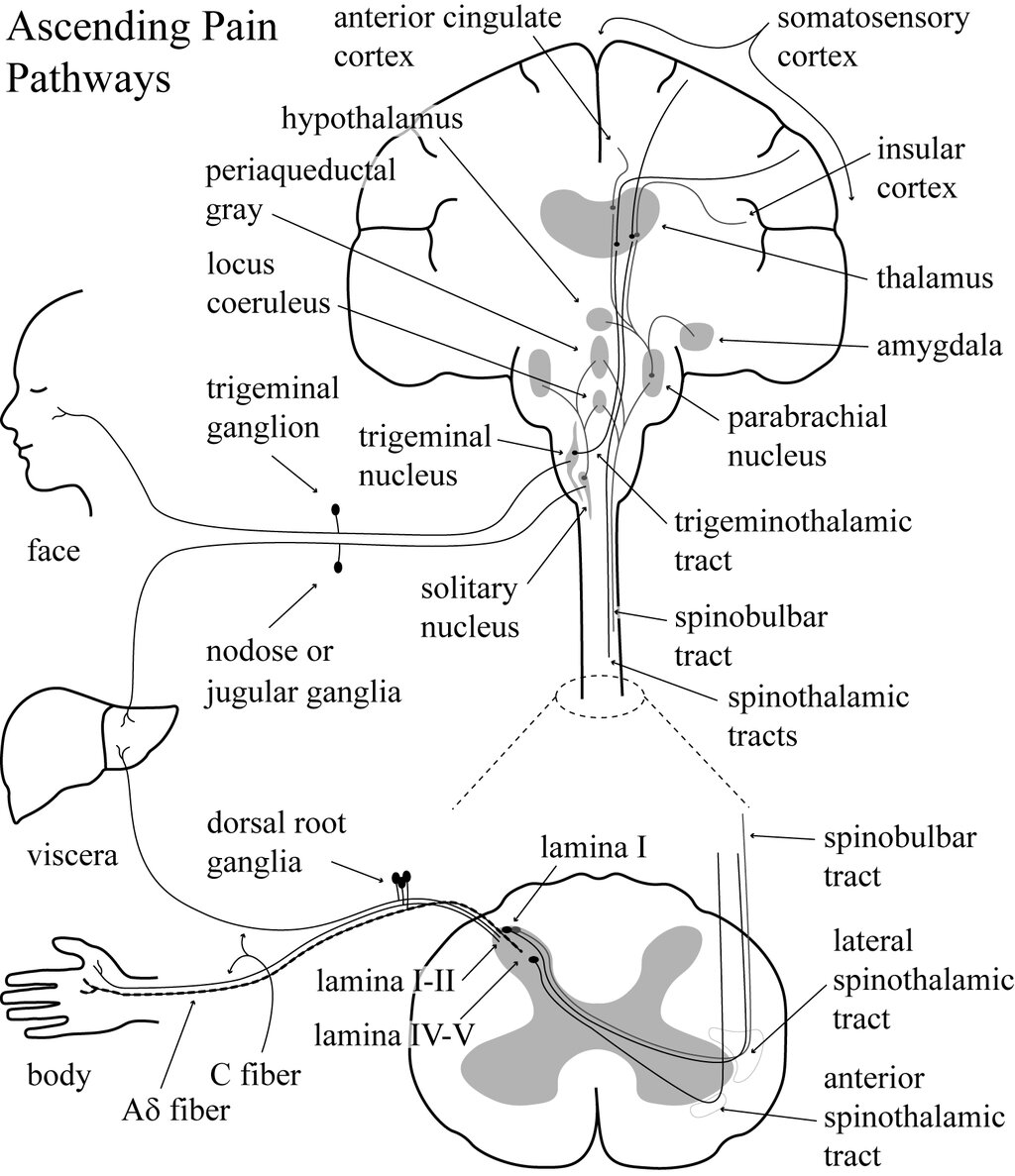
This signal travels along nerve fibers to the spinal cord, which acts as a crucial relay station. Here, the message is passed from the initial nerve cell to a new one that carries the signal up to the brain. The spinal cord can also trigger immediate, protective actions without waiting for the brain's input. This is called a reflex, like when you automatically pull your hand away from a hot stove.
The final destination for the pain signal is the brain. It's here that the electrical signals are processed and interpreted as the feeling we call pain. Multiple areas of the brain light up, not just one. Some parts process the location and intensity of the pain, while others handle the emotional response, like fear or annoyance. This is why pain is not just a sensation but also an emotional experience.
Acute vs Chronic Pain
Not all pain is the same. The most basic distinction is between acute and chronic pain, which differ mainly in their duration and purpose.
| Feature | Acute Pain | Chronic Pain |
|---|---|---|
| Duration | Short-term (minutes to weeks) | Long-term (3+ months) |
| Cause | Usually a specific injury or illness | May start with an injury, but persists after healing |
| Purpose | Protective alarm system | No clear protective purpose |
| System State | A properly functioning alarm | A malfunctioning, oversensitive alarm |
Acute pain is the normal, predictable response to an injury. It's the pain you feel from a cut, a sprain, or after surgery. It serves a clear purpose: it tells you to stop what you're doing, protect the injured area, and let it heal. Once the injury heals, the acute pain goes away.
Chronic pain is different. It's pain that lasts for more than three months, continuing long after the initial injury has healed. In these cases, the nervous system's alarm stays on. The pain signals keep firing, even without an ongoing injury. It's as if the alarm system itself has become faulty, creating a persistent sensation of pain that no longer serves a protective function.
In general, acute pain resolves within weeks of the initial causative insult, whereas chronic pain is continuous, long-term pain which can last months or years
Understanding this distinction is key. Acute pain is a symptom of tissue damage, while chronic pain is more like a condition of the nervous system itself. They require very different approaches to understand and manage.