The Science and History of Gunpowder
Origins of Gunpowder
The Elixir of Death
Around the 9th century in Tang dynasty China, alchemists were busy with a monumental task: discovering the elixir of life. They mixed and heated all sorts of substances, hoping to create a potion for immortality. In their quest for eternal life, they stumbled upon something quite the opposite.
Instead of an elixir, they created an explosive black powder. A mixture of saltpeter, sulfur, and charcoal that burned with incredible speed and force.
Early texts from the period don't hide the shock of this discovery. An alchemical text from the mid-800s warns against mixing these specific ingredients, describing how it could singe beards and even burn down the houses of those experimenting with it. The recipe for this volatile mixture, which they called huoyao (火藥), or "fire medicine," was first formally written down in a military text from the Song Dynasty called the Wujing Zongyao in 1044.
From Fireworks to Fire Lances
Before it became a tool of war, gunpowder was a source of wonder. The Chinese used its explosive properties to create spectacular fireworks for religious festivals, court ceremonies, and military celebrations. They packed the powder into bamboo tubes and paper cases to produce loud bangs and dazzling displays of light, believing the noise could ward off evil spirits.
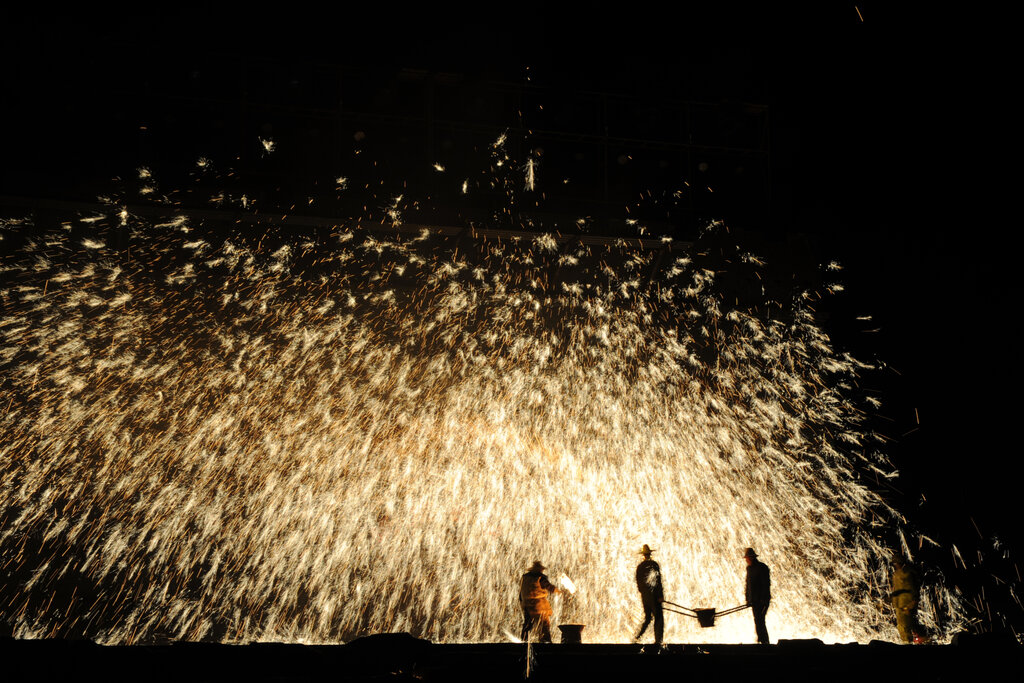
It wasn't long before military minds saw another use for this fire medicine. By the 10th century, the Song dynasty's military began attaching gunpowder tubes to spears. This created the "fire lance," one of the world's first firearms. It was essentially a spear that could also shoot a jet of flames and shrapnel at an enemy from several feet away. It was a terrifying psychological weapon, designed to shock and disorient troops.
From the fire lance, gunpowder weapons evolved. Engineers developed early forms of grenades and bombs by packing gunpowder into paper or bamboo casings. These could be lit and thrown by hand or launched from catapults, creating explosions that could break up enemy formations.
A World on Fire
Gunpowder technology didn't stay in China for long. The Mongol Empire, which conquered China in the 13th century, quickly adopted gunpowder weapons and used them in their campaigns westward. Through trade routes like the Silk Road and military conflicts, the knowledge spread to the Middle East.
Gunpowder tech spread via Silk Roads.
Arab chemists and engineers refined the recipes and developed more powerful forms of gunpowder. They also made significant advances in rocketry and cannonry. By the 14th century, the technology had made its way into Europe, where it would fundamentally change the nature of warfare. The age of knights in armor and fortified castles began to crumble, as cannons could now shatter stone walls that had once been impenetrable. This technological shift didn't just alter battles; it helped reshape entire societies, paving the way for the rise of powerful centralized states with standing armies.
What began as a failed attempt at immortality ended up altering the course of human history, proving that sometimes the most world-changing discoveries are made completely by accident.