The Science and Art of Color
Introduction to Color Theory
The Building Blocks of Color
At the heart of all colors are three foundational hues that can't be created by mixing others. These are the primary colors: red, yellow, and blue. Think of them as the original ancestors of every other color you can imagine. All other colors spring from combinations of these three.
When you mix any two primary colors, you get a secondary color. There are three of them:
- Red + Yellow = Orange
- Yellow + Blue = Green
- Blue + Red = Purple
Take it one step further by mixing a primary color with a neighboring secondary color, and you get a tertiary color. These have two-part names like yellow-orange, red-purple, or blue-green. They are the six shades that fill in the gaps between the primary and secondary colors.
Organizing the Rainbow
All these colors aren't just a random jumble. They have a logical order, which is visualized in the color wheel. The color wheel is a chart that shows the relationships between colors. It arranges them in a circle, making it easy to see how they are related.
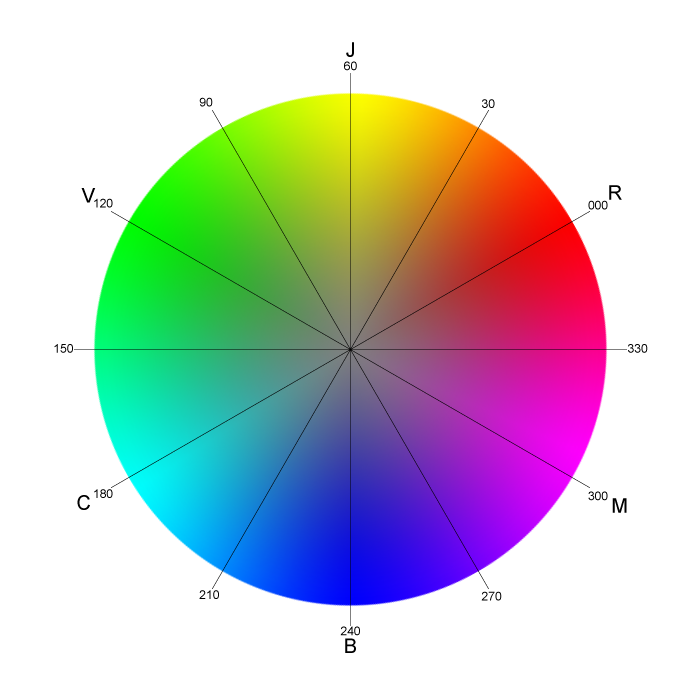
To build it, you start by placing the three primary colors in an equilateral triangle. Then, you place the secondary colors in between the primaries that create them. Finally, you fill in the remaining spots with the six tertiary colors. The result is a smooth, circular gradient of 12 basic hues. This simple tool is the foundation for understanding how colors work together.
The Three Dimensions of Color
When we talk about a specific color, we're actually describing three distinct properties. Thinking of a color just by its name is like describing a box by its length but ignoring its width and height. To truly understand a color, we need to look at its hue, saturation, and value.
Hue
noun
The purest form of a color, or what we typically think of as its name (like red, green, blue).
Hue is the most basic quality of a color. The 12 colors on the color wheel we just looked at are all distinct hues. It’s the foundational characteristic that separates red from blue, or green from orange.
Saturation
noun
The intensity or purity of a hue. High saturation means a color is vivid and bright; low saturation makes it appear dull or grayish.
Imagine a bright, fire-engine red. That’s a highly saturated color. Now, imagine mixing gray paint into that red. The red would become duller and less intense. Its saturation would be lower. A color with zero saturation is a shade of gray.
Value
noun
The lightness or darkness of a color. A high value means the color is light (closer to white), while a low value means it is dark (closer to black).
Value is about how much light a color appears to reflect. If you add white to a hue, you create a tint, raising its value. A light pink is a tint of red. If you add black, you create a shade, lowering its value. Maroon is a shade of red. This property is crucial for creating contrast and mood in a design.
Understanding these three elements—hue, saturation, and value—is key. Together, they give every color its unique identity and allow us to describe and manipulate color with precision.
Ready to test your knowledge? Let's see what you've learned about the fundamentals of color.
Which of the following are the primary colors?
Mixing the primary colors blue and yellow results in which secondary color?