The School of Life
Introduction to Collective Behavior
More Than the Sum of Its Parts
Have you ever seen a flock of starlings paint the sky at dusk? Thousands of birds move as one, creating swirling, hypnotic patterns. It looks like a carefully choreographed dance, but there's no leader, no director, and no plan. The same synchronized grace appears in a school of fish that instantly changes direction to avoid a predator, or a colony of ants that builds a living bridge to cross a gap.
This is collective behavior: the coordinated action of a large group of individuals without centralized control. It’s a system where complex, intelligent group patterns arise from animals following very simple rules. No single bird or fish has a picture of the whole pattern. It simply pays attention to its immediate neighbors.
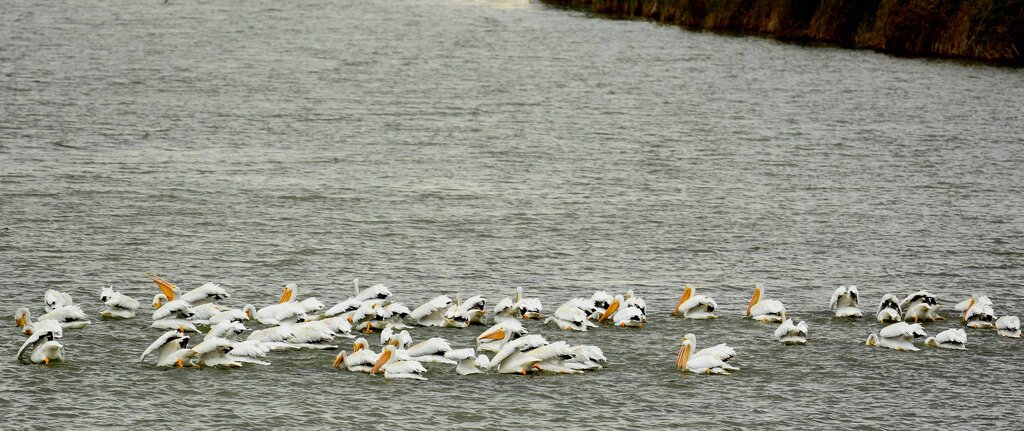
This phenomenon is everywhere in nature. Wildebeest migrate in vast herds across the African savanna, relying on the group's collective knowledge to find water and grazing land. Honeybees in a hive work together to regulate the temperature, ensuring the colony's survival through hot summers and cold winters. Each individual's actions are simple, but together, they achieve remarkable feats.
The Unseen Rules
How do these groups achieve such stunning coordination? The secret is self-organization. Instead of following a leader, each animal follows a short list of simple, local rules. For a bird in a flock, these rules might be:
- Separation: Don't get too close to your neighbors.
- Alignment: Try to fly in the same average direction as your neighbors.
- Cohesion: Steer toward the average position of your neighbors, but not so much that you crowd them.
That's it. By following these three basic instructions, the entire flock can exhibit complex behaviors like wheeling, diving, and avoiding obstacles as a single, fluid entity. It's a bottom-up system, where order emerges from local interactions rather than being imposed from the top down.
Think of it like a crowd doing "the wave" at a stadium. No one is in charge. People just stand up when they see their neighbor stand up. The result is a pattern that travels across the entire stadium, created by individuals following one simple rule.
Magic from the Many
When a group's behavior is more than what its individual members can do alone, we call this an emergent property. Emergence is the hallmark of collective behavior. A single ant is not particularly smart, but a colony of ants can find the shortest path to a food source, build complex nests, and farm fungi.
The colony's "intelligence" is an emergent property of the interactions between thousands of ants following simple chemical trails. No single ant understands the whole map; the map is stored in the network of trails left by the entire group.
Emergent behavior is the phenomenon of a system exhibiting properties or behaviors that are not present or obvious in its individual parts.
The significance of these behaviors is profound. They are essential strategies for survival. Collective behavior helps animals find food, choose new homes, avoid predators, and travel efficiently. For example, the V-formation of migrating geese helps each bird conserve energy by taking advantage of the air currents created by the bird in front of it. Safety in numbers dilutes the risk of any one individual being attacked.
By studying these natural systems, we can learn how to design better decentralized systems ourselves, from swarms of robots that can explore other planets to more efficient computer networks.