The Salesians of Don Bosco A Legacy of Youth
Introduction to Documentary Filmmaking
Telling True Stories
A documentary is a film that tells a true story. It's not about made-up characters or fantasy worlds. Instead, it aims to capture some aspect of reality. The goal might be to teach, to inform, or simply to create a record of a person, place, or event.
At its heart, a documentary is a non-fictional motion picture intended to document some aspect of reality, primarily for the purposes of instruction, education, or maintaining a historical record.
But just because they're based in fact doesn't mean they're all the same. Documentaries come in many different flavors, each with its own way of telling a story.
Styles of Storytelling
Documentary filmmakers use different styles to present their stories. The style you choose shapes how the audience experiences the film.
Expository documentaries aim to explain a topic. They often feature a narrator, sometimes called a "voice of God," who guides the viewer through the information. Think of classic nature documentaries where a calm voice explains the behavior of animals.
Observational films are the opposite. They try to be a "fly on the wall," capturing events as they unfold without any narration or interviews. The goal is to let viewers feel like they are right there, observing reality directly.
Participatory documentaries involve the filmmaker directly in the story. You might see them on screen, hear them asking questions, or watch as they interact with the subjects. This style acknowledges that the filmmaker's presence changes the story.
Regardless of the style, every good documentary needs a strong narrative. Just like a fictional movie, a documentary needs a beginning, a middle, and an end. This is often called the three-act structure.
The Technical Toolkit
To bring a story to life, you need to master a few technical skills. The three pillars of production are camera work, sound recording, and editing. You don't need the most expensive equipment to start, but understanding the fundamentals is crucial.
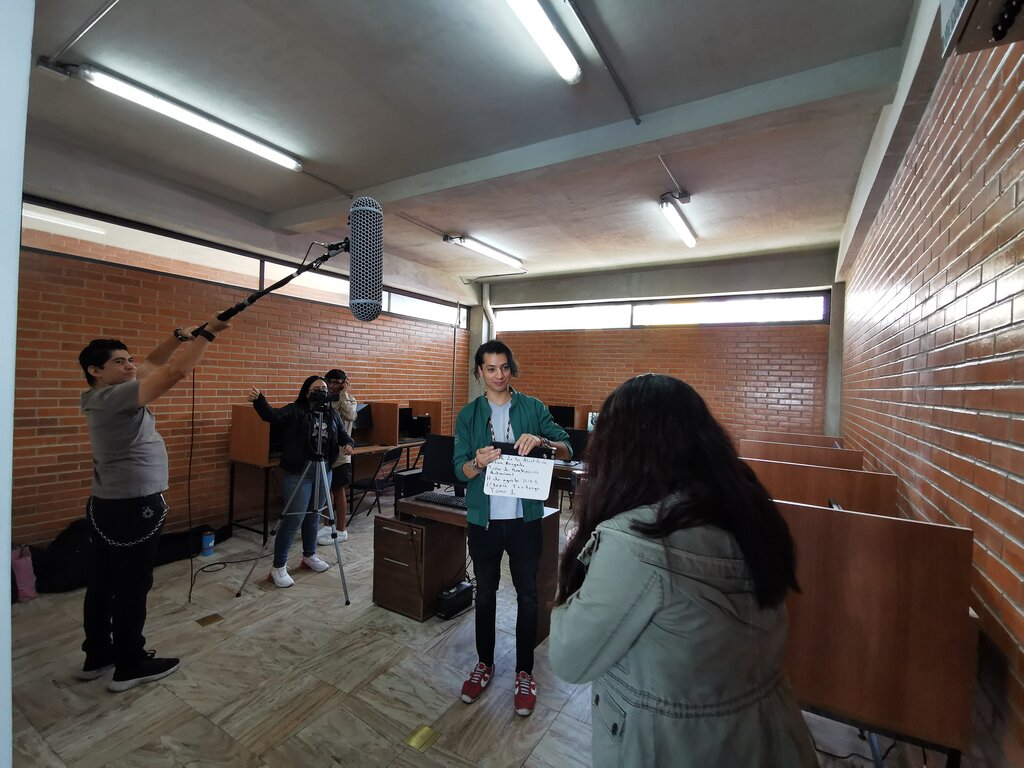
First, let's talk about the camera. Your job as the camera operator is to capture the visuals that tell the story. This means more than just pointing and shooting. Think about framing. What's in the shot? What's left out? A close-up on someone's face conveys intimacy or emotion, while a wide shot can establish a location or show scale.
Next is focus. A sharp, clear image is almost always what you want. Make sure your subject is in focus so the audience knows where to look. Finally, exposure is about getting the right amount of light. An image that is too dark (underexposed) or too bright (overexposed) can be hard to watch.
Good visuals are important, but clear audio is what separates an amateur video from a professional one.
Sound is just as important as the picture. The audience might forgive a slightly shaky shot, but they won't stick around for audio that's muffled, full of wind noise, or too quiet. The microphone built into your camera is rarely good enough. Whenever possible, use an external microphone and get it as close to your subject as you can. Your goal is to capture clean dialogue and important environmental sounds while minimizing distracting background noise.
Once you've filmed your scenes and recorded your audio, it's time for editing. This is where the story truly takes shape. Editing is the process of selecting the best shots, arranging them in a logical sequence, and trimming them to the right length. You'll add in any narration, interviews, music, and sound effects.
Good editing creates a smooth, coherent flow. It sets the pace of the film, builds suspense, and helps guide the audience's emotions. It's often said that a film is written three times: once in the script, once during shooting, and a final time in the edit.
Now that we've covered the basics, let's check your understanding.
What is the main characteristic of a documentary film?
A filmmaker creates a film about a protest march by joining the marchers, interviewing them on the move, and asking questions from behind the camera. Which documentary style does this best represent?
These foundational skills are the building blocks for creating any compelling documentary.