The Rosetta Stone
The Memphis Decree
Unlocking the Rosetta Stone
Most people know the Rosetta Stone as the key to decoding hieroglyphs, but its origins are far more political than academic. By exploring the turbulent reign of the young King Ptolemy V and the strategic motives of the Egyptian priesthood, this chapter reveals why this routine administrative decree was crafted and how a tool of royal propaganda accidentally became the most significant linguistic discovery in history. By the end of this lesson, you will understand how a blend of Pharaonic tradition and Hellenistic governance turned a simple political maneuver into an enduring masterpiece.
A Kingdom on the Edge
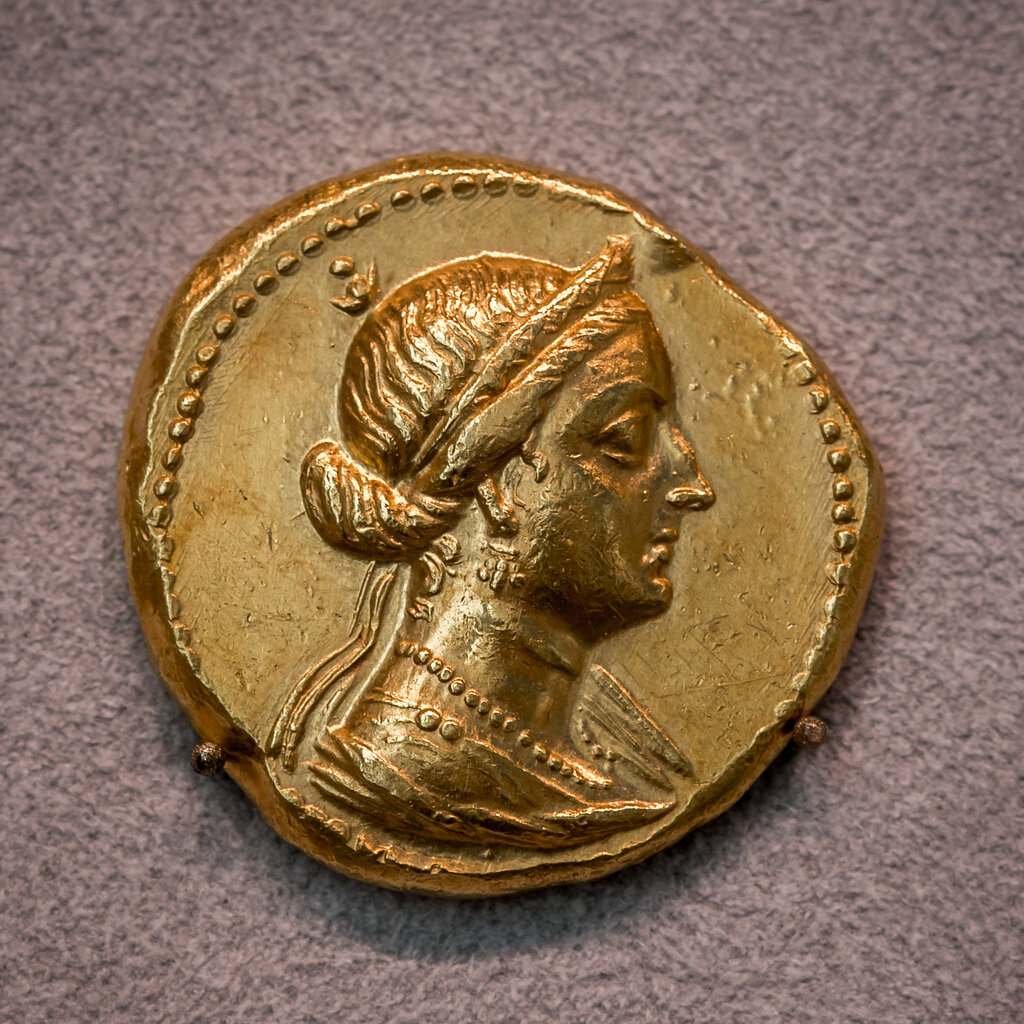
Egypt in 196 BCE was a place of high tension and low stability. The kingdom was ruled by the , a family of Greek descent that had sat on the Egyptian throne for over a century since the death of Alexander the Great. However, they were still seen as outsiders by much of the native population. The current king, Ptolemy V, was only thirteen years old, and he had inherited a realm plagued by internal revolts, foreign threats, and a treasury that was dangerously thin.
To the average Egyptian farmer, the king in Alexandria spoke a foreign tongue and worshipped in a different style. To the powerful Egyptian priests, the crown was a source of both patronage and frustration. The atmosphere wasn't one of sacred reverence, but of cold, hard calculation. The young king needed the priests to tell the people he was a god to legitimize his rule, and the priests needed the king to keep the temple doors open and the taxes away.
The Great Political Trade
The text on the Rosetta Stone is not a religious revelation; it is a contract. In 196 BCE, a council of priests met in Memphis to celebrate the coronation of Ptolemy V. They issued a decree that functioned as a massive quid pro quo. In exchange for the priests declaring the teenage boy a living god and establishing a in his honor, the king granted the temples significant tax exemptions and financial perks.
This was a classic administrative move. By embedding the king's authority into the religious fabric of the country, the Ptolemaic government could better manage a population that was culturally distinct from its rulers. The inscription reflects a fascinating dual identity: it uses the grand, ancient language of the Pharaohs to describe the king’s divinity, while the actual content reads like a modern bureaucratic audit, listing specific silver amounts and grain quantities owed to the temples.
The decree was essentially a local 'hometown' announcement intended to secure the loyalty of the Memphis region, never meant to be a message for the ages.
There is a profound irony in the Rosetta Stone’s survival. It was a standard, local political tool meant to solve a temporary crisis of legitimacy. When Ptolemy V’s power eventually faded and his dynasty collapsed, these stones were no longer relevant. Many were broken up and used as common building materials, which is exactly how the French found the Rosetta Stone centuries later—tucked into the wall of an old fort. A document that was intended to expire with the king's reign ended up becoming the most durable bridge to a lost civilization.
The story of the Rosetta Stone reminds us that history is often preserved by accident. What started as a desperate deal between a struggling boy-king and a shrewd priesthood eventually provided the key to unlocking three thousand years of Egyptian secrets. In the next section, we will look at how this piece of propaganda finally surrendered its secrets to the modern world.