The Root Five Approach to Art
Understanding the Golden Ratio
The Divine Proportion
Some numbers are more famous than others. You probably know , the ratio of a circle's circumference to its diameter. But have you met ? It's called the Golden Ratio, and it's a number that has fascinated thinkers for centuries. Its value is approximately 1.618.
The Golden Ratio comes from a simple geometric idea. Imagine a line segment. Now, divide it into two smaller pieces, a longer one (let's call it ) and a shorter one (). You've found the Golden Ratio if the ratio of the whole line () to the long piece () is the same as the ratio of the long piece () to the short piece ().
This unique proportion also has an official name: phi, spelled with the Greek letter . Mathematically, its exact value is .
A Number with History
The Golden Ratio is not a new discovery. Ancient Greek mathematicians were the first to study its properties. Euclid, in his famous book Elements from around 300 BC, described this proportion, calling it the "extreme and mean ratio." The term "divine proportion" came much later, during the Renaissance, when artists and mathematicians rediscovered its elegant properties.
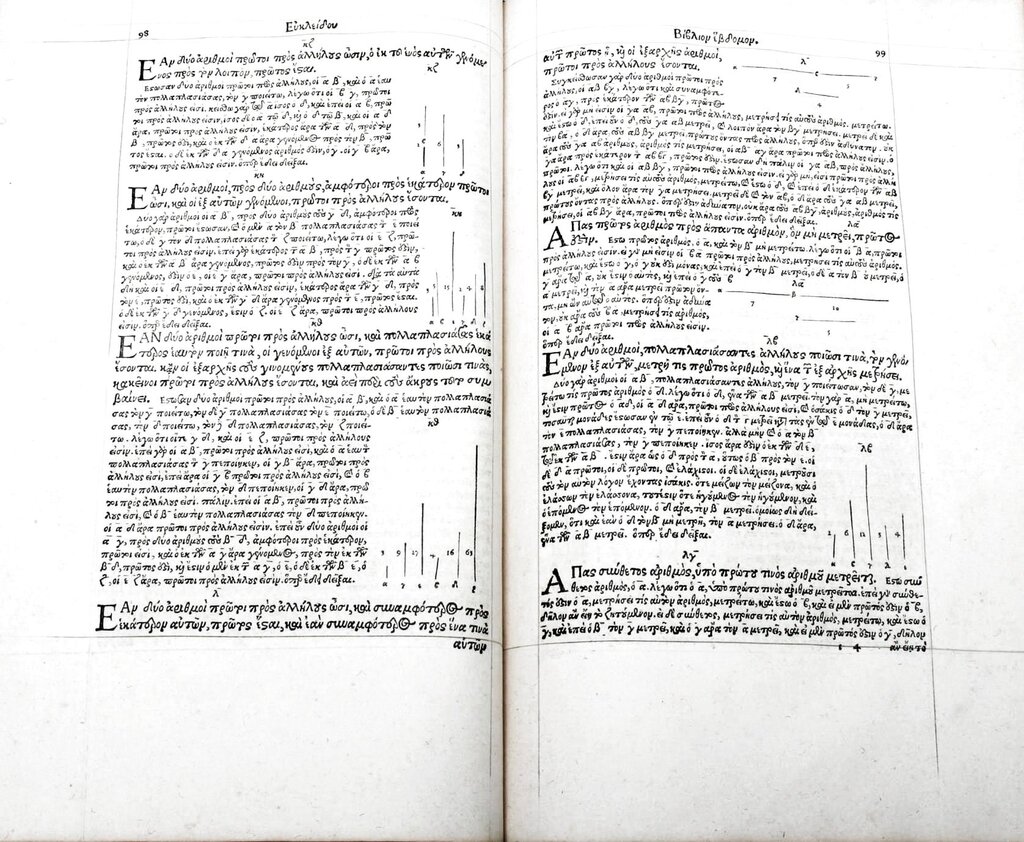
For centuries, this special number was mostly a mathematical curiosity. But its frequent appearance in geometry and nature led many to believe it held a special significance, a key to understanding harmony and beauty in the world.
Nature's Favorite Number
One of the most captivating things about the Golden Ratio is that it seems to be all around us. It appears in the growth patterns of many living things. The spiral arrangement of seeds in a sunflower head, the branching of trees, the shape of a nautilus shell, and even the spiral of some galaxies follow patterns related to .
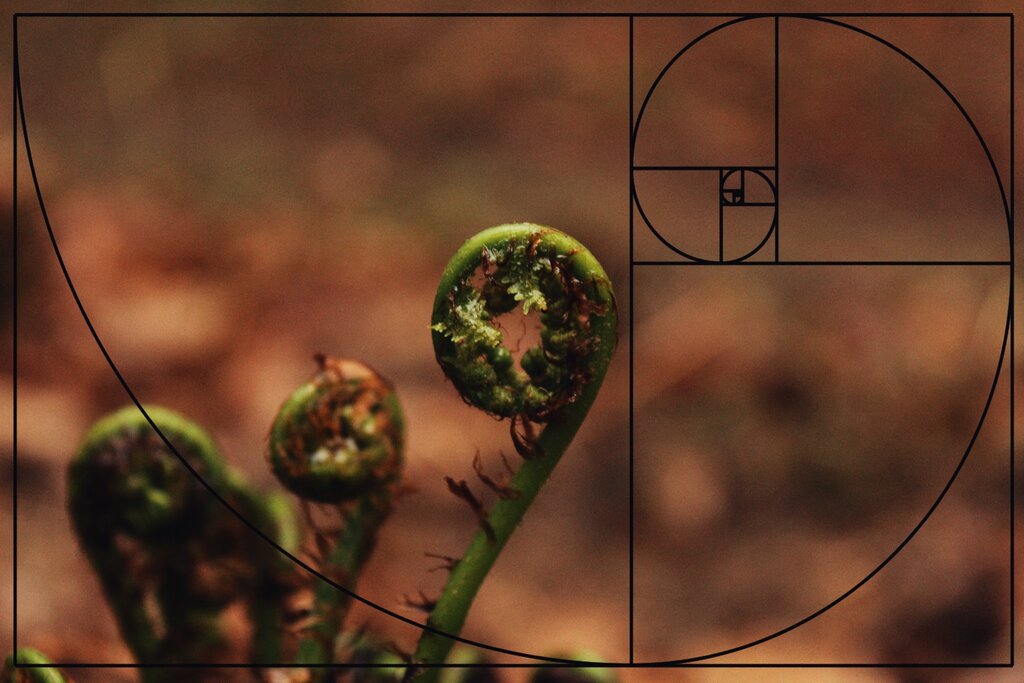
This isn't just a coincidence. These patterns often result from the most efficient way for something to grow or pack itself, like seeds in a flower head getting maximum exposure to sunlight. It seems that nature, in its search for efficiency, stumbled upon the same elegant math that fascinated the Greeks.
Humans have also used this proportion, consciously or not, in art and architecture for centuries. The Parthenon in Athens, built in the 5th century BC, is often said to have dimensions that fit within a golden rectangle, a rectangle whose sides have a ratio of .
While historians debate whether ancient architects used the Golden Ratio intentionally, its proportions are undeniably present in many celebrated structures, from the pyramids of Giza to more modern buildings.
A Formula for Beauty?
This brings us to a big question: is the Golden Ratio a universal formula for beauty? The idea is that shapes and compositions that use these proportions are naturally more pleasing to the human eye. They feel balanced, harmonious, and just plain right.
The entire aesthetic of classical art relies on three substantial ideals: beauty, harmony, and proportion.
This belief has made the Golden Ratio a guiding principle for many artists, designers, and photographers. By structuring a painting or a photograph around these proportions, they aim to create a composition with natural appeal and balance. While beauty is subjective, the enduring appeal of the Golden Ratio suggests there's something special about the harmony it creates.
What is the approximate numerical value of the Golden Ratio, often denoted by the Greek letter φ?
The Golden Ratio is found by dividing a line segment into two parts, a longer part () and a shorter part (). Which of the following mathematical relationships correctly defines this ratio?