The Roman Empire A to Z
Origins of Rome
The Wolf and the Twins
Every great story has a beginning, and Rome's is a legend. The city's founding myth starts with two twin brothers, Romulus and Remus. They were the sons of a princess and the god Mars, but their great-uncle, a jealous king, ordered them to be left to die in the Tiber River.
A lucky current washed their basket ashore. There, a she-wolf discovered them and nursed them back to health. A shepherd later found the boys and raised them as his own. As young men, they grew into natural leaders, strong and charismatic.
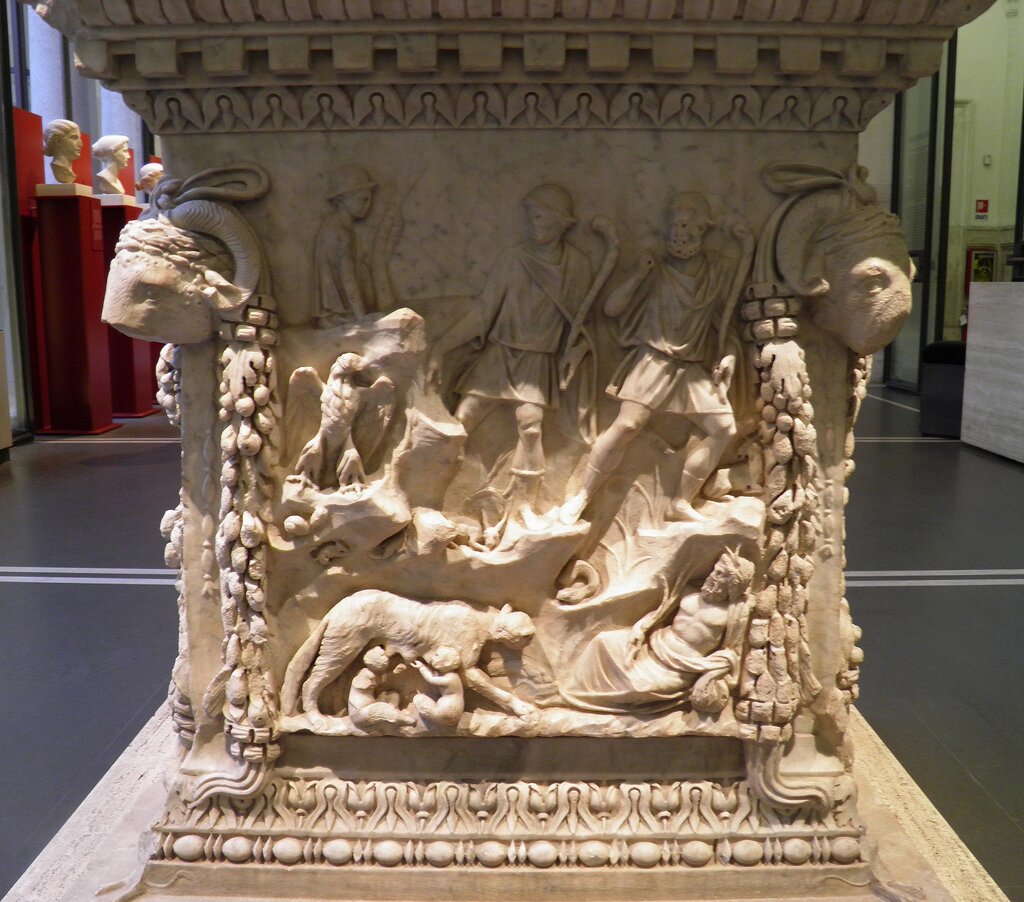
Upon learning their true heritage, they returned to their birthplace, overthrew the unjust king, and decided to found their own city. But they argued over where to build it. Romulus favored the Palatine Hill, while Remus preferred the Aventine Hill.
To settle the dispute, they watched for a sign from the gods. Remus saw six vultures, but Romulus saw twelve. Taking this as divine approval, Romulus began to build a wall around his chosen hill. In a fit of jealousy, Remus leaped over the half-built wall to mock its height. Enraged, Romulus killed him, declaring, "So shall it be for all who dare to cross my walls."
Romulus then founded his city, naming it Rome after himself, and became its first king. While it's a dramatic tale, the real story of Rome's origins is a blend of myth, archaeology, and the influence of its powerful neighbors.
Beyond the Legend
While the story of Romulus and Remus makes for a great epic, the true founding of Rome was a more gradual process. Archaeologists have found evidence of small settlements on the hills of Rome dating back to the 10th century BC, long before the city's traditional founding date of 753 BC. These villages likely merged over time, forming a larger community.
One of the most significant influences on early Rome came from the Etruscans, a sophisticated civilization that dominated the region to the north. The Etruscans were masters of engineering, art, and governance, and their impact on Roman culture was profound.
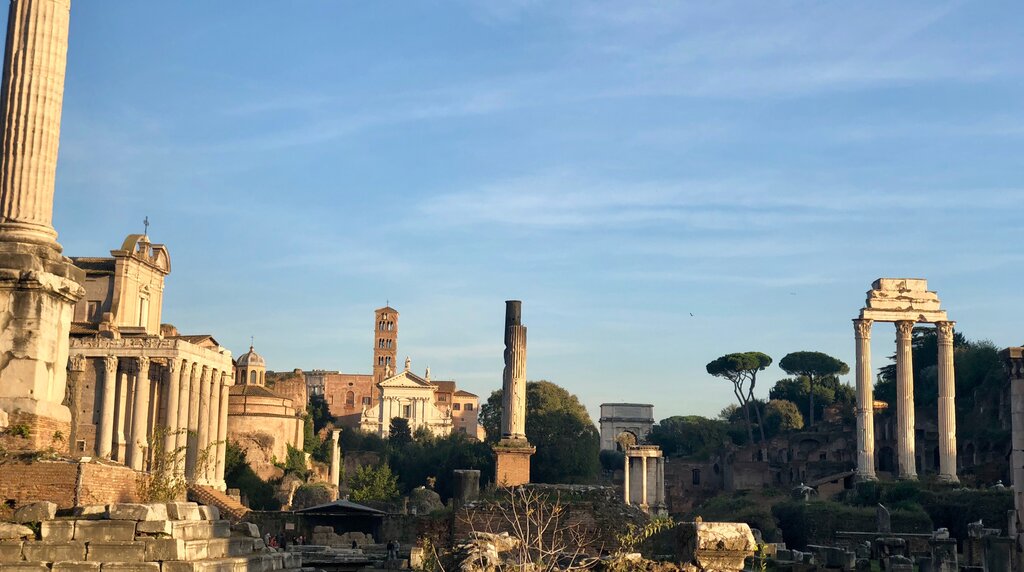
Romans adopted the Etruscan alphabet (which the Etruscans had adapted from Greek), their architectural techniques like the arch, and religious rituals. Even the toga, the iconic garment of Roman citizens, is believed to have Etruscan origins. Several of Rome's early kings were Etruscan, and under their rule, the collection of hilltop villages transformed into a true city. They drained the marshy valley that would become the Roman Forum and constructed major public works, laying the foundation for the city's future greatness.
The Etruscans didn't just build structures; they provided a blueprint for how to build a society.
An Early Society
Early Roman society, during the period of the kings, was structured into a clear hierarchy. At the top was the king, who served as the chief priest, judge, and military leader. He wasn't an absolute monarch, however. His power was checked by two other important bodies: the Senate and the Assembly.
The population was divided into two main classes: the patricians and the plebeians. Patricians were the wealthy, land-owning aristocracy. They claimed descent from the original senators appointed by Romulus and held all the political and religious power. The plebeians were the common people—farmers, artisans, and merchants. They were citizens and had to serve in the army, but they had little say in the government. This division between the classes would become a major source of conflict as Rome grew.
This early structure, a mix of monarchy, aristocracy (the Senate), and a hint of democracy (the Assemblies), set the stage for the complex political system that would follow. It was a foundation built on legend, foreign influence, and a rigid social order.
Let's review the key ideas from this section.
According to the founding myth, how was the dispute between Romulus and Remus over the location of their new city settled?
True or False: Archaeological evidence supports the legend that Rome was founded on a single day in 753 BC, rather than being a gradual development of smaller settlements.
Understanding these foundational elements—the inspiring myth, the practical influence of the Etruscans, and the early social structure—is key to grasping how a small city-state on the Tiber River eventually grew to rule the known world.