The Roman Empire
Origins of Rome
A City Born from Myth
Every great story needs a beginning. For Rome, that story starts with a legend. According to the myth, the city was founded in 753 BCE by twin brothers, Romulus and Remus. They were said to be the sons of the god Mars and a mortal princess, cast out as infants and left to die. But they were saved by a she-wolf who nursed them back to health.
As adults, the brothers decided to build a city. An argument over its location ended in tragedy, with Romulus killing Remus and naming the new settlement after himself: Rome. This tale of divine origins, struggle, and fratricide became the powerful foundation myth for what would become a vast republic and empire.
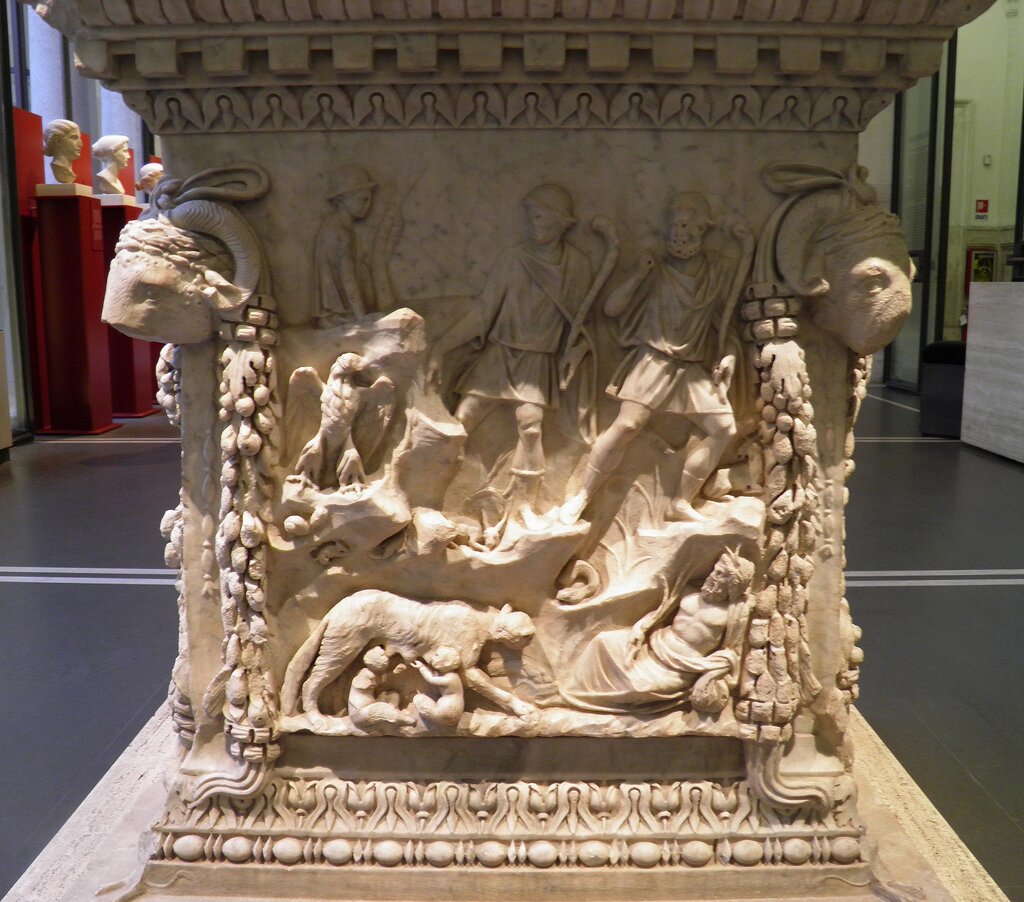
While historians don't take this story literally, it reveals how the Romans saw themselves: favored by the gods, destined for greatness, and forged in conflict. It provided a shared identity for a people who started as a small collection of villages on the hills overlooking the Tiber River.
The Etruscan Connection
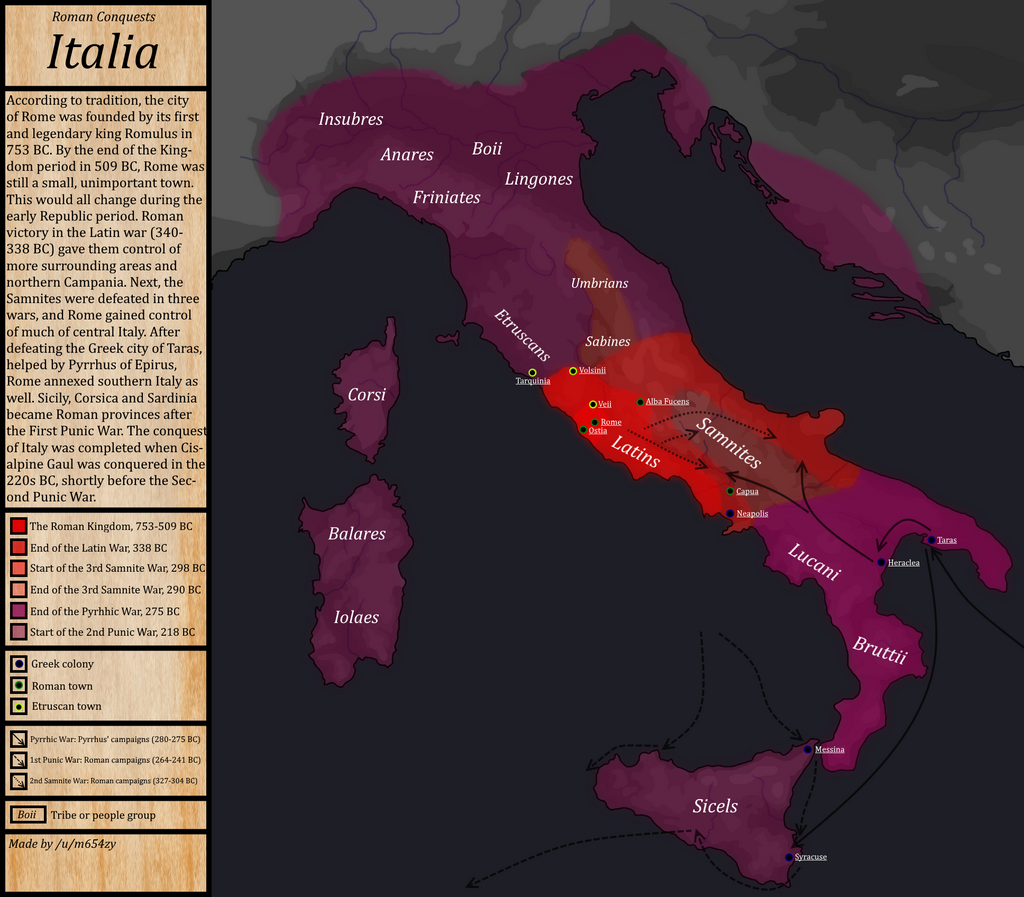
The reality of early Rome was less dramatic but just as important. The small Latin settlement was heavily influenced by its more advanced neighbors to the north, the Etruscans. Etruscan civilization dominated central Italy, and for a period, Etruscan kings ruled over Rome.
This wasn't a hostile takeover but a cultural exchange. The Romans adopted and adapted many Etruscan ideas. They learned advanced building techniques, like the arch, which would become a hallmark of Roman architecture. They borrowed religious rituals and even parts of their alphabet. The last three of Rome's legendary seven kings were Etruscan, and their rule helped transform the collection of villages into a true city.
The Birth of the Republic
Monarchy in Rome ended abruptly. In 509 BCE, the Romans overthrew their last king, Lucius Tarquinius Superbus, who was seen as a tyrant. They were determined never to be ruled by a single king again.
In its place, they established a new form of government: a republic. The word comes from the Latin res publica, meaning "public affair" or "property of the people." The core idea was to distribute power so no one person could become too dominant. This new system was built on a foundation of elected officials, a powerful senate, and popular assemblies.
Instead of a king, Rome was now led by two consuls, elected annually. They held equal power, and each could veto the other's decisions, a crucial check on authority.
The Senate, composed of the leading citizens and former officials, was the primary advisory body. While it couldn't pass laws on its own, its advice carried immense weight. The various citizen assemblies were responsible for electing officials and passing laws, giving the common people a voice in their government, at least in theory.
A Society of Orders
Early Roman society was sharply divided into two main classes, or orders.
| Class | Description |
|---|---|
| Patricians | The elite, aristocratic class. They were wealthy landowners who traced their ancestry to the original senators appointed by Romulus. |
| Plebeians | Everyone else. This group included everyone from poor farmers and laborers to wealthy merchants who lacked the right family background. |
Initially, all political power was in the hands of the patricians. The plebeians could vote, but they couldn't hold office or marry into patrician families. This inequality led to a long and bitter struggle known as the Conflict of the Orders.
Over two centuries, the plebeians fought for more rights. They used a powerful tactic: secession. They would leave the city en masse, refusing to work or fight until their demands were met. This pressure worked. Gradually, the plebeians won major concessions, including the right to elect their own officials, called Tribunes of the Plebs, who could veto actions of the Senate and consuls. This ongoing struggle shaped Rome's political DNA, creating a complex system of checks and balances.
Now that we've covered the founding of Rome and its early political structure, let's review some key terms.
Ready to check your understanding?
According to Roman mythology, who were the twin brothers credited with the founding of Rome?
The early Romans were heavily influenced by their neighbors, the Etruscans. Which of the following did the Romans adopt from Etruscan civilization?
From a mythical founding to a complex republic forged in social conflict, Rome's beginnings set the stage for its incredible rise. With its new political system in place, Rome was ready to look beyond its own walls and begin the long, slow process of conquering its neighbors.