The Rise of Nazism and Hitler
Post-WWI Germany
A Harsh Peace
When World War I ended in 1918, Germans hoped for a fair and lasting peace. They were exhausted by war and starvation. But the peace treaty signed at the Palace of Versailles in France was anything but fair in their eyes.
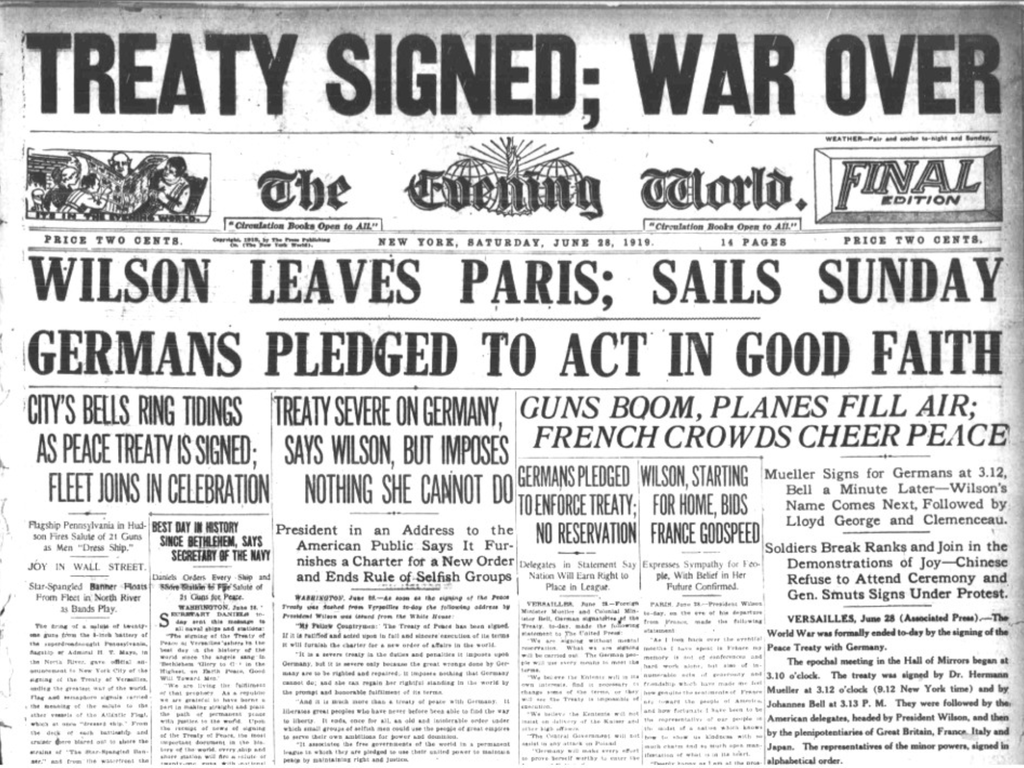
The terms of the Treaty of Versailles were punishing. Germany lost about 13% of its territory, including the industrial regions of Alsace-Lorraine. It had to give up all of its overseas colonies. The German military was dismantled, its army reduced to a mere 100,000 men, with no air force, tanks, or submarines allowed. The Rhineland, a key industrial area, was demilitarized.
The Treaty of Versailles (1919) played a crucial role in fostering resentment among defeated nations, particularly Germany.
Perhaps the most humiliating term was Article 231, the infamous "War Guilt Clause." It forced Germany to accept sole responsibility for starting the war. This clause became the legal basis for the Allies to demand massive financial payments, known as reparations, to cover the costs of the war. The final amount was set in 1921 at 132 billion gold marks, an astronomical sum.
Economic Collapse
To meet the reparation payments, the German government began printing more and more money. This decision, combined with a weak economy already shattered by war, led to one of the most severe cases of hyperinflation in history. The value of the German mark plummeted.
In early 1922, one U.S. dollar was worth about 320 German marks. By late 1923, a single U.S. dollar was worth 4.2 trillion marks.
Life savings became worthless overnight. A wheelbarrow full of cash might be needed to buy a loaf of bread. The economic chaos wiped out the middle class, creating widespread poverty and desperation. People who had worked their whole lives to build a stable future suddenly had nothing. This economic ruin bred deep anger and resentment, directed both at the Allied powers and Germany's own new government.
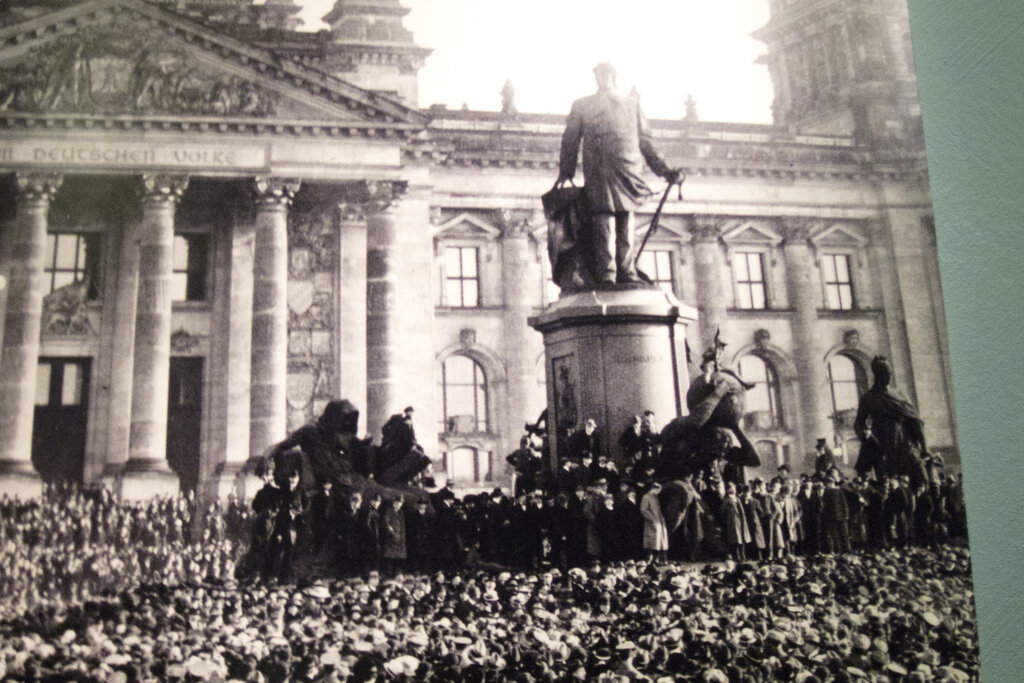
A Fragile Democracy
In the midst of this turmoil, Germany established a new democratic government known as the Weimar Republic. Its constitution, drafted in the city of Weimar, was one of the most progressive in the world at the time. It guaranteed universal suffrage, including for women, and a bill of rights.
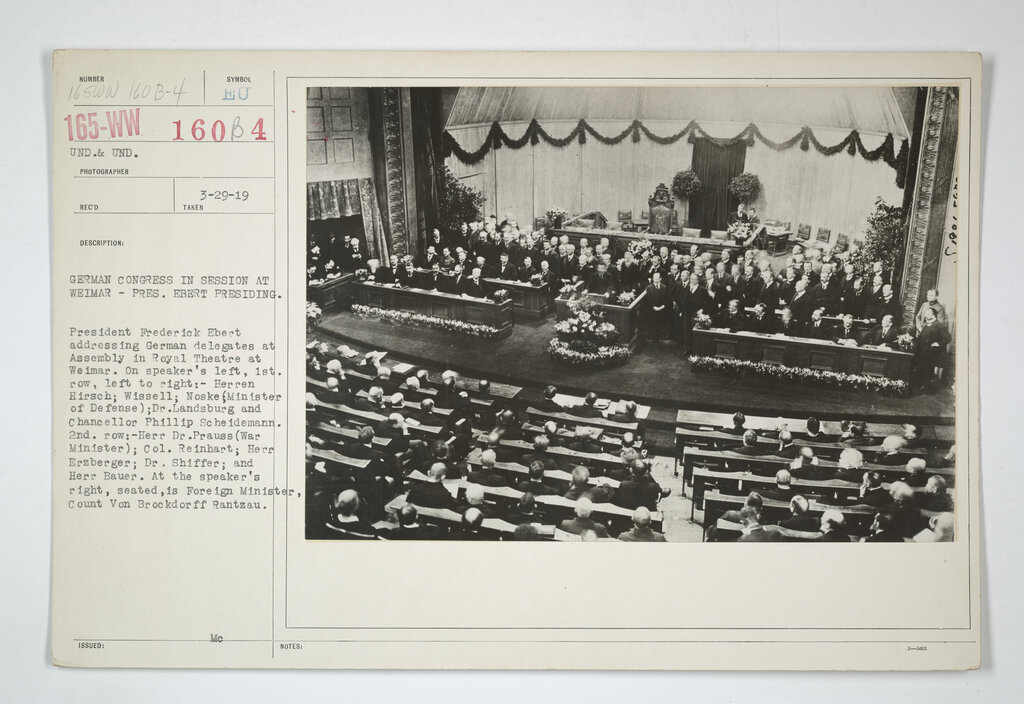
But the Republic was plagued by weaknesses from the start. Its system of proportional representation made it difficult for any single party to win a majority in the parliament, or Reichstag. This led to a series of unstable coalition governments that struggled to make decisive choices.
Critically, Article 48 of the constitution gave the president the power to rule by emergency decree, bypassing the Reichstag. This was meant as a safety measure but became a tool to undermine democracy. The Weimar Republic faced constant threats from extremist groups on both the left and the right, who launched uprisings and assassination campaigns against government officials.
The combination of national humiliation from the Versailles treaty, devastating economic hardship, and profound political instability created a perfect storm. Many Germans lost faith in democracy and began looking for radical solutions and strong leaders who promised to restore Germany's greatness. This deep-seated discontent provided fertile ground for the rise of extremist movements.
Let's review what you've learned about this turbulent period.
What was the primary purpose of Article 231 of the Treaty of Versailles, also known as the "War Guilt Clause"?
The German government's decision to print vast amounts of money to meet reparation payments led directly to which economic crisis?
This period of instability set the stage for one of history's darkest chapters.