The Rise and Fall of the Roman Empire
Founding of Rome
A City Born of Myth
Every great story needs a dramatic beginning, and Rome's is no exception. According to legend, the city was founded by twin brothers, Romulus and Remus. They were said to be the sons of Mars, the god of war, and a mortal princess named Rhea Silvia. Fearing the twins would one day seize his throne, their great-uncle, the king, ordered them to be thrown into the Tiber River.
But fate, or perhaps the river god, had other plans. The basket carrying the infants washed ashore at the future site of Rome. There, they were discovered and nursed by a she-wolf. A shepherd named Faustulus eventually found the boys and raised them as his own.
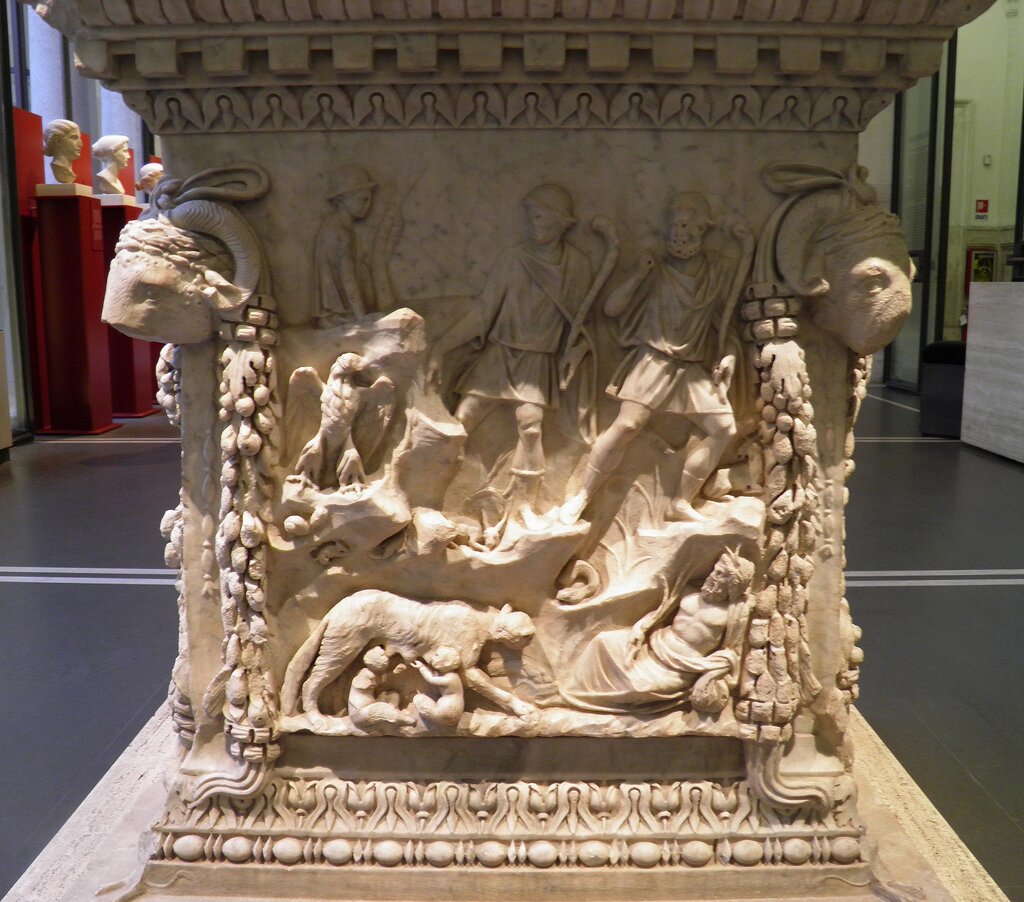
As young men, the brothers decided to found a city on the spot where they had been saved. They couldn't agree on which hill to build it on, so they looked for a sign from the gods. Remus saw six vultures, but Romulus saw twelve. Claiming divine favor, Romulus began to build a wall around his chosen hill, the Palatine.
In a fatal act of mockery, Remus leaped over the half-finished wall. Enraged that his city's defenses had been breached, Romulus killed his brother, declaring, "So shall it be for all who dare to cross my walls." And so, the city of Rome was founded, named after its first king and stained with a brother's blood around 753 BCE.
The Age of Kings
While the story of Romulus is a myth, archaeology confirms that small settlements did exist on Rome's hills around that time. These villages eventually merged into a single city-state. For its first two and a half centuries, Rome was ruled by kings.
Tradition holds that Rome had seven kings, beginning with Romulus. These rulers were not hereditary monarchs; each was chosen by the city's leading men. The king held supreme military, executive, and judicial authority. Two other political bodies existed, but they had limited power.
- The Senate: An advisory council of elders, or patres (fathers), who were the heads of Rome's leading families. They advised the king but could not pass laws.
- The Assembly: Made up of all adult male citizens, this body could vote on issues put before it by the king, but it could not propose its own ideas.
This early structure—king, senate, and assembly—planted the seeds for the complex government that would later rule a vast empire.
The Republic is Born
The era of monarchy ended abruptly in 509 BCE with a dramatic revolution. The last king, Lucius Tarquinius Superbus, or Tarquin the Proud, was a tyrant. The final straw came when his son, Sextus Tarquinius, assaulted Lucretia, the virtuous wife of a nobleman.
After revealing what had happened to her husband and father, Lucretia took her own life, unable to live with the dishonor. Her sacrifice ignited the fury of the Roman aristocrats. Led by Lucius Junius Brutus, they rallied the people, drove Tarquin and his family out of Rome, and swore an oath to never again be ruled by a king.
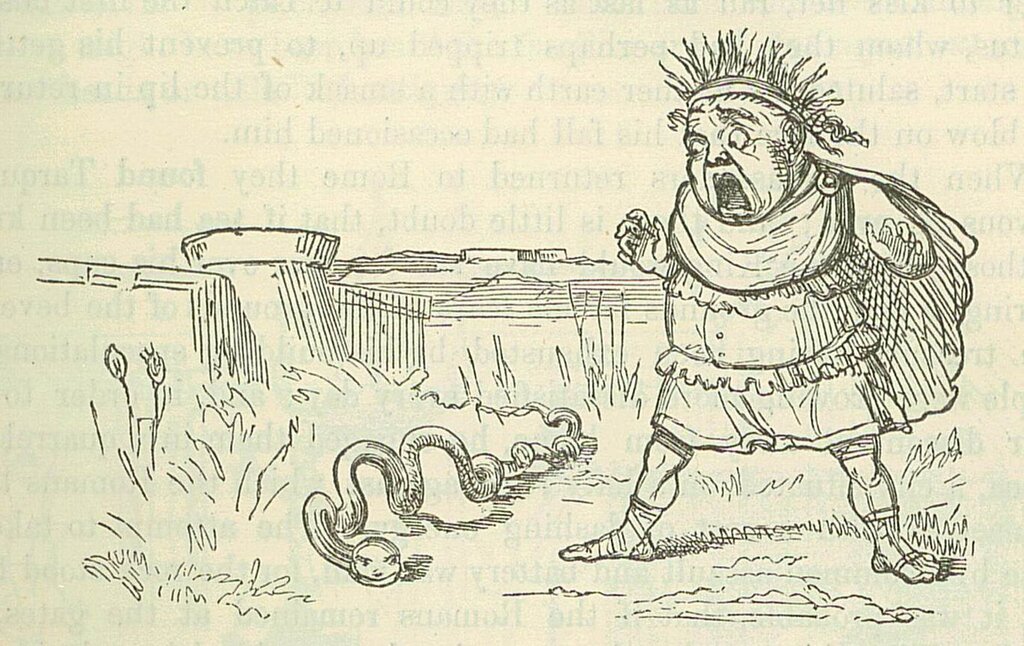
With the monarchy abolished, the Romans established a new form of government: a republic. They called it res publica, a Latin phrase meaning "public affair" or "the people's business." The core principle was to prevent any single individual from gaining absolute power.
A New Way to Rule
The new Republican government was built on checks and balances. Instead of a king, Rome was led by two Consuls, elected annually. They held equal power, and each could veto the other's decision, ensuring no one man could act alone.
The Senate's role grew significantly. It became the primary governing body, controlling state finances, foreign policy, and advising the consuls. Membership was for life, providing stability and experience.
Early Roman society was sharply divided into two classes.
| Class | Description |
|---|---|
| Patricians | The aristocratic upper class, who held most of the wealth and all political and religious offices. |
| Plebeians | The common people, including farmers, merchants, and artisans. They were citizens but initially had few rights. |
This division created tension. Much of the early Republic's history was defined by the struggle of the plebeians to gain political equality with the patricians. This conflict, known as the Conflict of the Orders, would slowly reshape Roman society and government.
With this new political structure, Rome was no longer just a small city-state. It was a republic with the ambition and organization to become a world power.
According to the founding myth of Rome, who were the twin brothers raised by a she-wolf?
During the period of the Roman Monarchy, what was the main function of the Senate?