The Rise and Fall of the Mughal Empire
Founding of the Mughal Empire
A New Dynasty Arrives
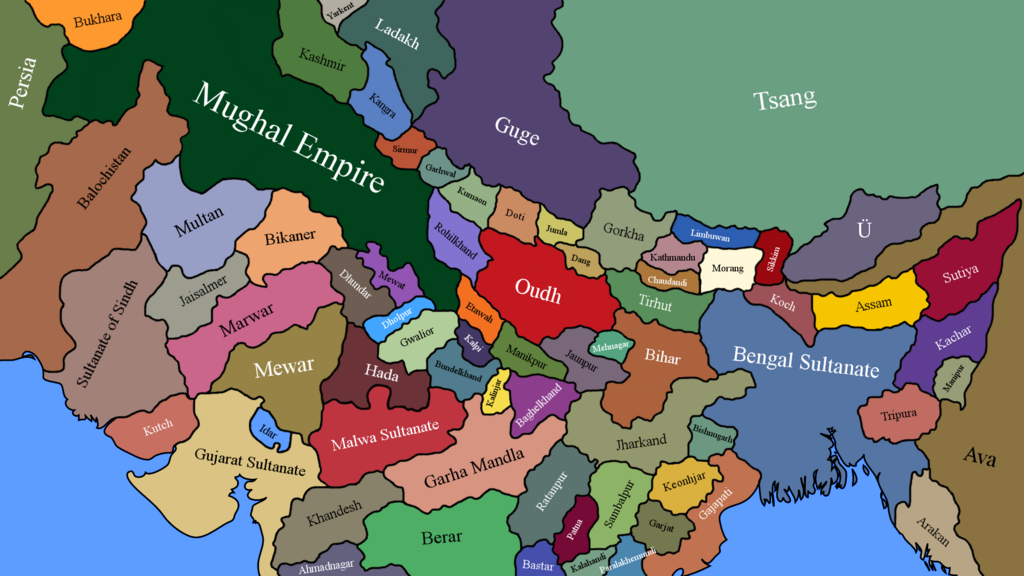
In the early 1500s, North India was a fractured landscape. The once-mighty Delhi Sultanate, ruled by the Lodi dynasty, was crumbling from within. Ambitious governors and local rulers vied for power, creating a patchwork of competing states. This political instability set the stage for a new conqueror from Central Asia.
His name was Zahir-ud-din Muhammad, better known as Babur, meaning "tiger." He wasn't just another warlord; he was a prince with a formidable pedigree.
The Prince from Kabul
Babur descended from two of Asia's greatest conquerors. On his father's side, he was a Timurid, a direct descendant of Timur (also known as Tamerlane). On his mother's side, he traced his lineage back to Genghis Khan. This heritage gave him a powerful claim to rule, but his early life was a constant struggle.
After losing his ancestral kingdom of Fergana in Central Asia, Babur eventually carved out a new base for himself in Kabul in 1504. From this vantage point, he looked east towards the vast and wealthy plains of Hindustan. He saw not just an opportunity for plunder, but a chance to build a lasting empire.
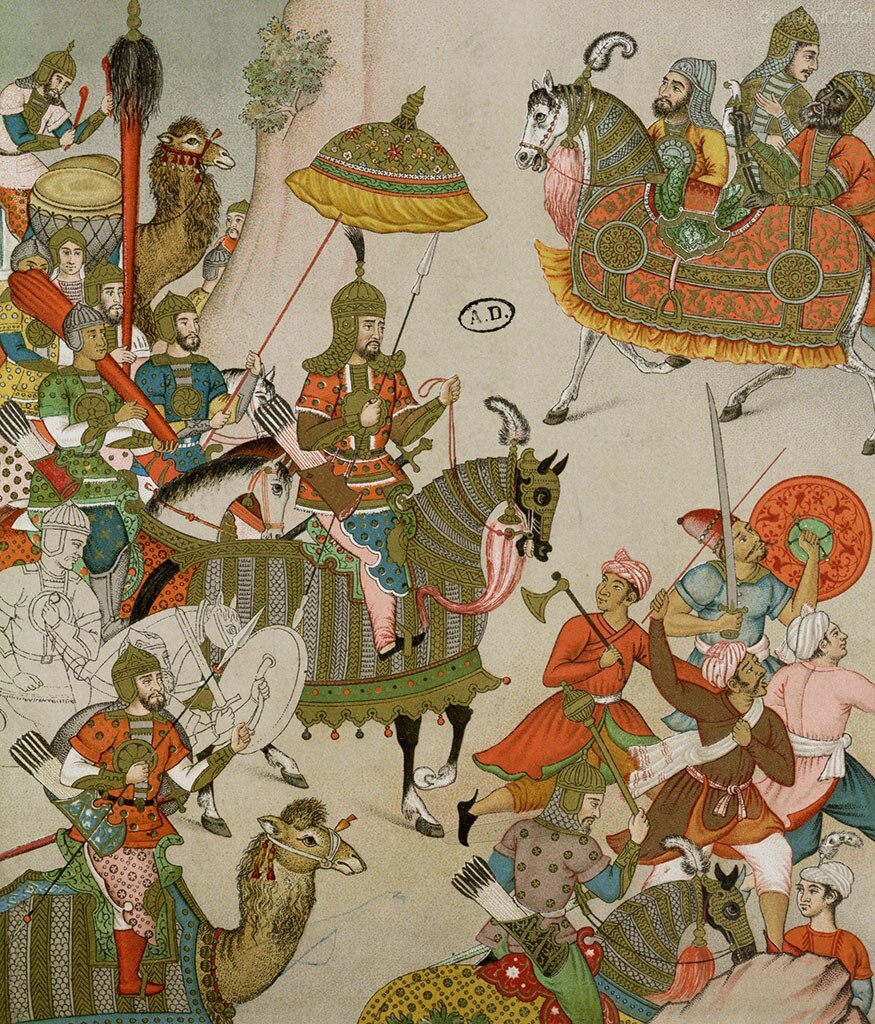
The internal squabbles of the Delhi Sultanate provided the perfect opening. Dissatisfied nobles, tired of the unpopular Sultan Ibrahim Lodi, invited Babur to intervene. He accepted the invitation, marching his army into Punjab.
The Battle of Panipat
The decisive confrontation came on April 21, 1526, on the plains of Panipat, north of Delhi. Babur's army was vastly outnumbered. He faced Ibrahim Lodi's force of roughly 100,000 soldiers and 1,000 war elephants with only about 15,000 men.
But Babur had a technological and tactical edge. He brought firearms—cannons and matchlock muskets—which were largely unknown in Indian warfare at the time. He also employed innovative tactics learned from the Ottomans and Uzbeks.
Babur arranged a defensive line of around 700 carts tied together with ropes. This formation, called an araba, provided cover for his cannons and musketeers, breaking the charge of Lodi's cavalry.
Behind the araba, he planned his masterstroke: the tulgulma. He divided his cavalry into a left wing, a right wing, and a reserve. The plan was to draw the enemy in, then have the wings wheel around to attack the Lodi army from the flanks and rear, completely encircling them.
The battle was over in a few hours. The sound and fury of the cannons terrified Lodi's elephants, which turned and trampled their own troops. The flanking cavalry trapped the Sultan's army, and Babur's gunners decimated their ranks. Ibrahim Lodi was killed in the fighting, and his army was routed.
With this single victory, the Lodi dynasty was shattered. Babur quickly seized control of Delhi and Agra, the twin capitals of the Sultanate, and laid the foundation for the Mughal Empire.
Securing the Foothold
Winning Panipat was just the beginning. Babur's hold on India was precarious. He faced threats from two main groups: the powerful Rajput Confederacy to the south, and the remaining Afghan nobles to the east who had served the Lodis.
The Rajput rulers, led by the formidable Rana Sanga of Mewar, saw Babur as another foreign invader who could be driven out. They assembled a massive army and marched to challenge him. In 1527, the two forces met at the Battle of Khanwa. Once again, Babur was outnumbered, but his superior tactics and artillery won the day. The victory at Khanwa was even more significant than Panipat, as it crushed the most powerful military alliance in North India.
Two years later, in 1529, Babur defeated the remaining Afghan chiefs at the Battle of Ghaghra. These three victories secured his fledgling empire, establishing Mughal control over the Indo-Gangetic Plain.
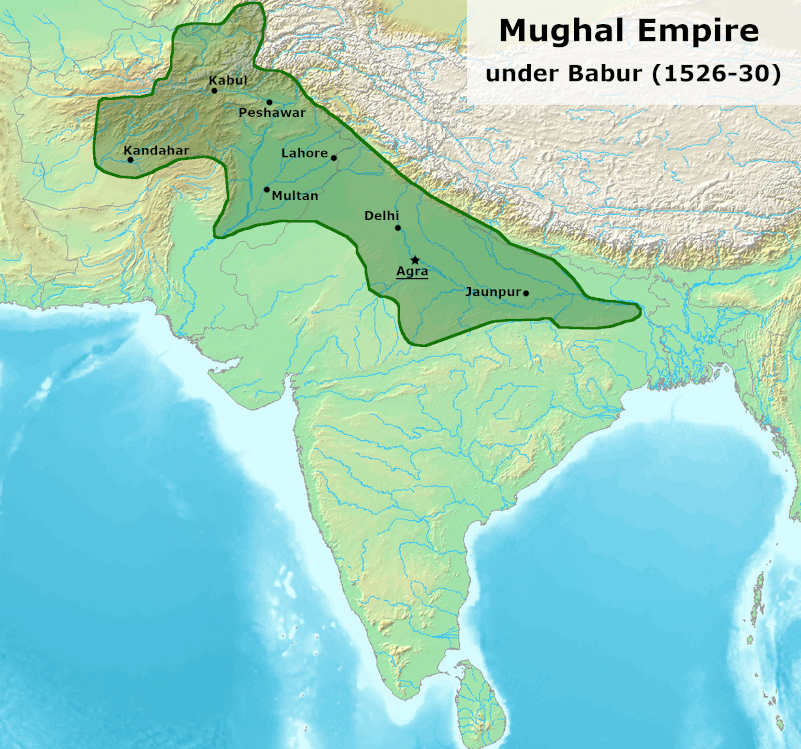
Babur would not live long to enjoy his conquest, dying in 1530. But in just four short years, he had overthrown an old empire and established a new one that would shape the course of Indian history for the next three centuries.