The Rise and Fall of Rome
Founding of Rome
A City Born from Myth
Every great story needs a dramatic beginning, and Rome's is no exception. The city’s founding myth is a tale of gods, royalty, and a pair of abandoned twins raised by a she-wolf.
The legend begins with Rhea Silvia, a princess descended from the Trojan hero Aeneas. She was forced to become a priestess, but the war god Mars fell in love with her. They had twin sons, Romulus and Remus. The local king, Amulius, feared the boys would one day overthrow him, so he ordered them to be thrown into the Tiber River.
But fate, or perhaps the river god, had other plans. The basket carrying the infants washed ashore at the foot of the Palatine Hill. There, a she-wolf discovered them and, instead of harming them, nursed them back to health.
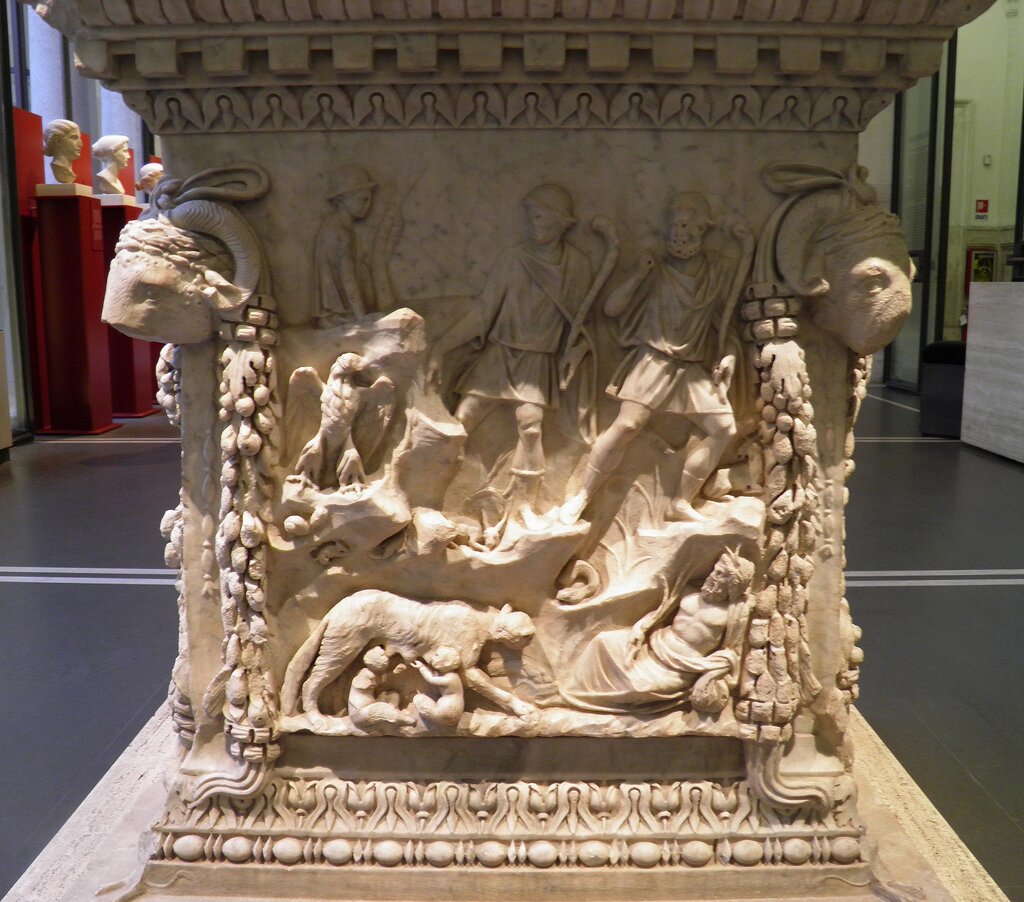
A shepherd named Faustulus eventually found the twins and raised them as his own. As young men, Romulus and Remus became natural leaders. After learning their true identities, they returned to their birthplace, overthrew the evil King Amulius, and restored their grandfather to the throne.
With their duty done, the brothers decided to found their own city near the spot where the she-wolf had saved them. But they couldn't agree on which hill to build it. Romulus favored the Palatine Hill, while Remus chose the Aventine Hill. They agreed to let the gods decide through a practice called augury, or watching for signs in the flight of birds.
Remus saw six vultures first, but Romulus then saw twelve. Each claimed victory. In the heated argument that followed, Remus mockingly jumped over the low wall Romulus had started to build. Enraged, Romulus killed his brother, declaring, “So perish all who ever cross my walls.” He then founded his city, naming it Rome after himself, and became its first king. The traditional date for this founding is April 21, 753 BCE.
From Villages to a City
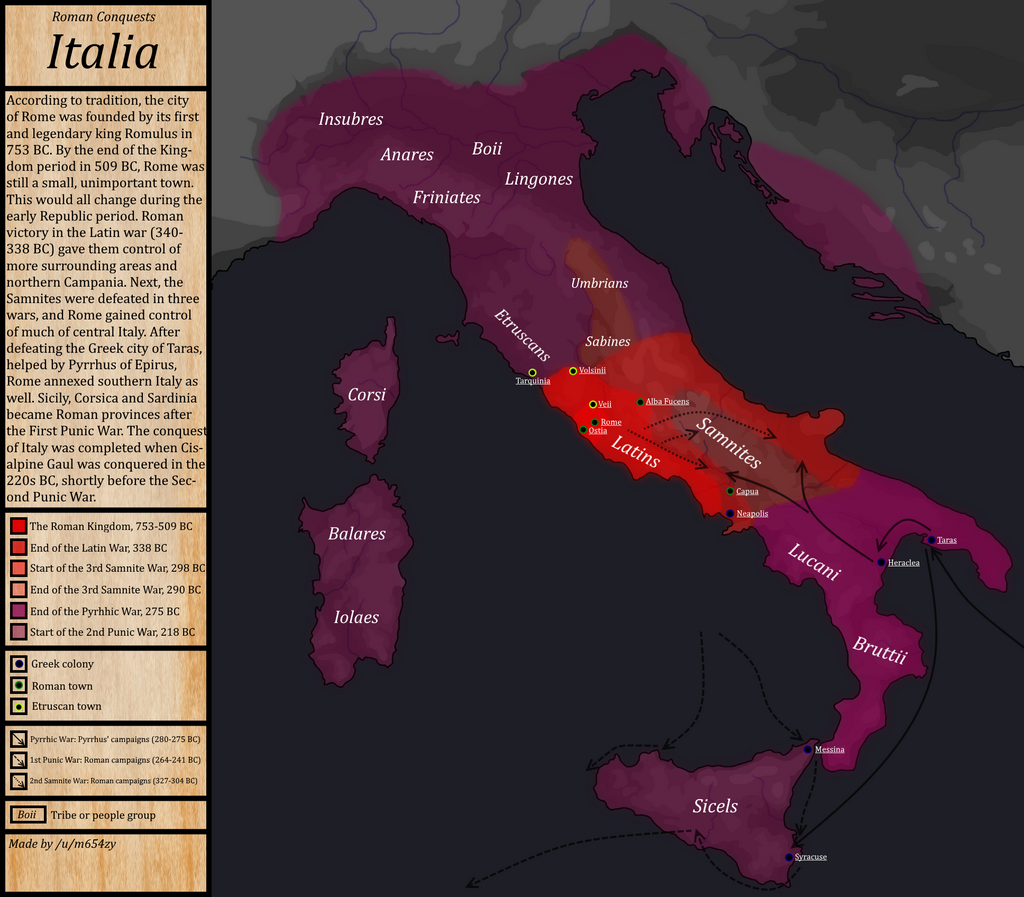
While the story of Romulus and Remus is a powerful myth, archaeologists tell a slightly different tale. The real origins of Rome were more gradual. Long before it was a city, the area was a collection of small villages scattered across several hills overlooking the Tiber River.
Around the 10th century BCE, groups of Latin-speaking people began to settle on the Palatine Hill, likely chosen for its defensible slopes and proximity to the river, which was a vital trade route. Over time, other nearby hills like the Capitoline and Quirinal were also inhabited.
For centuries, these were separate communities. They farmed the valleys between the hills and buried their dead in the low-lying marshland that would one day become the famous Roman Forum.
Around the 8th century BCE, these hilltop villages began to band together for mutual protection and trade. They drained the marshy valley and created a common marketplace and meeting area. This slow process of unification, known as synoecism, marked the true birth of the city of Rome. The myth of a single founder, Romulus, likely served to create a shared identity for these once-separate peoples.
Influential Neighbors
Early Rome did not develop in a vacuum. It was surrounded by older, more advanced cultures that left a lasting mark on the young city.
To the north were the Etruscans, a mysterious and sophisticated people who dominated central Italy. From them, the Romans borrowed key elements of their culture. The architectural arch, which became a hallmark of Roman engineering, was an Etruscan invention. So was the practice of augury, the very method Romulus and Remus used to decide their city's fate. Even the toga, the iconic garment of Roman citizens, had Etruscan origins.
The Etruscans gave the Romans their engineering skills and religious rituals, providing a framework for the city's structure and beliefs.
To the south, the coastline of Italy was dotted with wealthy Greek colonies, a region so heavily influenced by Greek culture it was called Magna Graecia, or "Great Greece." Contact with these colonies brought the Greek alphabet to Rome, which the Latins adapted to create their own writing system.
The Romans were also captivated by Greek mythology. They began to identify their own gods with the Greek pantheon: their sky god Jupiter became associated with Zeus, their war god Mars with Ares, and their goddess of love Venus with Aphrodite. This fusion of religion, writing, and philosophy provided a rich cultural foundation upon which Rome would build its future.
According to Rome's founding myth, who were the twin brothers raised by a she-wolf?
The final, fatal conflict between Romulus and Remus began over a disagreement about what?