The Rise and Fall of Nazi Germany
Weimar Republic
A Republic Born from Defeat
In late 1918, Germany was on its knees. Defeat in World War I was certain, and the German people were exhausted. This frustration boiled over into a revolution, forcing Kaiser Wilhelm II to abdicate and flee the country. The German Empire was no more.
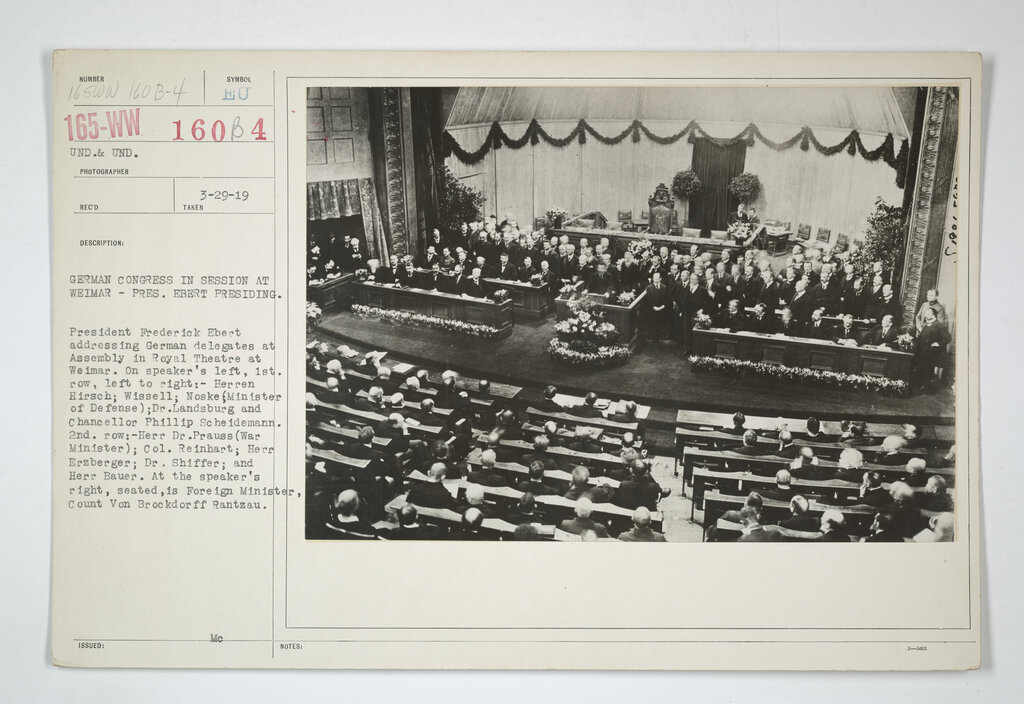
In its place, a new democratic government was needed. Fearing the political turmoil and street fighting in Berlin, elected delegates met in the quieter city of Weimar to write a new constitution. It was here, in 1919, that the German Republic, unofficially known as the Weimar Republic, was established.
This new republic was born under a dark cloud: the Treaty of Versailles. This peace treaty, signed by the victorious Allied powers, imposed harsh terms on Germany. It forced the nation to accept full blame for the war, pay crippling financial reparations, give up significant territory, and drastically reduce its military. Many Germans viewed the treaty as a national humiliation, and they blamed the new republic for accepting it. This resentment would haunt the Weimar government for its entire existence.
A Democratic Experiment
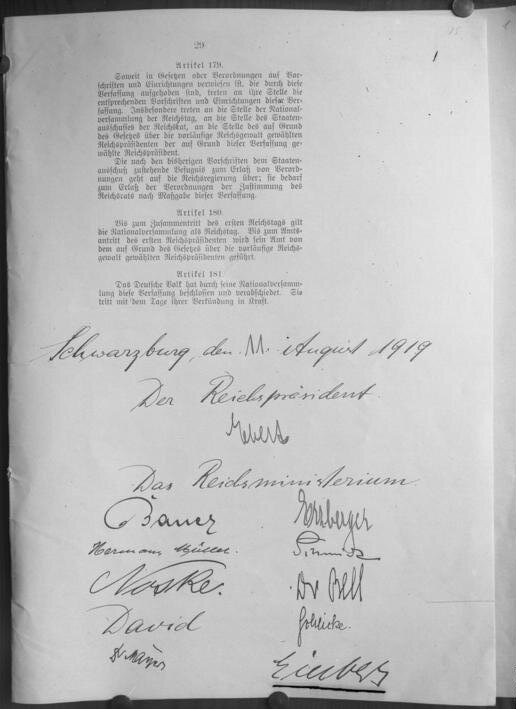
The Weimar Constitution was, on paper, one of the most progressive and democratic in the world at the time. It established a federal republic with a directly elected president as head of state and a chancellor, appointed by the president, as head of government. The parliament, called the Reichstag, was elected through a system of universal suffrage that included women for the first time in German history. A comprehensive bill of rights guaranteed freedoms of speech, assembly, and religion.
However, the constitution contained critical weaknesses. The system used for elections, called proportional representation, meant that a party's share of seats in the Reichstag was directly proportional to its share of the national vote. While fair, this system allowed many small, often radical, parties to gain seats. As a result, no single party ever won a majority. Governments had to be formed by unstable coalitions of several parties that often disagreed on key issues, leading to political gridlock and frequent collapses of government.
One of the most dangerous flaws was Article 48. This emergency clause gave the president the power to suspend civil rights and rule by decree without the consent of the Reichstag. It was intended as a safety measure for times of crisis, but it created a path to bypass democracy entirely.
Economic Turmoil
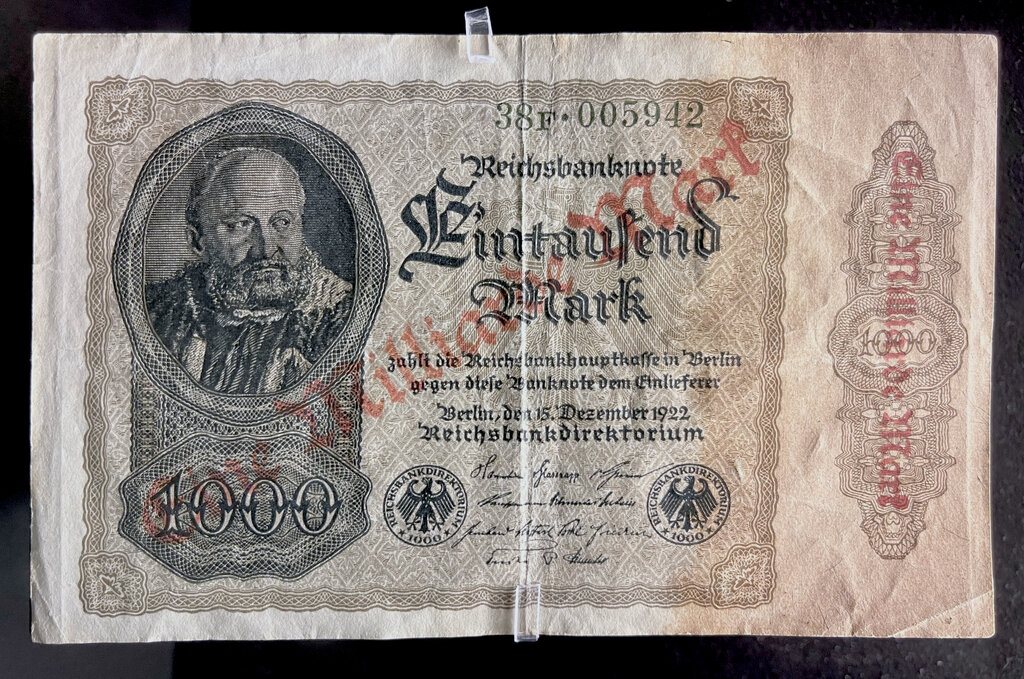
The Weimar Republic's political instability was matched by its economic chaos. To pay its massive war reparations, the government began printing more and more money. This decision, combined with a weak economy, triggered one of the most devastating cases of hyperinflation in history.
By November 1923, the German currency, the Papiermark, was worthless. Prices skyrocketed daily, then hourly. A loaf of bread that cost 250 marks in January cost 200 billion marks by November. People's life savings were wiped out overnight. Workers were paid twice a day and would rush to stores with wheelbarrows full of cash to buy goods before their money lost even more value.
The crisis was eventually brought under control with a new currency and international loans, leading to a brief period of stability known as the Golden Twenties. But Germany's economy was fragile and heavily dependent on American loans.
When the U.S. stock market crashed in 1929, sparking the Great Depression, those loans dried up. The German economy collapsed. Businesses failed, and by 1932, nearly one-third of the German workforce was unemployed. The economic misery plunged the country back into chaos and created a fertile breeding ground for political extremism.
Besieged from All Sides
From its inception, the Weimar Republic faced constant threats from extremist movements on both the left and the right. These groups despised the democratic government and sought to overthrow it through violence and political agitation.
On the left, communists, inspired by the Russian Revolution, tried to seize power in several uprisings, most notably the Spartacist Uprising in Berlin in 1919. On the right, ultranationalist and monarchist groups, including disgruntled former soldiers, longed for a return to authoritarian rule. They spread the toxic "stab-in-the-back" myth, a baseless conspiracy theory claiming that Germany had not lost the war on the battlefield but had been betrayed by politicians, socialists, and Jews on the home front.
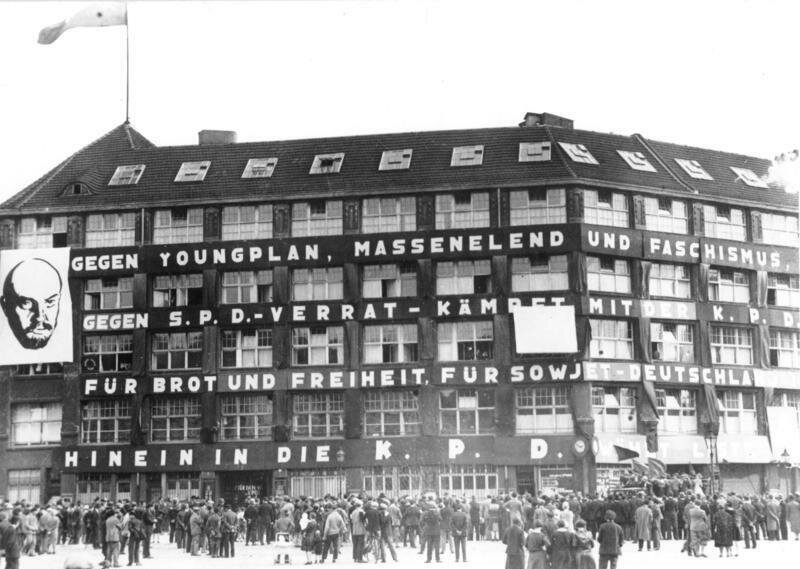
These extremist parties exploited the republic's weaknesses. The constant political infighting, the economic devastation of hyperinflation and the Great Depression, and the deep national resentment over the Treaty of Versailles all created widespread disillusionment with democracy. Many Germans began to lose faith in the Weimar Republic's ability to solve the country's problems, making them increasingly open to radical alternatives that promised to restore order and national pride.
Why was the new German republic's constitution written in the city of Weimar instead of the capital, Berlin?
The electoral system of proportional representation in the Weimar Constitution, while democratic, inadvertently led to what major political problem?