The Rise and Fall of Ancient Rome
Founding of Rome
A City Born from Myth
Every great story needs a beginning, and Rome's is one of the most famous. It starts with twin brothers, Romulus and Remus, descendants of a Trojan hero. According to the legend, a jealous king ordered them to be drowned in the river Tiber. But fate intervened. The basket carrying the infants washed ashore, where a she-wolf discovered and nursed them back to health.
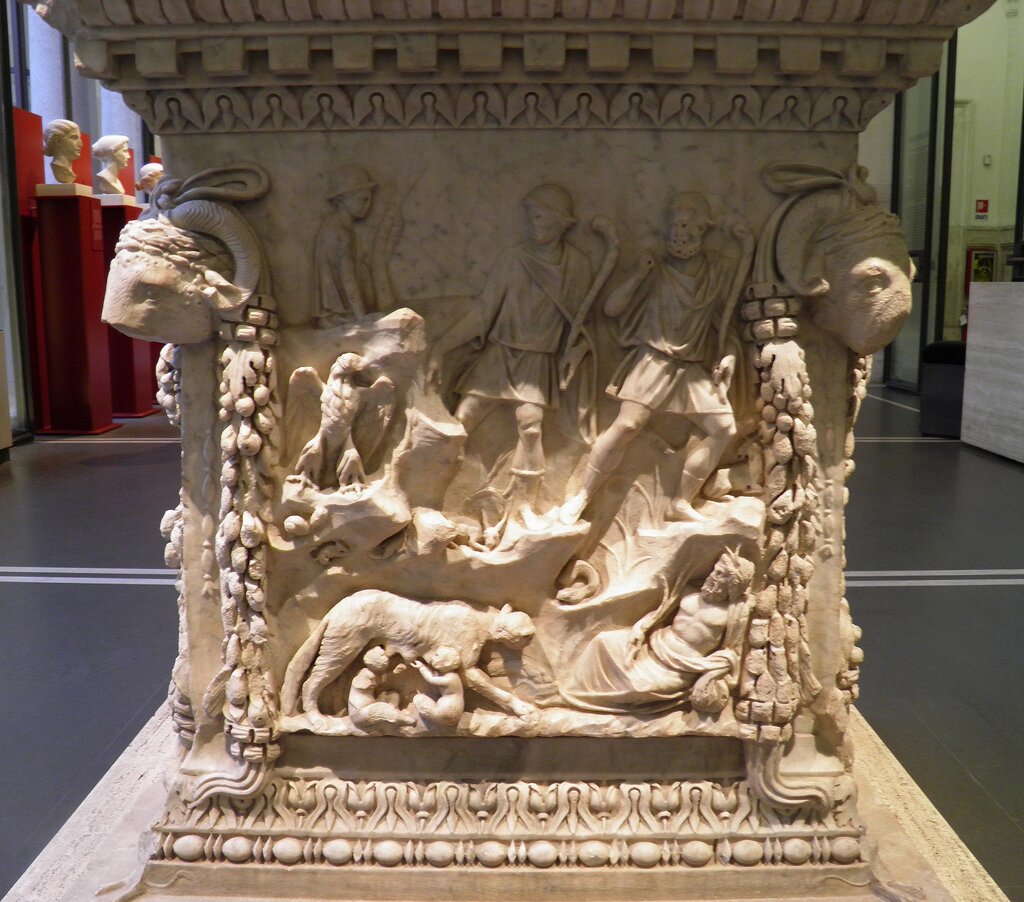
Raised by a shepherd, the brothers grew into strong leaders. When they decided to build a city of their own, they quarrelled over its location. To settle the dispute, they watched for an omen from the gods—a flight of birds. Remus saw six vultures first, but Romulus saw twelve. Romulus claimed victory and began building a wall around his chosen site, the Palatine Hill.
In a final, tragic dispute, Remus mocked his brother's low wall by jumping over it. Enraged, Romulus killed him, declaring, "So shall it be for all who dare to leap my walls." He named the city Roma, after himself, and became its first king. This dramatic tale, traditionally dated to 753 BC, gave the Romans a powerful origin story rooted in divine favour, conflict, and destiny.
The Real Story in the Soil
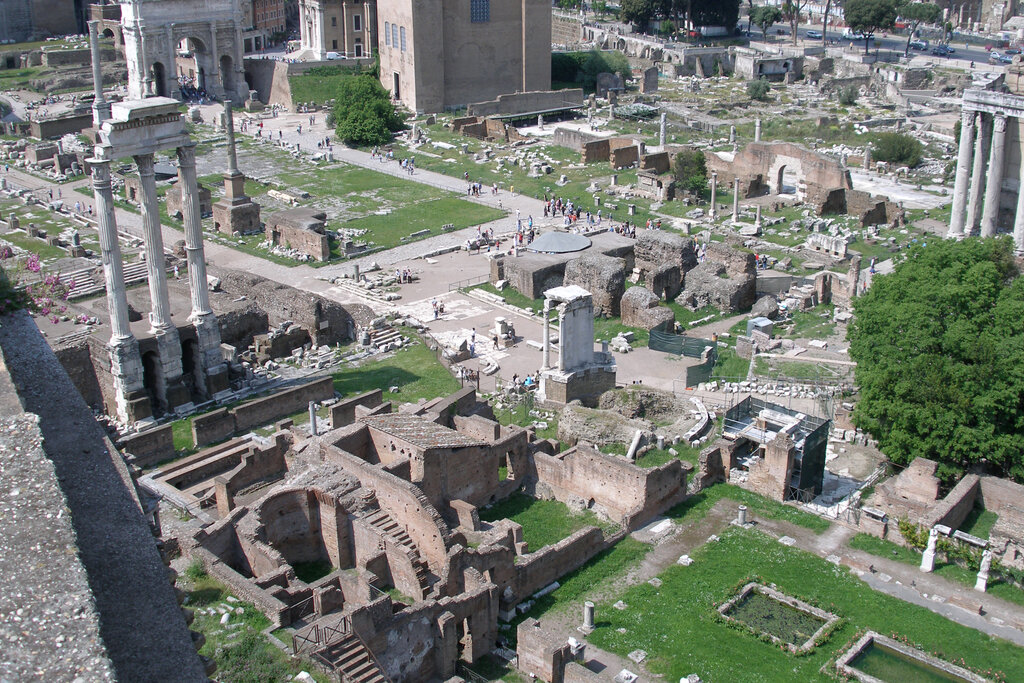
While the legend of the she-wolf is captivating, archaeology tells a different, more gradual story. Long before 753 BC, the famous seven hills of Rome were home to small, independent villages. Archaeologists have uncovered evidence on the Palatine Hill—the very place Romulus supposedly founded his city—of simple huts dating back to the 10th century BC.
Instead of a single, grand founding event, it seems Rome grew organically. Over time, these hilltop settlements expanded and eventually merged, likely for mutual defence and trade. The low-lying marshland between the hills was drained and became a central meeting point—the future Roman Forum. This slow fusion of communities created the city-state that would one day rule an empire.
The Age of Kings
The first period of Roman history is known as the Roman Kingdom. Tradition tells us that Rome was ruled by a series of seven kings, starting with Romulus himself. These were not hereditary monarchs who passed the crown from father to son. Instead, each king was chosen by the senate, a council of elders from Rome's leading families, and approved by the assembly of citizens.
The kings held supreme military, executive, and judicial authority. They commanded the army, acted as chief priest, and served as the final judge in legal matters.
The early kings laid the groundwork for Roman society. Romulus is said to have established the senate and organised citizens into groups for political and military purposes. His successor, Numa Pompilius, is credited with founding Roman religious institutions and creating the first Roman calendar. Later kings, especially the Etruscan rulers like Tarquinius Priscus, transformed Rome from a collection of villages into a true city, building major public works like the great sewer (Cloaca Maxima) and the Temple of Jupiter on the Capitoline Hill.
During this era, foundational aspects of Roman culture took shape. Society was organised around the family, headed by the paterfamilias, or father of the family, who held absolute authority over his household. The population was divided into two main classes: the patricians, who were the wealthy, landowning elite, and the plebeians, who were the common citizens. This social structure would define Roman politics for centuries to come.
Patrician
noun
A member of the original senatorial aristocracy in ancient Rome, forming a privileged class.
The Roman Kingdom lasted for over two centuries, setting the stage for the Republic that would follow. It was a formative period where the core elements of Roman law, religion, and social order were first established.