The Rick Archetype Explained
Introduction to Character Archetypes
The Characters We All Know
Have you ever noticed how some characters in stories feel instantly familiar? The brave hero, the wise old mentor, the mischievous trickster—these figures pop up in movies, books, and myths across different cultures and time periods. It’s not a coincidence. These are character archetypes.
archetype
noun
A typical character, action, or situation that seems to represent universal patterns of human nature. It's like a recurring model or prototype.
Think of an archetype as a blueprint for a character. It's not a complete, fully detailed person, but a foundational pattern that writers build upon. The psychologist Carl Jung believed these patterns come from a “collective unconscious,” a set of shared memories and ideas that all humans inherit.
Archetypes form the structure of the collective unconscious – the home for psychic innate dispositions to experience and represent basic human behavior and situations.
This shared understanding is why we can watch a movie from another country or read an ancient myth and still connect with the characters. Their fundamental roles and motivations make sense to us on an instinctual level.
Why Archetypes Matter
Archetypes are the secret ingredient that makes stories so powerful. They act as a form of narrative shorthand, allowing storytellers to establish a character’s role and personality quickly, so they can get right to the action. When we meet a character with a long white beard who offers cryptic advice, we don't need a detailed backstory to understand he's the Mentor. We just get it.
This familiarity creates a deep, satisfying connection for the audience. It taps into our shared understanding of the world and the human experience. Archetypes are also crucial for a story's structure. Many popular narrative models, like the Hero's Journey, rely on specific archetypes to move the plot forward.
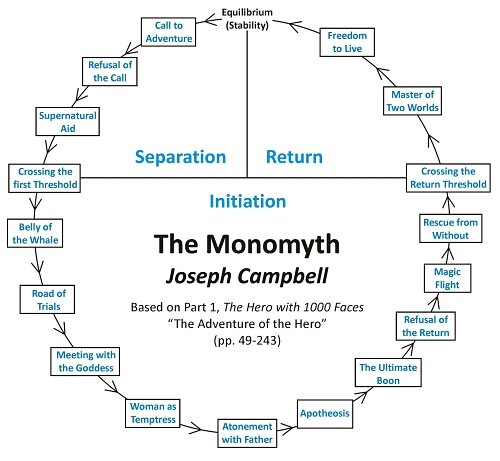
In the Hero's Journey, for example, the Hero is called to adventure, guided by a Mentor, challenged by a Shadow, and aided by Allies. Each archetype has a specific job to do, and their interactions create the conflict, growth, and resolution that make a story compelling. Without them, the story would lack structure and emotional weight.
A Cast of Classics
While there are countless variations, a few core archetypes appear almost everywhere. They are flexible enough to fit into any genre, from epic fantasy and sci-fi to romantic comedies and gritty crime dramas. Here are a few of the most common ones.
| Archetype | Role in the Story | Classic Examples |
|---|---|---|
| The Hero | The protagonist who goes on a journey to achieve a goal. | Harry Potter, Luke Skywalker, Katniss Everdeen |
| The Mentor | A wise figure who guides and prepares the hero. | Dumbledore, Obi-Wan Kenobi, Gandalf |
| The Shadow | The antagonist or villain; represents the hero's darkest fears. | Voldemort, Darth Vader, The Joker |
| The Herald | Delivers the call to adventure and sets the story in motion. | R2-D2's message, Hagrid's arrival, Morpheus's offer |
| The Trickster | A mischievous character who provides comic relief and challenges the status quo. | Loki, Bugs Bunny, Jack Sparrow |
| The Ally | A loyal friend who supports the hero on their journey. | Samwise Gamgee, Ron Weasley, Han Solo |
A character doesn't have to be just one archetype. A complex character might start as an Ally and grow into a Hero, or a Mentor might also have Trickster qualities. These patterns are just starting points, providing a foundation for creating unique and memorable characters.
Ready to test your knowledge? Let's see if you can identify these classic character roles.
What is a character archetype?
According to psychologist Carl Jung, where do these archetypal patterns come from?
Understanding these foundational roles is the first step to analyzing more complex and modern characters. They are the building blocks of the stories we've always loved.