The Rich Tapestry of Sri Lankan Culture
Ancient Civilizations
The First Great Kingdom
Sri Lanka's recorded history begins with the Anuradhapura Kingdom, one of the world's longest-ruling dynasties. For over 1,300 years, from the 4th century BCE to the 11th century CE, this city served as the island's political and religious heart. Its story isn't just one of kings and conquests; it's a story of engineering and faith.
The kingdom's founders faced a major challenge: a climate with seasonal rains and long dry spells. To build a thriving civilization, they needed a reliable water supply for agriculture, especially for rice cultivation. Their solution was ingenious and massive in scale.
They built a sophisticated network of man-made reservoirs, known as 'tanks' or 'wewa,' connected by canals. These systems captured monsoon rains and distributed water across the dry plains, turning arid land into fertile rice paddies. This mastery of irrigation was the bedrock of Anuradhapura's power and prosperity.
Alongside these engineering feats, Anuradhapura became a major center for Buddhism. The kings built enormous dome-shaped brick structures to house sacred relics. These monuments are known as stupas.
stupa
noun
A dome-shaped structure erected as a Buddhist shrine, typically containing relics.
Some of these stupas were immense, rivaling the scale of Egypt's smaller pyramids. They served as focal points for worship and demonstrated the king's devotion and power, their white domes visible for miles across the flat landscape.
A New Capital Rises
After enduring repeated invasions from South India, the capital was moved to Polonnaruwa in the 11th century. This city was more strategically located and easier to defend. Though its time as the capital was shorter—lasting until the 13th century—the Polonnaruwa period was a golden age of Sri Lankan art and architecture.
Polonnaruwa's rulers continued and refined the traditions of Anuradhapura. They built their own impressive irrigation works, most famously the Parakrama Samudra, or the Sea of Parakrama. This was a massive, interconnected chain of reservoirs so large it felt like an inland ocean, supporting a vast agricultural heartland.
The architecture became more compact and concentrated than in Anuradhapura. Polonnaruwa is known for its well-preserved ruins, including beautiful temples, palaces, and towering Buddha statues carved directly from granite cliffs. These structures showcase a high level of craftsmanship and artistic expression.
The Indian Connection
Sri Lanka's early civilizations did not develop in isolation. The island's close proximity to the Indian subcontinent led to a continuous exchange of ideas, technologies, and people. This influence was profound and shaped many aspects of Sri Lankan culture.
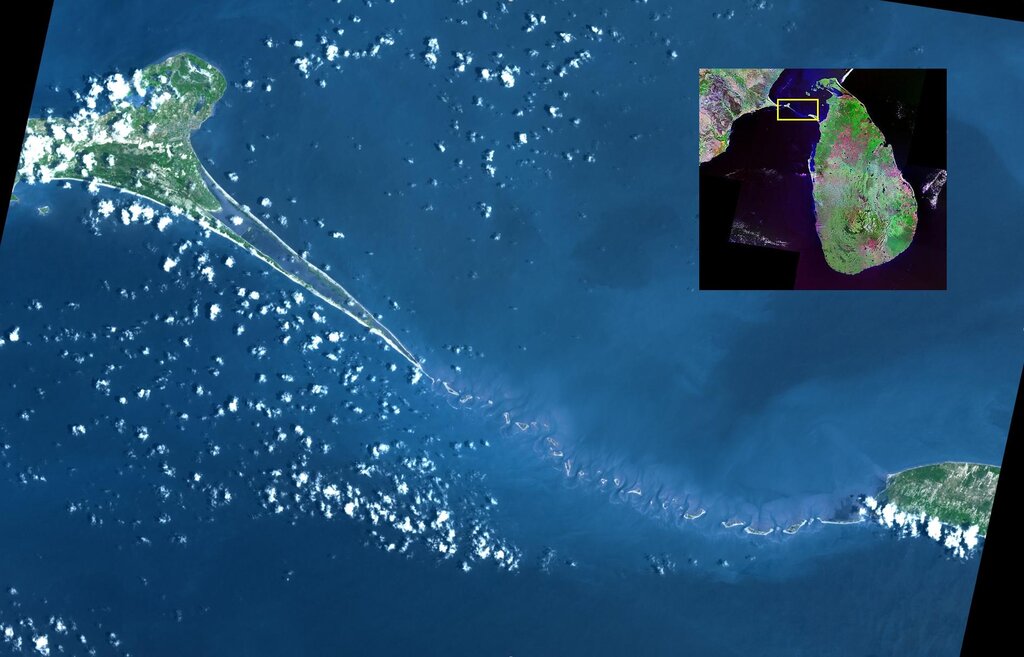
The most significant import from India was Buddhism, which arrived in the 3rd century BCE and became central to the island's identity. Early art, architecture, and writing systems show strong connections to Indian styles. For example, the Brahmi script used in early Sri Lankan inscriptions is closely related to scripts used in India at the time.
Political and military interactions were also common. South Indian kingdoms, such as the Cholas and Pandyas, both traded with and invaded Sri Lanka. This sometimes led to conflict and destruction, as with the move from Anuradhapura to Polonnaruwa, but it also introduced new cultural elements, including Hindu traditions and Dravidian architectural styles, which were integrated into the local landscape.
Ready to test your knowledge?
What was the primary environmental challenge that led to the development of massive irrigation systems in the Anuradhapura Kingdom?
The enormous dome-shaped structures built in Anuradhapura, some rivaling the size of smaller Egyptian pyramids, are known as stupas. What was their main purpose?
The legacies of Anuradhapura and Polonnaruwa, from their vast reservoirs to their towering stupas, continue to shape Sri Lanka's identity today.