The Resonant World of the Oboe
Oboe Origins
Ancient Roots
The story of the oboe begins long before the concert hall. For thousands of years, cultures across the globe have created music using double-reed instruments. These early ancestors, found from the Middle East to Asia, were typically made from simple materials like cane or wood. They produced loud, piercing sounds ideal for outdoor ceremonies and military events.
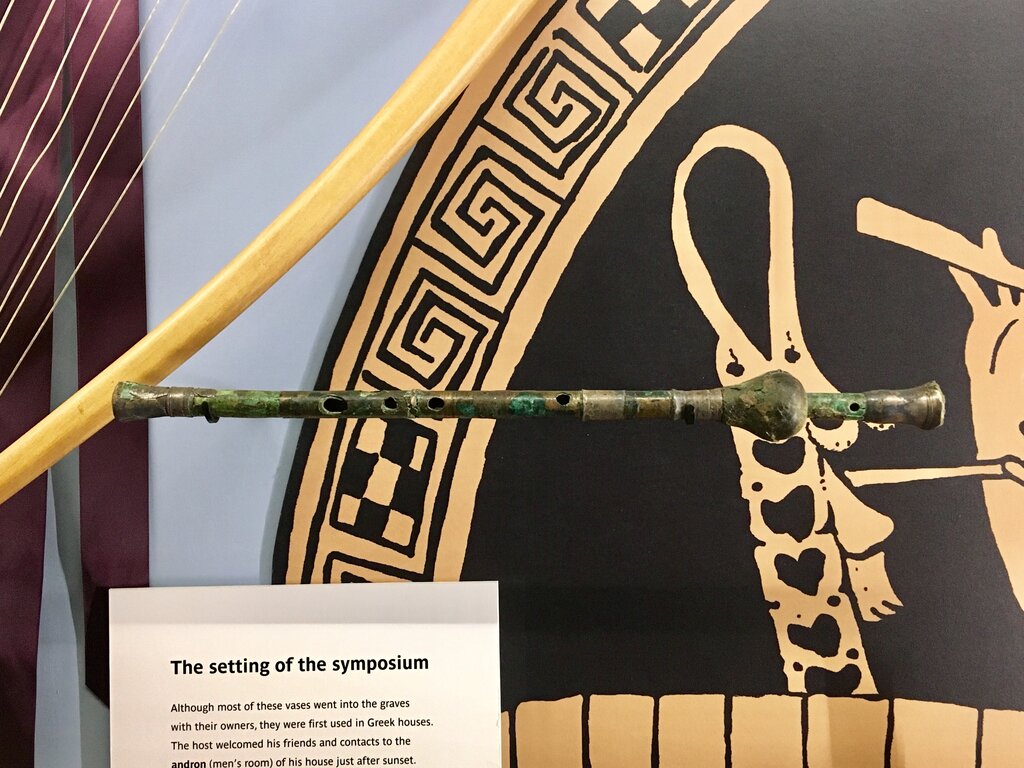
One famous example is the ancient Greek aulos. Often depicted in art, it consisted of two pipes played simultaneously. These instruments were not known for their subtlety. Their primary function was volume and projection, a trait that would carry forward into their medieval descendants.
The Shawm Takes the Stage
The precursor of the oboe was an instrument called the shawm, which had been known in Europe, in various sizes, since the 13th century.
During the Medieval and Renaissance periods, the shawm became a prominent instrument in Europe. It had a conical bore, which means the tube gradually widened from the reed to the end, and a flared bell. This design, combined with a wide, stiff reed, gave it a powerful, trumpet-like tone. Shawms were the outdoor instruments par excellence, used in town bands, processions, and military fanfares.
shawm
noun
A medieval and Renaissance double-reed woodwind instrument, the predecessor of the oboe, characterized by its loud, piercing tone.
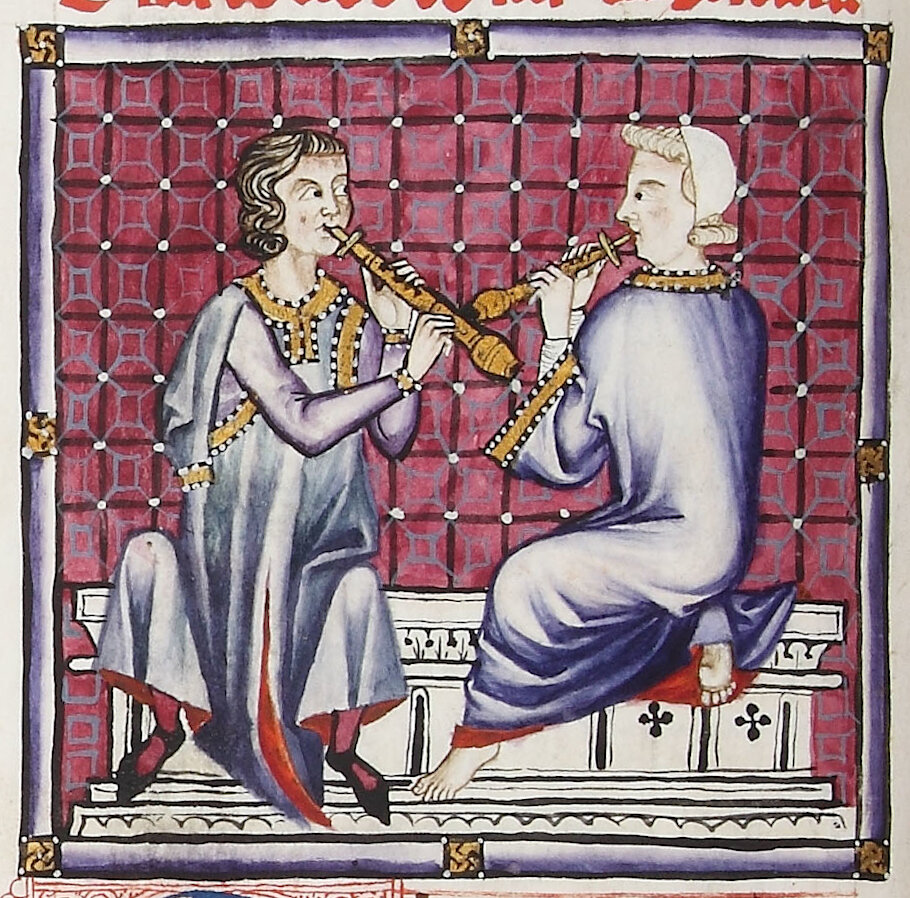
Shawms came in a variety of sizes, from high-pitched sopranos to deep basses, often playing together in ensembles. However, their sheer volume made them unsuitable for the more intimate settings of indoor court music.
From Hautbois to Oboe
The transition from the rustic shawm to the refined oboe happened in mid-17th century France, likely at the court of King Louis XIV. Instrument makers like Jean Hotteterre began experimenting with the shawm's design to create an instrument better suited for indoor chamber music and the newly forming orchestra.
They narrowed the bore, reduced the size of the finger holes, and developed a more delicate reed. The instrument was also constructed in three jointed sections, which improved its tuning.
The result was a new instrument with a much sweeter, more focused, and expressive tone. The French called it the hautbois, meaning "high wood" or "loud wood," a name that reflected its pitch and wooden construction. This new instrument quickly gained popularity across Europe, adopted by composers like Jean-Baptiste Lully.
oboe
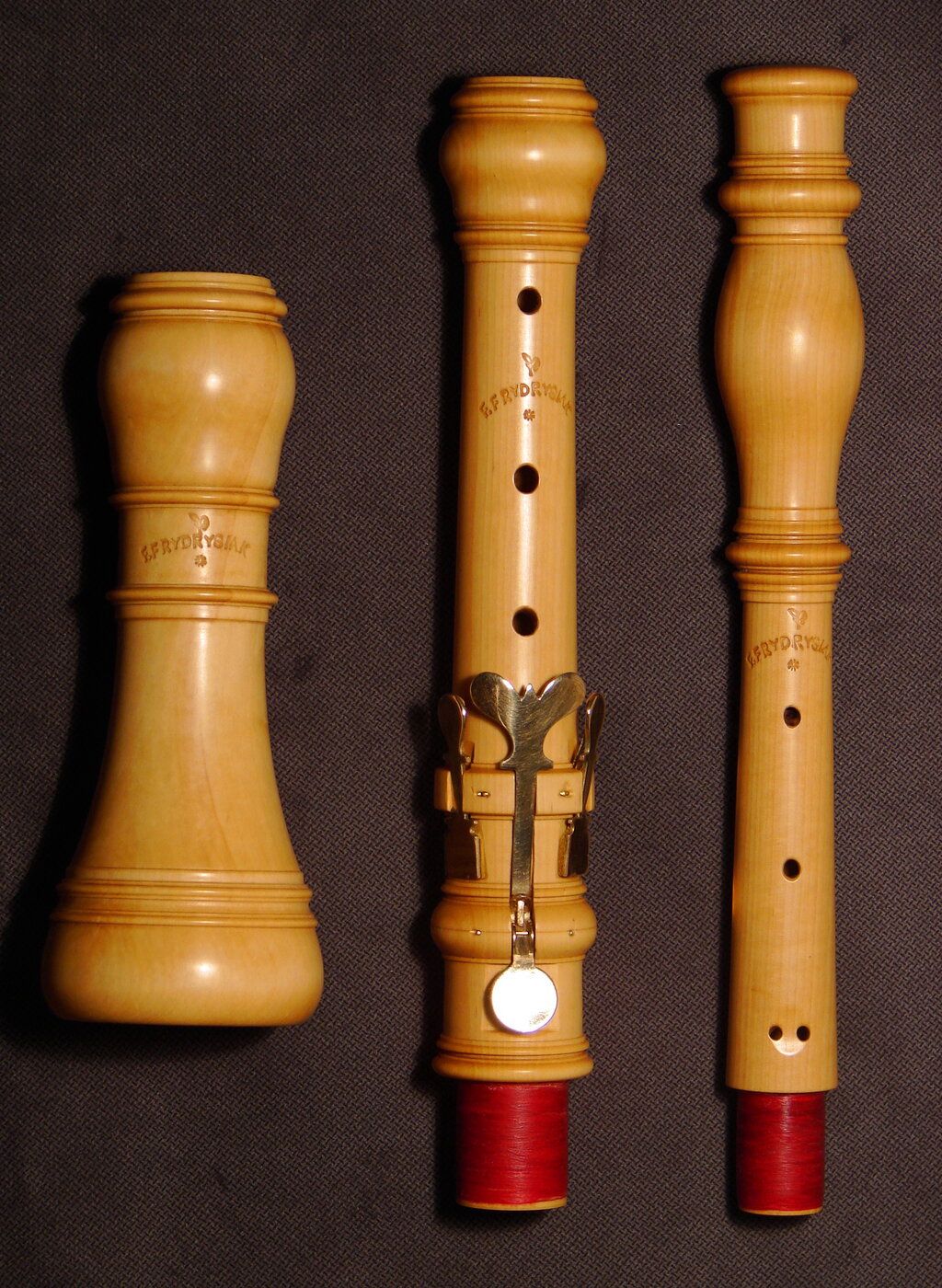
This Baroque oboe, as it's now called, had only two or three keys. Fingering was complex, and playing in certain keys was very difficult. Even so, its beautiful tone made it a favorite solo instrument for composers like Bach, Handel, and Vivaldi. During the Classical period, composers like Mozart continued to write extensively for the oboe, and makers added a few more keys to improve its range and intonation.
Mechanical Marvels
The 19th century was a period of great innovation in instrument making, and the oboe was no exception. The Industrial Revolution brought new tools and techniques that allowed for more precise manufacturing. Oboe makers began to experiment with complex systems of keys, rings, and levers.
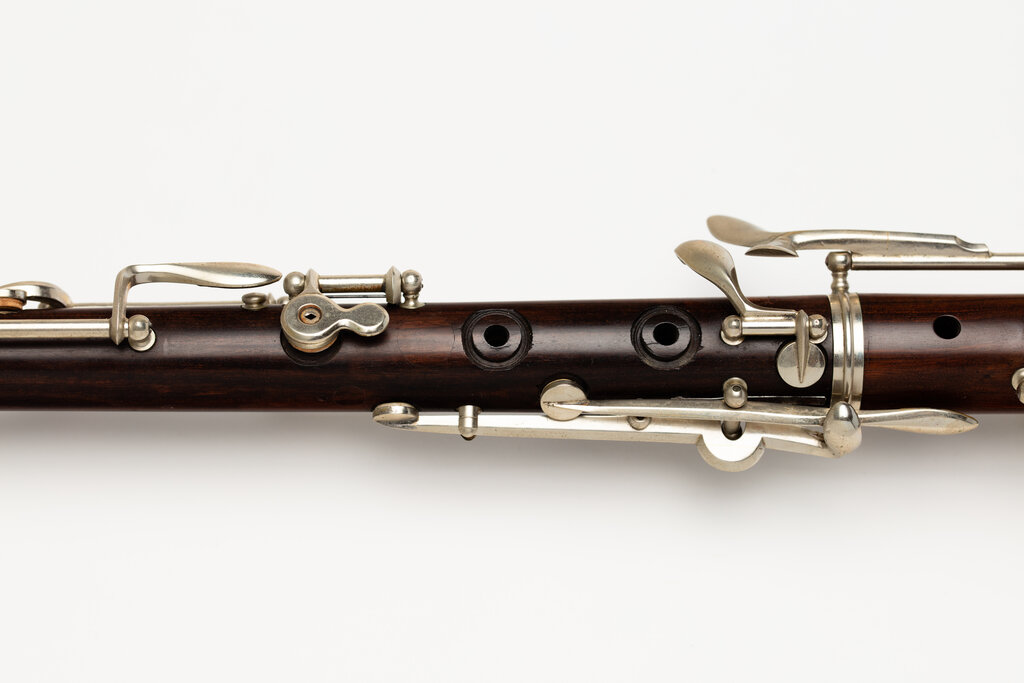
The goal was to make the instrument easier to play, improve its tuning, and allow it to navigate the increasingly complex harmonies of Romantic music. The most significant development came from the Triébert family in Paris. They designed a key system that became the foundation for the modern oboe. Other makers, like Guillaume-Adolphe Buffet, also contributed important innovations.
By the end of the century, the oboe had transformed from a simple wooden tube with a few brass keys into a sophisticated piece of machinery. This allowed players to perform with greater technical agility and consistency.
This evolution continued into the 20th century, when instrument makers largely standardized the oboe's design into the form we recognize today. While small variations exist between manufacturers, the fundamental mechanical system perfected in the late 19th century remains the standard for orchestral players worldwide.
Let's review the key terms from the oboe's history.
Ready to test your knowledge?
The shawm, a prominent double-reed instrument during the Medieval and Renaissance periods, was primarily used for what purpose?
The transition from the shawm to the more refined oboe occurred in the mid-17th century at the court of King Louis XIV in France.
From its ancient, powerful ancestors to the refined instrument of the modern orchestra, the oboe's journey reflects the changing tastes and technical demands of Western music.